

Delta Airlines Pet Carrier Size for In-Cabin Travel
Flying with your dog starts with one practical question: will your carrier fit under the seat?
Delta's recommended maximum dimensions for a soft-sided in-cabin carrier are 18 inches long by 11 inches wide by 11 inches tall.
However, the actual space under the seat depends on your aircraft type. Not every plane gives you the same clearance.
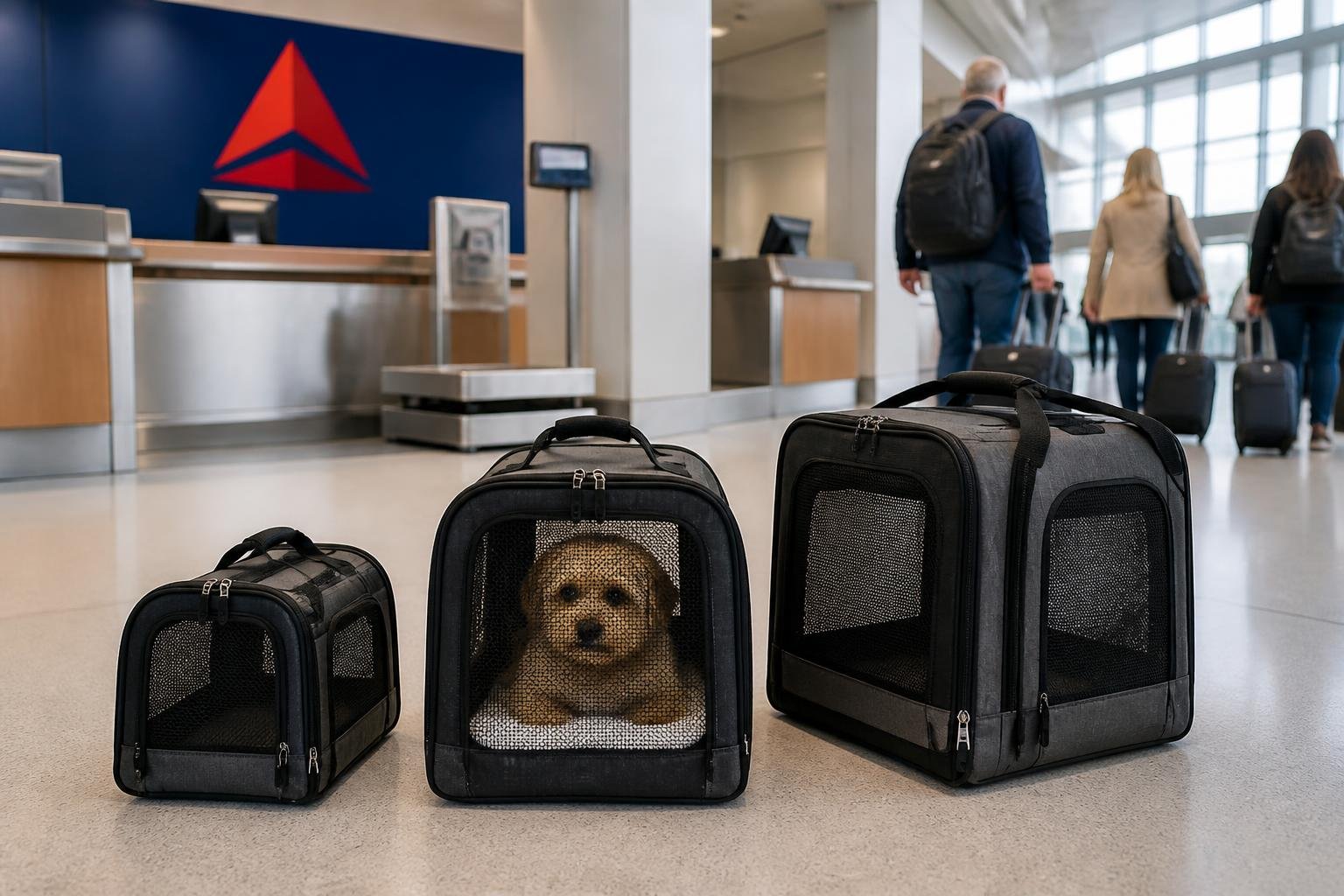
At Rover Ready, the focus is on helping dog owners find travel-ready carriers built for exactly this kind of situation. This includes guidance on airline-specific sizing, soft-sided construction, and what to look for when comfort and compliance both matter.
This guide covers everything you need to know before flying your dog on Delta in-cabin. Topics include carrier dimensions, booking steps, seat restrictions, and breed considerations.
Head to RoverReady.co to browse carriers and size guides. You can also reach out at 803-630-1451 if you have questions before your trip.
Key Takeaways
- Delta recommends a soft-sided carrier no larger than 18" x 11" x 11", but under-seat space varies by aircraft.
- You must contact Delta Reservations directly to add your pet, since cabin spots are limited and first-come, first-served.
- Certain seats, cabin classes, and international routes have restrictions that affect whether your dog can fly in-cabin at all.
Delta's In-Cabin Carrier Rules at a Glance
Delta's in-cabin pet rules cover dimensions, material requirements, ventilation, and where the carrier must be stored at all times. The 18" x 11" x 11" guideline is a recommendation, not an absolute maximum, because under-seat clearance differs across Delta's fleet.
Recommended Soft-Sided Dimensions for Most Delta Flights
According to Delta's official pet travel page, the airline recommends a soft-sided carrier with maximum dimensions of 18" x 11" x 11" because this size fits most aircraft types. It is the safest target measurement when you are shopping for a carrier before you know your exact plane.
Soft-sided carriers are preferred because they compress slightly to fit snugly into tighter spaces without damaging the carrier structure.
How Under-Seat Fit Is Actually Evaluated
At check-in, a Delta agent visually confirms that your carrier fits under the seat in front of you. The carrier must fit fully under the seat, not partially.
No part of the carrier can extend into the aisle or passenger space. The agent may also check that your pet can move around comfortably inside without touching or pressing against the carrier walls.
When a Carrier Can Be the Right Size but Still Be Rejected
A carrier that meets the 18" x 11" x 11" guideline on paper can still be rejected if it is too rigid to compress into the available space or if it lacks proper ventilation. Delta requires ventilation openings on at least three sides for domestic travel and four sides for international travel.
A carrier that looks fine at home may not clear the check-in test if the frame is stiff or the dimensions are right at the outer edge of the recommendation.
How to Choose a Carrier That Fits Your Dog and the Plane
Choosing a carrier involves balancing your dog's comfort inside the bag with the exterior measurements that have to clear the seat. A carrier that is too small stresses your dog; one that is too large does not make the flight.
Internal Space vs. Exterior Measurements
The 18" x 11" x 11" guideline refers to the exterior of the carrier. Your dog needs enough interior room to stand, turn, and lie down comfortably.
Measure your dog from nose to tail base and from floor to the top of the shoulder before buying. A good rule: the interior length should be at least a few inches longer than your dog's body length.
Soft-Sided vs. Hard-Sided for Delta Travel
Soft-sided carriers are strongly preferred for Delta in-cabin travel. They compress slightly when sliding under the seat, which makes a real practical difference on aircraft with tighter under-seat clearance.
As noted in airline carrier dimension guides, hard-sided carriers do not flex and are more likely to fail the under-seat test even when exterior dimensions look close. Delta does permit hard-sided carriers in some cases, but the risk of rejection is higher.
Features That Improve Comfort, Safety, and Check-In Confidence
Look for these features when selecting a carrier:
- Mesh ventilation panels on three or more sides
- Leak-proof bottom with a removable liner
- Top and side entry for easier loading at security
- Padded interior to cushion turbulence
- Luggage pass-through strap so it sits stable on a rolling bag
When the Sherpa Original Deluxe Makes Sense
The Sherpa Original Deluxe is a frequently recommended soft-sided carrier for Delta travel. Its flexible frame compresses to fit under most seats, it has mesh panels on multiple sides, and the dimensions on standard sizes fall within Delta's guidelines.
It works best for dogs roughly under 15 pounds. Confirm your specific dog's weight and measurements against the carrier's listed interior dimensions before purchasing.
Booking Your Dog on Delta Without Last-Minute Surprises
Delta limits the number of in-cabin pets per flight, and spots are reserved on a first-come, first-served basis. Knowing how the booking process works keeps you from arriving at the airport with a carrier and no confirmed pet reservation.
Why You Need to Contact Delta Reservations Early
Delta does not let you add a pet through the standard online booking flow. You must call Delta Reservations directly after you have your flight reservation.
Have your pet's carrier dimensions ready when you call, since the agent will log them. The earlier you call after booking your ticket, the better your chances of securing one of the limited in-cabin spots.
How Pet Reservations Work on Limited-Capacity Flights
Per Delta's pet travel policy, Delta Main Cabin allows up to four in-cabin pets per flight, while Delta First on domestic routes allows up to two. Once those spots are taken, no additional pets are permitted in the cabin on that flight.
This limit applies across all passengers on the flight, not per traveler.
What to Confirm Before You Pay the Pet Fee
Before you pay, confirm these details with the Delta agent:
- Your pet reservation is logged and confirmed
- The carrier dimensions you provided are on file
- Your seat assignment is not in a restricted zone
- The route does not have an in-cabin pet exception
The pet fee is collected at check-in, not at booking. For tickets issued on or after April 8, 2025, the one-way fee is $150 USD for U.S., Canada, Puerto Rico, and U.S. Virgin Islands travel, and $200 USD for most international routes.
Seat, Cabin, and Route Limits That Affect Carrier Choice
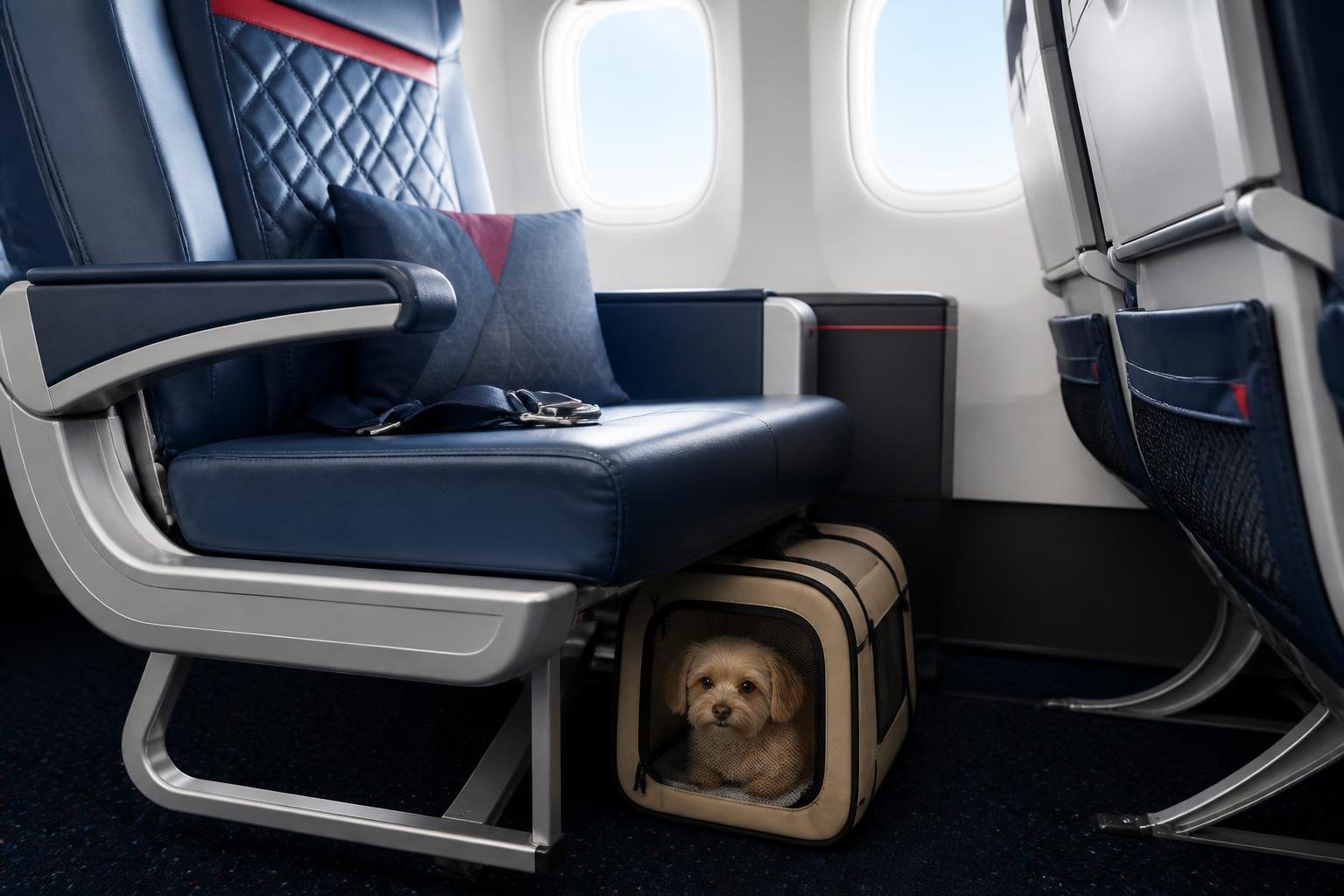
Even a perfectly sized carrier will not help if your seat assignment does not include usable under-seat storage. Delta restricts in-cabin pet travel based on seat location, cabin class, and route.
Seats Where Under-Seat Pet Storage Is Not Allowed
According to Delta's policy, passengers with in-cabin pets may not sit in:
- Bulkhead seats
- Emergency exit rows
- Seats designated as "no stowage"
- Flat-bed or Delta One seats
- Rows 46-51 on the A330-200
- Rows 54-59 on the A330-300
- Center seats on the B757-200
These restrictions exist because there is no under-seat space in front of those positions, or because safety regulations prohibit blocked floor space in those rows.
Cabin Restrictions on Premium and International Itineraries
Pets are not permitted in Business Class, Delta One, or Delta Premium Select on any route, domestic or international. These cabins use flat-bed or premium seat configurations that either lack proper under-seat storage or restrict any floor stowage entirely.
On domestic Delta First flights without flat-bed seats, up to two in-cabin pets are allowed.
Route Exceptions That Can Change Your Plans
Certain destinations do not allow in-cabin pets regardless of carrier size or compliance. As listed in Delta's in-cabin pet exceptions, these include:
- Hawaii
- Australia, New Zealand, and South Africa
- United Kingdom and United Arab Emirates
- Iceland and Hong Kong
- Jamaica and Barbados
- Pets originating in Brazil, Colombia, or the Dominican Republic
Check your specific route before purchasing a carrier or booking your pet's reservation.
Pet Eligibility, Breed, and Safety Considerations
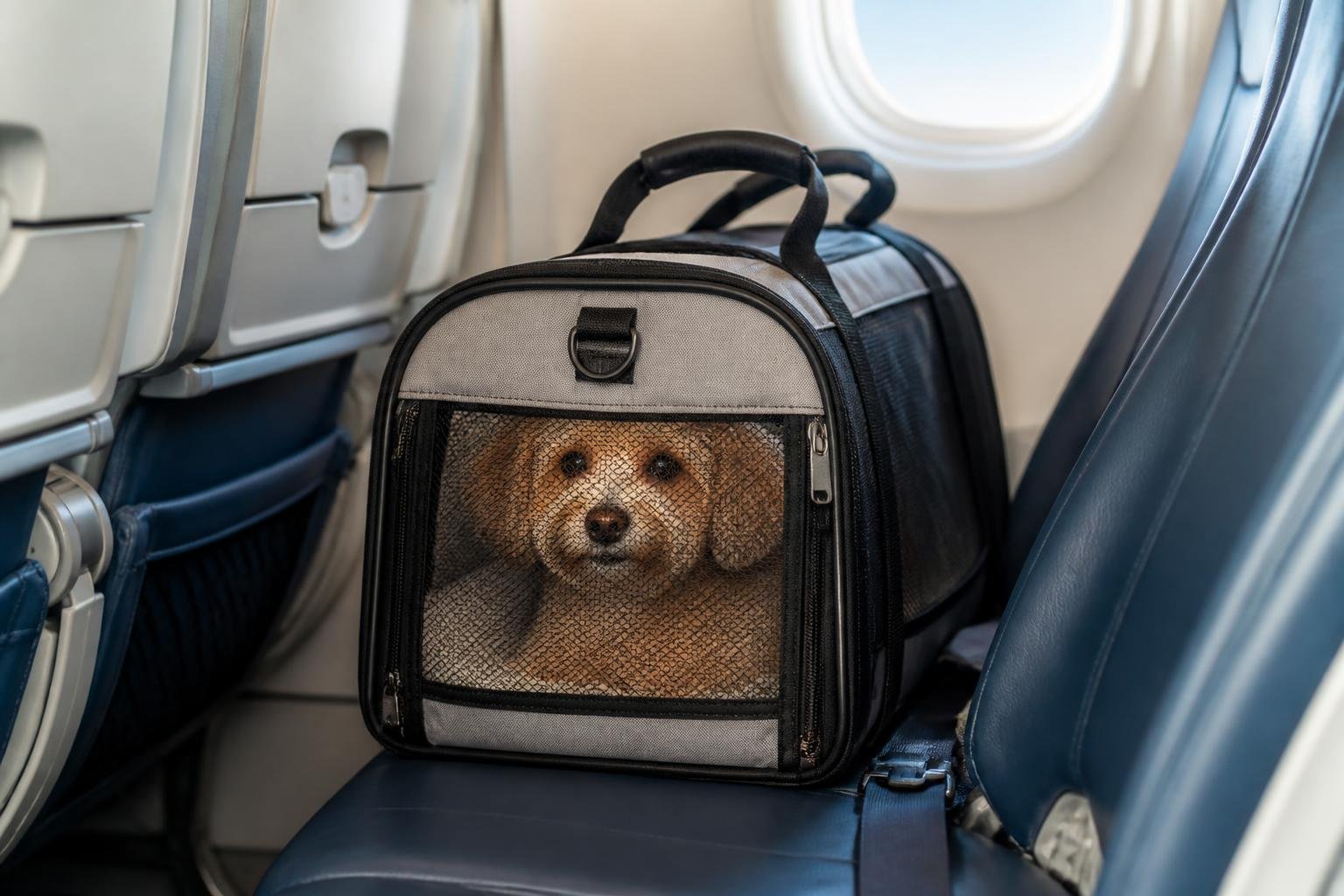
A carrier that fits the seat is only part of what Delta evaluates. Your dog also has to meet age, health, and breed-related requirements to be cleared for in-cabin travel.
Age, Size, and In-Carrier Comfort Standards
Dogs must be at least 8 weeks old for domestic in-cabin travel. For travel to the U.S. from another country, dogs must be at least 6 months old.
Dogs entering the U.S. must also be microchipped and accompanied by a completed CDC Dog Import Form. Your dog must be small enough to stand, turn around, and lie down comfortably inside the carrier without touching or protruding from any side.
Breed Restrictions and Brachycephalic Concerns
Delta does not publish a specific banned breed list for in-cabin travel the way some carriers do for cargo. Brachycephalic breeds such as Bulldogs, Pugs, and Boston Terriers face real physiological risks at altitude due to their shortened airways.
Many veterinarians advise against air travel for these dogs regardless of airline policy. If your dog is a flat-faced breed, consult your vet before booking and check whether Delta has updated any guidance on your specific breed category.
Why Rover Ready Prioritizes Comfort and Low-Stress Travel
Rover Ready's approach to carrier selection puts your dog's in-carrier experience at the center of the decision, not just dimensional compliance. The goal is a carrier your dog can rest in calmly from check-in through landing.
Rover Ready's Checklist for a Better Flight Day
Preparation before the airport makes the check-in process faster and less stressful for both you and your dog. These practical steps address the most common points where things can go wrong.
What to Measure Before Buying a Carrier
Before shopping, gather these measurements:
- Your dog: length (nose to tail base), height (floor to top of shoulder), and weight
- The carrier exterior: confirm all three dimensions stay within 18" x 11" x 11"
- The carrier interior: verify your dog has room to stand and turn without pressing against the walls
Cross-reference your measurements against the specific aircraft scheduled for your flight. Delta's under-seat dimensions vary, and some planes have less than 11 inches of vertical clearance.
What to Pack in and Around the Carrier
Keep these items accessible on travel day:
- An absorbent liner or pad inside the carrier
- A small, familiar-smelling item such as a worn shirt or toy
- A collapsible water bowl and water for layovers
- Any required health documentation or vaccination records
- A leash clipped to the outside for security checkpoints
Do not overload the carrier floor with items that reduce your dog's moving space.
How to Reduce Stress at Check-In, Boarding, and During the Flight
Arrive at the airport early. Delta requires you to check in at the Special Service Counter when traveling with a pet, which takes more time than standard check-in.
At the security checkpoint, you will need to remove your dog from the carrier. Practice this at home so your dog is familiar with the routine.
Once you board, slide the carrier under the seat slowly and avoid jostling it during setup.
Keep your dog calm by avoiding feeding a large meal right before the flight. Stay relaxed yourself, since dogs often read your body language.
Frequently Asked Questions
What are the maximum in-cabin pet carrier dimensions allowed on Delta flights?
Delta recommends a maximum carrier size of 18" x 11" x 11" for most aircraft, as this fits the under-seat space on the majority of Delta's fleet. The actual allowed dimensions vary by aircraft type, so it is worth checking the specific plane on your route.
How do I add a pet to my Delta reservation for in-cabin travel?
You cannot add a pet online. You must call Delta Reservations directly after booking your flight.
Have your carrier dimensions ready, since agents log them as part of the pet booking process. Confirm your seat is not in a restricted area.
What types of pet carriers are accepted for in-cabin travel on Delta (soft-sided vs. hard-sided)?
Delta accepts both soft-sided and hard-sided carriers, but strongly recommends soft-sided options because they compress slightly to fit more easily under the seat. Hard-sided carriers that meet the size guideline may still be rejected if they are too rigid to fit in tighter under-seat spaces.
For most travelers, a well-ventilated soft-sided carrier is the safer choice.
What is Delta's in-cabin pet fee, and are there any situations where it can be waived?
For tickets issued on or after April 8, 2025, the one-way in-cabin pet fee is $150 USD for domestic U.S., Canada, Puerto Rico, and U.S. Virgin Islands travel. The fee is $200 USD for most international routes.
The fee is collected at check-in, not at booking. Delta does not generally waive this fee for standard pet travel.
Are the in-cabin pet carrier rules different for Delta international flights compared with domestic flights?
The size guideline stays the same, but ventilation requirements increase for international travel. Your carrier must have ventilation openings on four sides rather than three for international routes.
Several international destinations also prohibit in-cabin pets entirely, including the United Kingdom, Australia, Hawaii, and several others. Verify your route before traveling.
What should I do if my pet carrier slightly exceeds the under-seat space on my Delta aircraft?
If your carrier is borderline on size, contact Delta ahead of your trip to ask about the specific aircraft's under-seat dimensions.
Arriving with a carrier that does not fit puts your entire trip at risk, since Delta agents are required to confirm the carrier fits before issuing your cabin pet tag.


