

By Craig Roberts, Rover Ready Co
International pet air travel requires careful planning and compliance with multiple regulations. This guide provides the documentation, airline carrier standards, import rules, and preparation steps required for international flights. It explains required travel documents, how to select airline-approved carriers, country import rules, and recent policy updates that affect pet travel. Adhering to these requirements supports regulatory compliance and improves pet safety and comfort.
Start planning early: identify all documentation requirements, confirm airline rules, and schedule veterinary visits. Early preparation reduces the chance of last-minute issues and gives time to resolve registration, translation, or endorsement needs that some countries require. Build a central file—physical and digital—for easy access at check-in and on arrival.
Key Takeaways
- International pet air travel requires specific documentation including health certificates, vaccination records, and microchip identification.
- Pet health certificates confirm fitness for travel and must include timely rabies vaccinations per destination country rules.
- Microchipping pets with updated owner information is mandatory for identification and compliance with many countries’ entry requirements.
- Selecting airline-approved pet carriers involves meeting size, material, and ventilation standards unique to each airline.
- Accurate pet measurements ensure the chosen carrier complies with airline regulations and provides comfort during flights.
- International pet import regulations vary by country and may include quarantine, breed restrictions, and additional vaccination tests.
- Preparing pets for travel includes veterinary health checks, packing essentials, and managing stress with calming strategies during flights.
- COVID-19 has led to updated airline policies and health advisories affecting pet travel documentation and quarantine protocols.
- Using checklists and consulting official airline and regulatory guidelines helps avoid common compliance issues in international pet travel.
What Are the Required Pet Travel Documents for International Flights?
Required documentation typically includes a health certificate, vaccination records, and microchip identification. Each document verifies the animal's health and compliance with the destination country's import rules. Confirm requirements well in advance to prevent delays.
In addition to the core documents, some destinations ask for supporting paperwork such as a proof of owner identity, import permits or official endorsements, and certified translations of veterinary records when documents are not in the destination country’s official language. Keep both original documents and high-quality scanned copies accessible on a mobile device or cloud storage to present quickly at checkpoints.
Understanding Pet Health Certificates and Vaccination Records
Pet health certificates are issued by a licensed veterinarian to confirm fitness for travel. Certificates must document required vaccinations, including rabies, which many countries require at least 21 days before entry. Some destinations mandate additional vaccines; verify the destination's regulations before travel.
Health certificates can require specific wording or endorsements from government veterinary agencies in the exporting country. Ask your veterinarian whether a notarization, government stamp, or additional validation is required for your destination. If documents must be translated, use a professional service or an official translator acceptable to the destination authority, and include a dated translation with the original certificate.
How to Obtain and Verify Microchip Identification for Pets
Microchipping provides a unique identification number linked to the owner's contact details. A veterinarian implants the microchip and registers it with an appropriate database. Verify the microchip before travel and ensure the registry lists current contact information, since many countries require microchipping for entry.
Before travel, ask your veterinarian to scan and read the microchip so you can confirm the number matches your paperwork. If the destination requires a specific microchip type or registry, confirm compatibility and update contact details accordingly. Carry paperwork showing the date of implantation, the microchip number, and the registry where the chip is recorded.
How to Select Airline Approved Pet Carriers for International Travel
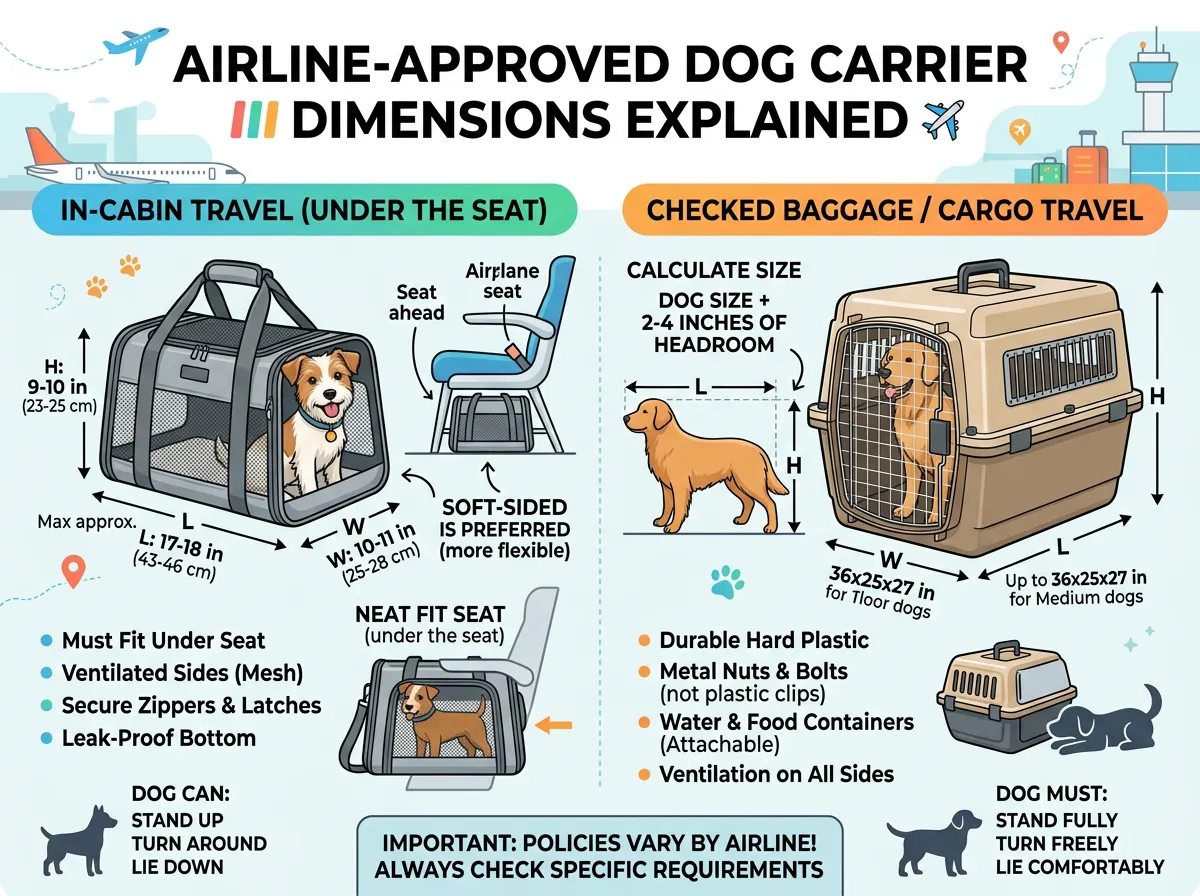
Select a carrier that meets the airline's size, material, and safety standards while providing adequate space for the pet. Review airline-specific requirements before purchase to ensure compliance.
Carriers differ by intended use: in-cabin, checked baggage, and cargo compartments each have distinct rules. Consider the pet's size, breed, and behavior when choosing. For long journeys, choose a design that supports ventilation on multiple sides, a leak-proof base, and secure closures. Certification labels and manufacturer instructions can indicate intended use, but always confirm with the airline.
Airline Pet Carrier Size and Material Requirements
Airlines enforce carrier size limits that vary by carrier. In-cabin carriers commonly must fit under the seat; typical dimensions are 18–20 inches long, 11–14 inches wide, and 9–11 inches high. Carriers should be durable and well ventilated. Confirm exact specifications with the airline.
| Airline | Size Limit (inches) | Material Requirements |
|---|---|---|
| Airline A | 18 x 11 x 9 | Soft-sided, well-ventilated |
| Airline B | 20 x 14 x 10 | Hard-sided or soft-sided, secure closures |
| Airline C | 19 x 12 x 10 | Soft-sided, with mesh panels |
This table shows differing size limits and material requirements across airlines; confirm your airline's policy before travel.
When assessing materials, prioritize breathable mesh panels and sturdy seams. For cargo travel, look for reinforced hard-sided carriers that protect against impact while allowing airflow. Add a soft, absorbent liner or pad for comfort and to manage accidents. Mark the carrier externally with the pet's name and your contact details in case of separation.
Measuring Your Pet for the Correct Carrier Dimensions
Measure the pet's length from the tip of the nose to the base of the tail and the height from the ground to the top of the head when standing. Add a few inches for comfort and account for natural posture. A correctly sized carrier ensures compliance and comfort.
Also measure width across the shoulders and the pet's weight, as many airlines calculate in-cabin allowances by combined weight. For pets that sit taller when alert, measure while the animal is standing and add space for them to turn around and lie down. If your pet is between sizes, choose the larger size to prevent restriction and reduce stress during travel.
What Are the International Pet Import Regulations and Quarantine Rules?
Countries maintain distinct import and quarantine rules for pets. These rules commonly specify documentation, vaccination requirements, and potential quarantine periods. Research the destination's rules early to avoid complications on arrival.
Historically, formal schemes and regulations have been implemented to manage pet movement across borders—particularly within regions such as the EU—to address risks like rabies.
International Pet Travel Schemes: Rabies, Quarantine & EU Regulations
Amendments were made to the UK quarantine laws and the Pet Travel Scheme (PETS) was subsequently introduced in 2000 for animals entering the UK from qualifying listed countries. European Regulation 998/2003 on the non-commercial movement of pet animals initiated the European Union Pet Movement Policy (EUPMP) in July 2004. The introduction of EUPMP harmonized the movement of pet animals within the EU (EUPMPlisted) but raised the possibility of domestic animals entering the UK from a non-EU state where rabies is endemic (EUPMPunlisted).
Quantitative risk assessment to compare the risk of rabies entering the UK from Turkey via quarantine, the Pet Travel Scheme and the EU Pet Movement Policy, 2010
Country-Specific Import Requirements and Restrictions
Import requirements vary by country and may include specific vaccinations, health certificates, and breed restrictions. Some countries require a rabies titer test to confirm vaccination levels. Research destination-specific requirements well in advance to ensure compliance.
To gather accurate country-specific information, consult the destination's official government pages and the airline's published guidance. If import permits are required, begin the application early and track processing times. Some destinations also require proof of parasite treatment or certificates stating a pet is free of certain diseases within a set period before travel.
Navigating Quarantine Procedures and Duration
Pets may be subject to quarantine on arrival. Quarantine durations range from a few hours to several months depending on national regulations and the pet's health status. Ensure all documentation is complete and vaccinations are current to prepare for possible quarantine. Understanding the process reduces stress and delays.
If quarantine is a possibility, identify approved quarantine facilities at the destination and confirm their booking procedures ahead of travel. Prepare an in-quarantine care kit with familiar items and a supply of prescription medications. Ask the quarantine facility about daily care, exercise, and veterinary access so you can make informed arrangements and reduce anxiety for your pet while they are confined.
How to Prepare Your Pet for International Air Travel
Preparation includes veterinary health checks, packing essential supplies, and implementing measures to manage stress during travel. Plan these steps well in advance.
Build a travel plan that sequences paperwork, carrier acclimation, and health visits. Collect required forms, request any necessary endorsements, and confirm flight details that may affect your pet, such as layovers, cabin or cargo travel, and seasonal travel restrictions. Keep a travel binder with all documents organized by section (veterinary, permits, identification) and store electronic backups accessible from a phone or tablet.
Pre-Flight Health and Safety Preparations
Schedule a veterinary examination to obtain required health certificates and confirm that vaccinations are current. Pack essentials such as food, water, and comfort items like toys or blankets to support the pet during travel.
Prepare a travel health kit containing copies of prescriptions, a small first-aid kit, any daily medications, and clear instructions for administration. Discuss the pet's feeding schedule and fasting guidance with your veterinarian to avoid travel-related digestive issues. If your pet requires medication during travel, ensure you have sufficient supply and a letter from the veterinarian explaining the treatment.
Managing Pet Comfort and Stress During Flights
Reduce travel stress by acclimating pets to their carriers before departure, using approved calming products when appropriate, and ensuring access to water. When feasible, choose direct flights to minimise travel time.
Acclimation training can begin at home by leaving the carrier accessible with bedding and treats, increasing time spent inside gradually. Practice closing the carrier for short periods and rewarding calm behavior. For nervous animals, consider short car rides in the carrier to mimic motion and build tolerance. Avoid sedatives unless a veterinarian specifically recommends them and provides dosing guidance tailored to the pet’s health status.
What Are the Latest COVID-19 Updates Affecting International Pet Travel?
The COVID-19 pandemic introduced additional regulations and operational changes that affect international pet travel. Review current guidance and airline notices before planning travel.
Operational changes related to the pandemic can be fluid; confirm policies at the time of booking and again close to departure. Some airports have adjusted check-in routines, restricted access for non-traveling companions, or introduced staff protocols that affect how pets are handled. Verify whether the airline requires additional health attestations or limits the number of animals per flight segment due to operational constraints.
Changes in Airline Policies Due to COVID-19
Airlines have updated pet travel policies in response to the pandemic. Changes may include modified documentation requirements, limits on the number of cabin pets, and enhanced safety protocols. Verify the latest airline policies prior to travel.
When policies change, airlines typically publish notices with effective dates. Confirm whether you must present additional documents at check-in, whether pet handling procedures have changed during transfer, and whether ground handling partners at the destination follow separate rules. Maintain copies of communications from the airline in case clarification is needed at the airport.
Health Advisories and Travel Restrictions Impacting Pets
Health advisories can impose additional entry requirements for pets, such as extra health checks or quarantine. Monitor destination advisories and regulatory updates to ensure compliance.
Subscribe to official notification tools or RSS feeds from relevant regulatory bodies to receive timely updates. If your travel plans include multiple countries, track each jurisdiction’s advisories separately and plan contingencies for route changes or sudden restrictions that might affect layovers or transit permissions.
How to Ensure Compliance with Airline and International Pet Travel Regulations
Ensure compliance by identifying required documentation, meeting carrier specifications, and resolving common issues before travel. Advance preparation reduces the risk of denial or delay.
Create a pre-travel checklist and follow a consistent verification routine: review airline requirements, confirm veterinary paperwork, verify microchip registration, and check entry rules for each stop in your itinerary. If any document requires an official endorsement, such as a government stamp or signature, complete that step well ahead of travel to avoid processing delays.
Using Checklists for Pet Travel Documentation
Create a checklist that includes health certificates, vaccination records, microchip information, and any country-specific import permits. A checklist helps prevent last-minute omissions and supports a smooth process.
- Identify required documents for the destination and transit countries.
- Schedule veterinary appointments early to complete testing or treatments that require waiting periods.
- Obtain translations and endorsements if necessary, and keep originals plus digital copies.
- Confirm airline carrier type and size limitations for your pet’s flight segments.
Common Compliance Issues and How to Avoid Them
Frequent compliance failures include missing documentation, inaccurate vaccination records, and non-compliant carriers. Double-check all documents and measurements before travel. Consult a veterinarian or a pet travel specialist for guidance when necessary.
To avoid common pitfalls, cross-check dates on vaccinations, ensure microchip numbers match paperwork exactly, and re-measure your pet before finalizing a carrier purchase. If a document lists an expiration or validity window, verify the travel dates fall within that period. When in doubt, ask the airline or the destination’s veterinary authority for written confirmation of any ambiguous requirement.
Where to Find Reliable Resources and Support for International Pet Travel
Use authoritative organizations and official websites for accurate information on pet travel regulations and recommended procedures.
Primary sources include government veterinary services, official embassy guidance, and airline policy pages. For practical assistance, consider contacting a licensed pet relocation specialist who can advise on documentation, quarantine arrangements, and logistics. Professional assistance can be particularly useful for complex itineraries, multiple connections, or travel to countries with strict entry rules.
Official Guidelines from Airlines and Regulatory Bodies
Refer to airline and government agency publications for current regulations, required documentation, and safety protocols. These sources provide authoritative guidance on compliance.
Always use the most recent publications and confirm dates on guidance documents. If a government agency posts a change or temporary requirement, follow the official instructions for compliance rather than relying solely on secondary summaries. Airlines may also publish carrier-specific checklists or forms to simplify the submission process.
Helpful Guides and Tools for Pet Owners
Online tools and guides offer checklists, country-specific rules, and travel tips. Use these resources to prepare documentation and plan logistics for a compliant journey.
Practical tools include downloadable checklists, sample forms, and step-by-step timelines. Save and print these materials, and adapt them to your pet’s needs. For multi-leg travel, create a consolidated itinerary that highlights where to present documents and where approvals are required to minimize confusion during transfers.
Frequently Asked Questions
What should I do if my pet has special health needs before travel?
Consult your veterinarian well in advance to discuss medical conditions, medications, and dietary needs. Obtain any required health certificates and arrange necessary accommodations. Pack extra medications and specialised food for the journey.
Work with your veterinarian to create a travel care plan describing the pet’s condition, medications, and emergency contact information. Share this plan with airline staff and with anyone who will be handling the pet during transit. If your pet requires temperature-sensitive medication, confirm storage options during layovers or quarantine.
Are there breed restrictions for pets traveling internationally?
Many countries enforce breed restrictions, particularly for breeds considered dangerous. Requirements vary; some destinations require additional documentation or may refuse entry for certain breeds. Verify destination rules with relevant authorities or the airline.
If your pet’s breed is subject to restrictions, prepare alternate plans such as researching permitted relocation routes or obtaining special permissions if available. Document the pet’s identification and clarify breed descriptions in paperwork to prevent misunderstandings during inspection.
How can I help my pet adjust to the travel carrier?
Introduce the carrier at home and place familiar items inside to create a comfortable environment. Encourage short, regular practice sessions, using treats and positive reinforcement to build acceptance.
Gradually lengthen time in the carrier, simulate travel conditions with gentle motion, and reward calm behavior. Make the carrier a positive space with preferred bedding and treats so your pet associates it with comfort rather than confinement.
What are the potential costs associated with international pet travel?
Costs vary and may include airline fees, veterinary services, microchipping, required documentation, import permits, and quarantine fees. Research all potential expenses and budget accordingly.
Request cost estimates for veterinary services such as testing, certificates, or endorsements, and confirm airline pet fees at the time of booking. If quarantine or special handling is possible at the destination, obtain detailed pricing and include contingency funds for unexpected expenses.
How can I find the latest travel advisories for pets?
Regularly check official government websites such as the Centers for Disease Control and Prevention (CDC) and the U.S. Department of Agriculture (USDA). Review airline websites for policy updates and consult pet travel organisations and traveller forums for recent experiences.
When consulting forums or third-party summaries, verify any critical information against official sources before acting. Community resources can provide practical tips but should not replace regulatory guidance for required documentation or mandatory procedures.
What should I do if my pet gets sick during travel?
Remain calm and contact airline staff for assistance if available. Ensure you have medications and your veterinarian's contact information. If the condition is severe, seek veterinary care at the destination. Prepare an emergency plan, including local veterinary contacts.
Before travel, identify veterinary clinics near arrival points and save their contact details. Include an emergency contact for the pet’s regular veterinarian and a summary of medical history with the pet’s documents. Having a plan reduces decision time and ensures quicker access to appropriate care if needed.
What Documents Are Needed to Fly Pets Internationally?
Owners typically need a health certificate, vaccination records, and microchip identification to verify the pet's health status and compliance with the destination country's requirements.
Some destinations also require additional items such as import permits, parasite treatment certificates, or specific testing results. Confirm whether documents must be issued within a defined timeframe prior to travel and whether any endorsements or governmental approvals are necessary to make the documents valid for entry.
How to Choose the Right Airline Approved Pet Carrier?
Understand the airline's size and material requirements, measure the pet accurately, and select a carrier that meets regulations while providing sufficient space and ventilation for the pet's comfort.
Test the carrier at home: let the pet explore and rest inside, secure fastenings, and confirm that it is comfortable for the pet to turn, stand, and lie down. Ensure labels and handles are intact, and attach a clear contact card with name, phone number, and destination address on the outside of the carrier.
Conclusion
International pet travel requires precise attention to documentation, carrier compliance, and import regulations to facilitate a smooth journey. Applying these requirements improves pet safety and reduces the risk of entry issues. Consult the referenced resources and checklists to complete preparations and minimise travel disruption.
Careful planning, clear organization of paperwork, and incremental pet acclimation to travel conditions reduce stress for both owner and animal. When in doubt, seek clarification from official sources and consider professional support for complex itineraries. With thorough preparation, international pet travel can be managed safely and successfully.


