

Dog Anxiety 101: Travel Triggers And Calming Tips
Travel changes everything about a dog's daily routine, and for nervous dogs, that shift can show up fast. New smells, unfamiliar sounds, a carrier that feels strange, a car ride that seems to go on too long. If your dog has ever trembled at the airport, refused to settle in the back seat, or spent a hotel night panting instead of sleeping, you are already familiar with what travel anxiety looks like in practice.
Experts estimate that up to 40% of dogs experience some form of anxiety during their lifetime, and travel sits near the top of the trigger list. The good news is that most travel-related stress is manageable when you understand what is driving it and how to prepare before the trip starts.
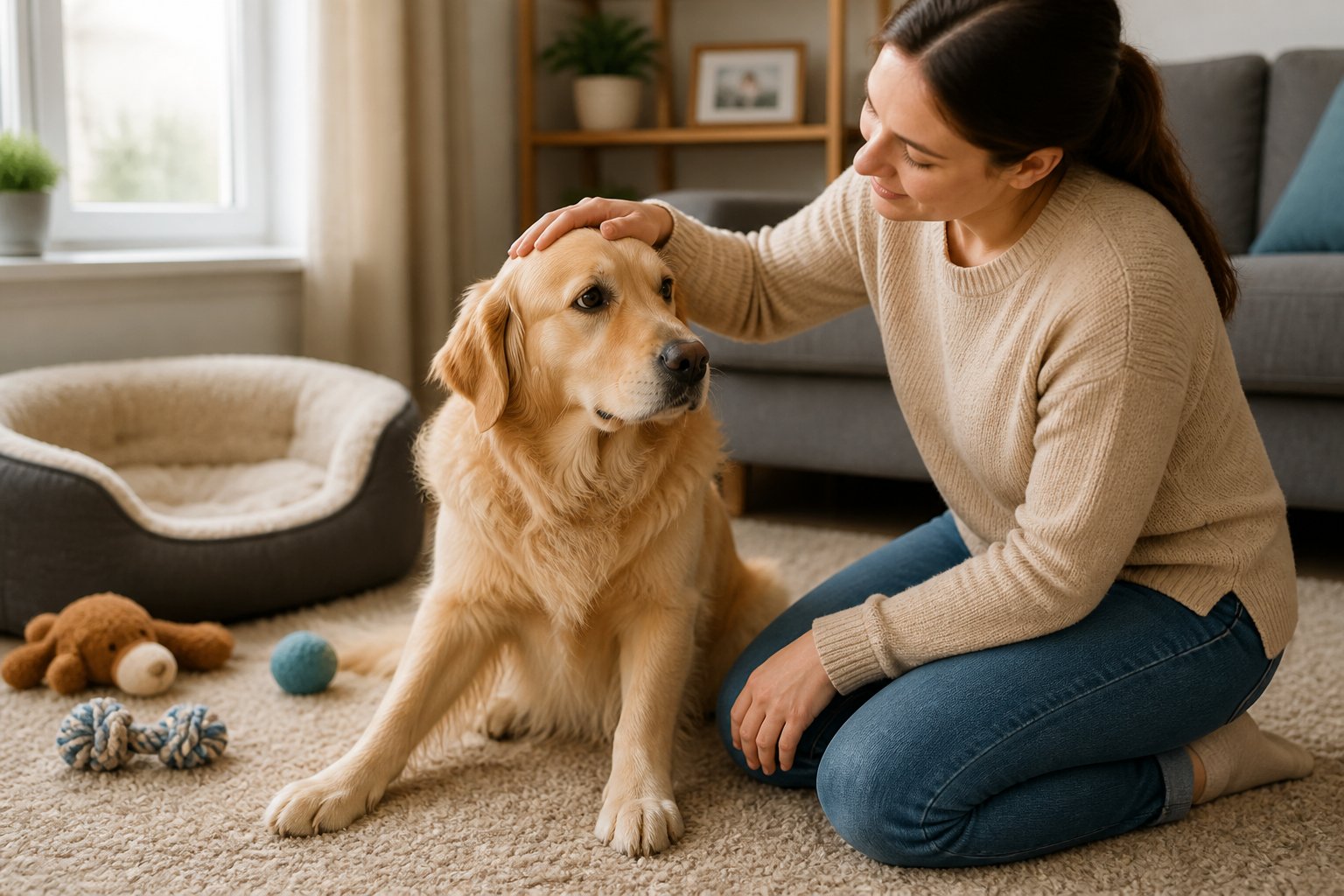
This guide breaks down what dog anxiety actually looks like, which travel situations tend to push dogs past their comfort zone, and what practical steps you can take before and during a trip to help your dog feel more settled. At Rover Ready, the focus is on helping dog owners choose travel-ready carriers and gear with comfort, safety, and airline confidence in mind, and that same practical mindset shapes everything in this article.
Whether you are prepping for your first flight with your dog or trying to make road trips less chaotic, the goal here is to give you clear, usable information without judgment or guesswork.
What Dog Anxiety Can Look Like Before And During Travel
Dog anxiety does not always look dramatic. Some dogs shut down quietly while others escalate quickly, and both responses can catch owners off guard during travel. Knowing the difference between a dog who is a little unsettled and one who is genuinely struggling helps you respond in the right way at the right time.
Everyday Stress Vs. A Bigger Pattern
A dog who sighs on a long drive or sniffs nervously at a hotel door is showing normal adjustment behavior. That is not the same as a dog who pants heavily for hours, refuses water, or cannot calm down between stops.
The distinction worth paying attention to is frequency and intensity. A one-time reaction to something new is typically situational. A dog who consistently falls apart during any travel prep, from the moment the suitcase comes out, is showing a pattern. According to research on anxiety in dogs, when stress responses happen repeatedly across different situations, that usually points to an underlying sensitivity that benefits from structured support rather than hoping the dog will "get used to it" on its own.
Body Language And Behavior Clues Owners Often Miss
The clearest signals tend to happen before a dog reaches full panic. Watch for:
- Whale eye: the whites of the eyes show at the corners, a sign of tension
- Lip licking when there is no food nearby
- Yawning repeatedly in a stimulating environment
- Ears pinned back or flattened
- A tucked tail during moments that are not especially exciting
- Excessive panting without physical exertion
- Pacing in a tight area or circling
These symptoms of anxiety in dogs are easy to miss because they look minor. In a busy airport or a moving car, you may be focused on logistics while your dog is quietly escalating. Checking in with your dog's body language at regular intervals during travel gives you a much better read on how they are actually doing.
When Travel Seems To Be The Trigger
Some dogs are relaxed at home and come apart the moment travel begins. That pattern makes sense because travel removes all the familiar anchors: the home scent, the regular schedule, the known sounds. Dog travel anxiety can stem from fear of the car, fear of an unfamiliar situation, or physical discomfort from motion sickness, and sometimes all three at once.
If your dog shows symptoms only in travel contexts, that is actually useful information. It means the anxiety is situational and tied to specific triggers you can work with. The sections below break those triggers down and walk through what you can do about them.
Common Triggers That Make Dogs Feel On Edge
The causes of dog anxiety during travel are rarely random. Most fall into predictable categories that you can anticipate and plan around once you know what to look for in your specific dog.
Separation From Owners, Hotel Rooms, And Crate Time
Separation anxiety is one of the most commonly documented causes of stress in dogs, and travel creates a lot of situations where dogs end up alone or confined without warning. A hotel room they have never been in, a crate in the cargo hold, or a carrier tucked under an airplane seat can all feel disorienting when the dog has not been prepared for that specific type of alone time.
Dogs with separation-related stress tend to escalate when they cannot see or access their owner. In travel, that happens more than at home, which is why practicing brief separations in familiar environments before a trip makes a real difference.
Cars, Airports, New Places, And Loud Sounds
Airports and busy travel hubs are genuinely loud. Engines, announcements, rolling luggage, crowds. For a dog whose hearing is significantly more sensitive than a human's, that environment can feel overwhelming very quickly.
Cars are their own category. Dog car anxiety is more common than many pet parents realize, and the triggers range from motion sickness to negative past associations with the car leading to a vet visit. Even dogs who seem fine in cars can start showing signs on longer drives when they cannot settle.
New places also strip away the scent markers that help dogs orient themselves. When everything smells unfamiliar, dogs often stay on alert longer than their owners expect.
Senior Dogs And Age-Related Behavior Changes
Older dogs sometimes develop new anxiety symptoms or show increased sensitivity to situations that did not bother them before. This can be connected to canine cognitive dysfunction, sometimes called canine cognitive dysfunction syndrome, which affects memory, awareness, and orientation in aging dogs.
If your senior dog has started reacting differently to travel or seems confused in new environments, age-related cognitive changes may be a factor worth discussing with your veterinarian. This is not something to manage with gear alone; it is a conversation for a professional.
How To Build A Lower-Stress Travel Routine
Building a lower-stress travel routine is less about a single prep session and more about consistent, gradual exposure that happens in the weeks before a trip. Desensitization and positive reinforcement are the two tools that do most of the work here, and both are practical enough to fit into a normal daily schedule.
Short Practice Sessions Before A Trip
The mistake most people make is waiting until the day before a trip to introduce the carrier, the car harness, or the travel crate. By then, your dog is already picking up on your pre-trip energy and the disruption to the household routine.
Start at least two to three weeks out. Keep sessions short, five to ten minutes, and focused on one thing at a time. Let your dog sniff the carrier without any pressure to go in. Sit with them near the car without going anywhere. Sniff walks in new environments during the weeks before a trip also help build general confidence in unfamiliar spaces, which transfers well to travel situations.
Desensitization For Carriers, Cars, And Alone Time
Desensitization and counterconditioning work by pairing something the dog finds stressful with something genuinely good, and doing it gradually enough that the dog does not tip into anxiety during the process. This approach is well-supported for treating travel-related fear and works across carriers, cars, and brief separations.
For a carrier, the progression might look like:
- Carrier sits open on the floor with treats scattered inside
- Dog eats meals near the carrier, then inside it
- Door closes briefly while dog is calm, then opens
- Short sessions in the carrier with you present
- Carrier moved to the car, then eventually used on a short drive
Each step only moves forward when the dog is genuinely relaxed at the current one. Rushing this is the most common mistake.
For alone time, start with very short departures, even thirty seconds, and build up slowly. The goal is to prevent dog anxiety from building by keeping every practice experience below your dog's stress threshold.
Positive Reinforcement That Builds Travel Confidence
Positive reinforcement training means rewarding behaviors you want to see more of, and in a travel context, that means rewarding calm. Every time your dog settles in the carrier, gets in the car without hesitating, or lies down quietly in a new space, that moment is worth marking with a treat or calm praise.
A behavioral modification plan does not require professional equipment or elaborate setups. It just requires consistency. Use high-value treats your dog does not get in everyday life. Keep your voice calm and steady. Avoid flooding your dog with too much too fast, which means do not take a dog who has never been in an airport and walk them straight through a crowded terminal hoping they adjust.
What builds real travel confidence over time is a long series of small wins, not one big exposure.
Comfort Tools That Support Calm Without Overpromising
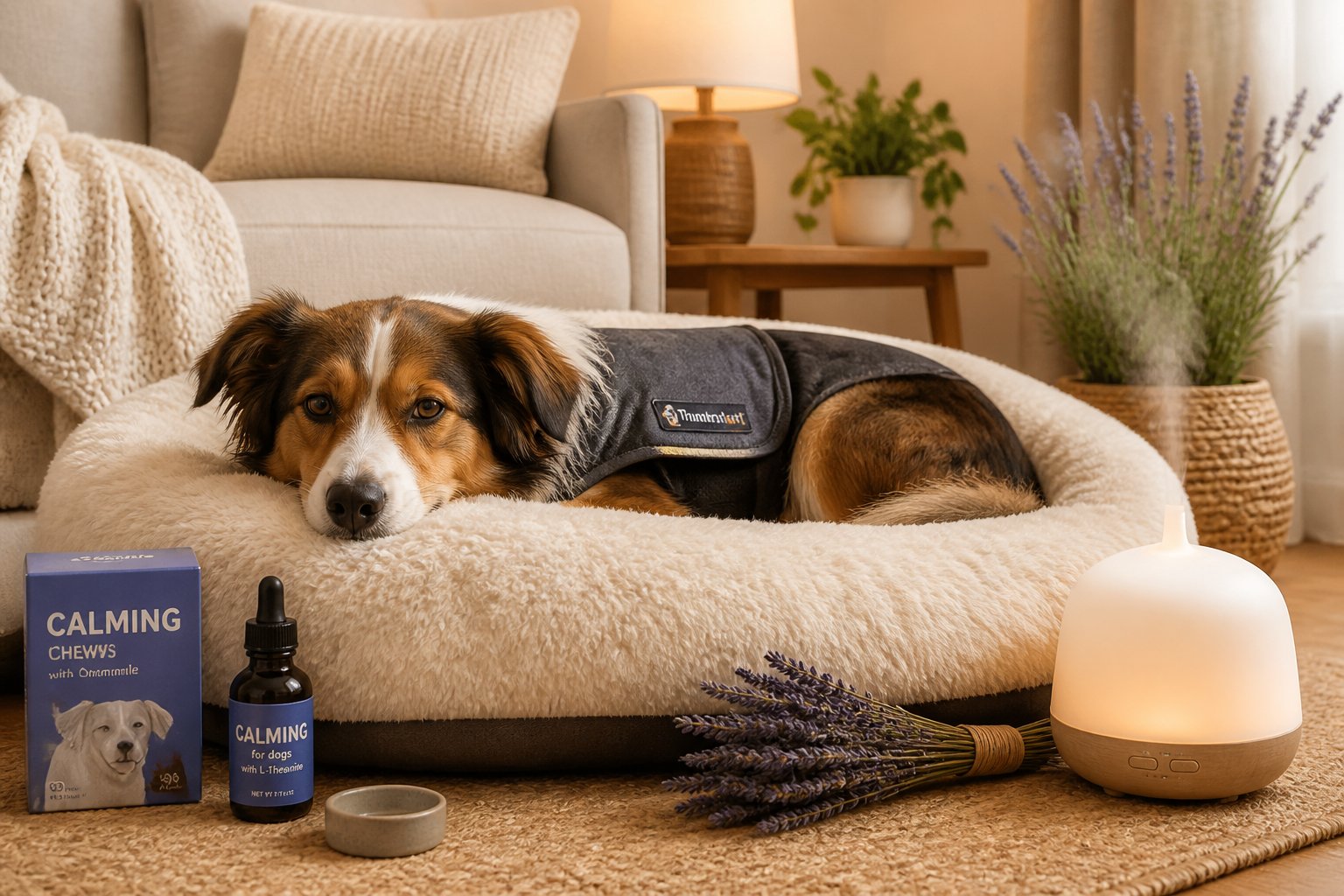
No single product eliminates travel anxiety, but the right combination of comfort tools can meaningfully support a calmer experience when paired with preparation and training. The key is using these tools as part of a routine, not as a last-minute fix on travel day.
How A Carrier Can Create A Cozy, Enclosed Space
A well-chosen carrier does more than transport your dog. When it is sized appropriately and introduced correctly, it becomes a familiar, enclosed space that helps comfort your dog during an otherwise unpredictable experience.
Dogs often feel more secure when they have boundaries around them, similar to the feeling of being tucked in rather than exposed. A carrier with a soft interior, good ventilation, and a dark, den-like feel gives your dog a consistent "home base" they can carry with them from the car to the airport to the plane. The carrier should be somewhere your dog already associates with positive experiences before travel day arrives.
Travel Comfort Items Like Blankets, Chews, And Travel Beds
Familiar scents are one of the most underused calming tools available. A blanket or small bed that smells like home gives your dog an olfactory anchor in an unfamiliar environment. Packing something with your scent on it can also help comfort dogs who get anxious when they cannot see you.
Long-lasting chews are useful during transit because chewing is a natural stress-relief behavior for dogs. They also keep a dog focused on something specific rather than scanning the environment for things to react to. Travel beds that offer enclosed, rounded sides add a similar sense of containment and can make a hotel room or car feel less open and unpredictable.
Calming Aids Owners May Ask About
Several over-the-counter calming aids come up frequently in conversations about travel prep:
- Pheromone diffusers and calming pheromone sprays (such as Adaptil) mimic the naturally occurring pheromones mother dogs produce and may help comfort some dogs in new environments. Spraying a small amount in the carrier before travel is a common use case.
- ThunderShirt and similar pressure wraps apply gentle, consistent pressure across the dog's body. These are widely used for noise sensitivity and travel stress and work well for some dogs, though not all.
- Zylkene is a supplement derived from a milk protein that some veterinarians recommend to support calm behavior during stressful events. It is not a sedative, but it is worth discussing with your vet before a trip.
None of these tools should be positioned as a guaranteed fix, and they work best when your dog has also had behavioral preparation. Use them to support calm routines, not replace them.
Choosing Travel Gear That Helps Dogs Feel More Secure
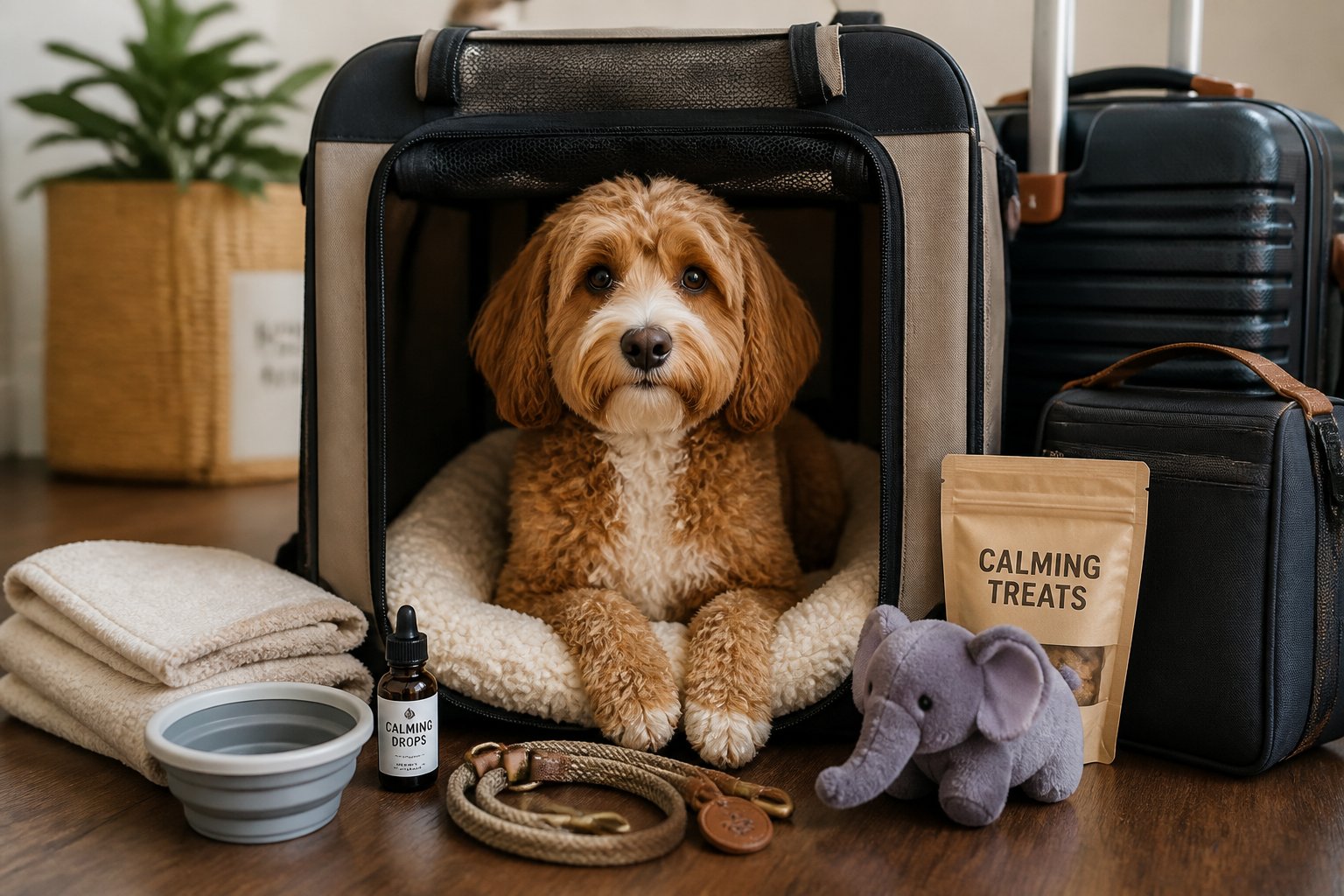
The gear you choose has a direct effect on how much stress your dog carries through a trip. Poorly fitting carriers, unsecured car setups, and unfamiliar equipment all add unnecessary chaos to an already stimulating experience. Choosing the right gear before you travel is one of the most practical things you can do for a nervous dog.
Carrier Features That Matter For Nervous Dogs
When you are evaluating carriers for an anxious dog, look beyond aesthetics. The features that matter most for comfort and security are:
- Soft interior padding that cushions movement and feels welcoming rather than clinical
- Ventilation on multiple sides so the dog gets airflow without feeling exposed
- A dark, enclosed top that creates a den-like feel rather than a fully open mesh design
- Secure zippers and closures that will not shift or open with movement
- A stable base that does not sway or tip, which can startle an already-tense dog
A carrier that wobbles, smells unfamiliar, or feels too large for your dog can increase anxiety rather than reduce it. Smaller dogs often feel more secure when the carrier fits them snugly rather than giving them too much empty space to slide around in.
Airline Fit And Under-Seat Confidence
One of the most common stressors for owners, not just dogs, is not knowing whether the carrier will fit under the seat on a flight. That uncertainty is fixable before you ever get to the airport.
Rover Ready is built specifically around this problem, offering size-comparison guidance for common airline cabin carrier requirements so you are not guessing on travel day. When you know your carrier meets your airline's under-seat dimensions, you board with confidence instead of dread. That calmer energy genuinely affects how your dog responds to the situation.
Checking your airline's specific measurements before purchasing a carrier is essential. Airlines vary, and what fits on one carrier may not meet another's requirements. Using an airline size guide to compare carrier dimensions ahead of your trip saves you from a stressful check-in situation that your dog will pick up on immediately.
Car Travel Setups That Reduce Chaos
Dogs who roam freely in a moving vehicle are not just a safety risk; allowing a dog to move around the car unsecured can actually increase anxiety because they cannot find a stable, settled position. A properly fitted car harness or secured crate gives your dog a consistent place to land, which supports calmer behavior on longer drives.
For small dogs who travel in a carrier during car trips, securing the carrier so it does not slide or tip on turns makes a noticeable difference. Place the carrier on a seat with the seatbelt looped through the handle or use a carrier specifically designed with a car-safe attachment point. Pairing that with a familiar blanket inside the carrier brings the den-like setup from air travel into the car context.
When To Get Professional Help Before A Trip
Home preparation goes a long way for most dogs, but there are situations where training on your own is not enough and pushing forward without support can make anxiety worse rather than better. Recognizing when to bring in a professional is part of responsible travel planning.
Signs Home Prep May Not Be Enough
Pay attention to whether your efforts are actually moving things forward. If your dog is not making any progress after two to three weeks of consistent desensitization work, or if the anxiety response is getting more intense rather than less, that is a signal worth taking seriously.
Other signs that warrant professional support include:
- Aggression that appears during travel prep or confinement
- Complete refusal to eat even high-value treats near travel equipment
- Self-injurious behavior like excessive scratching or chewing at paws
- Panic responses, such as frantic escape attempts, loss of bladder control, or non-stop vocalization
These responses go beyond typical travel nerves and suggest the dog needs a structured dog anxiety treatment plan from someone qualified to assess what is driving the behavior.
Working With Your Veterinarian
Your veterinarian is the right first call when anxiety symptoms are severe, when they seem to be getting worse with age, or when you are considering any supplement or medication support. A vet can rule out underlying health issues that might be contributing to anxious behavior, discuss whether short-term medication support makes sense for a specific trip, and refer you to a veterinary behaviorist if the situation calls for it.
Bring up travel specifically when you talk to your vet. Saying "my dog struggles during car rides and I have a flight coming up" gives them context to offer useful, situation-specific guidance rather than general advice. Treating dog anxiety is most effective when the professional has a clear picture of the actual triggers involved.
When A Trainer Or Behavior Specialist Makes Sense
A professional dog trainer who uses positive reinforcement methods can help you implement desensitization and counterconditioning correctly, especially if you are not sure whether your dog is actually progressing or just tolerating the sessions.
For more complex cases, a veterinary behaviorist is a veterinarian with advanced specialty training in animal behavior. They can diagnose behavioral conditions, prescribe medication when appropriate, and design a comprehensive behavior modification plan. This level of support is not overkill for dogs with significant travel anxiety; it is often the most efficient path to a real change.
When looking for a professional dog trainer or behaviorist, look for credentials such as CPDT-KA (Certified Professional Dog Trainer), CDBC (Certified Dog Behavior Consultant), or DACVB (Diplomate of the American College of Veterinary Behaviorists). These credentials indicate someone with formal, accountable training in behavior science rather than general experience alone.


