

Puppy Airline Carrier Guide for Safe In-Cabin Travel
A puppy airline carrier needs to do two things at the same time: fit under the seat and keep your dog calm, secure, and comfortable for the full trip. If you choose based on weight limits or marketing labels alone, you can end up with a carrier puppy setup that looks right online and fails at check-in.
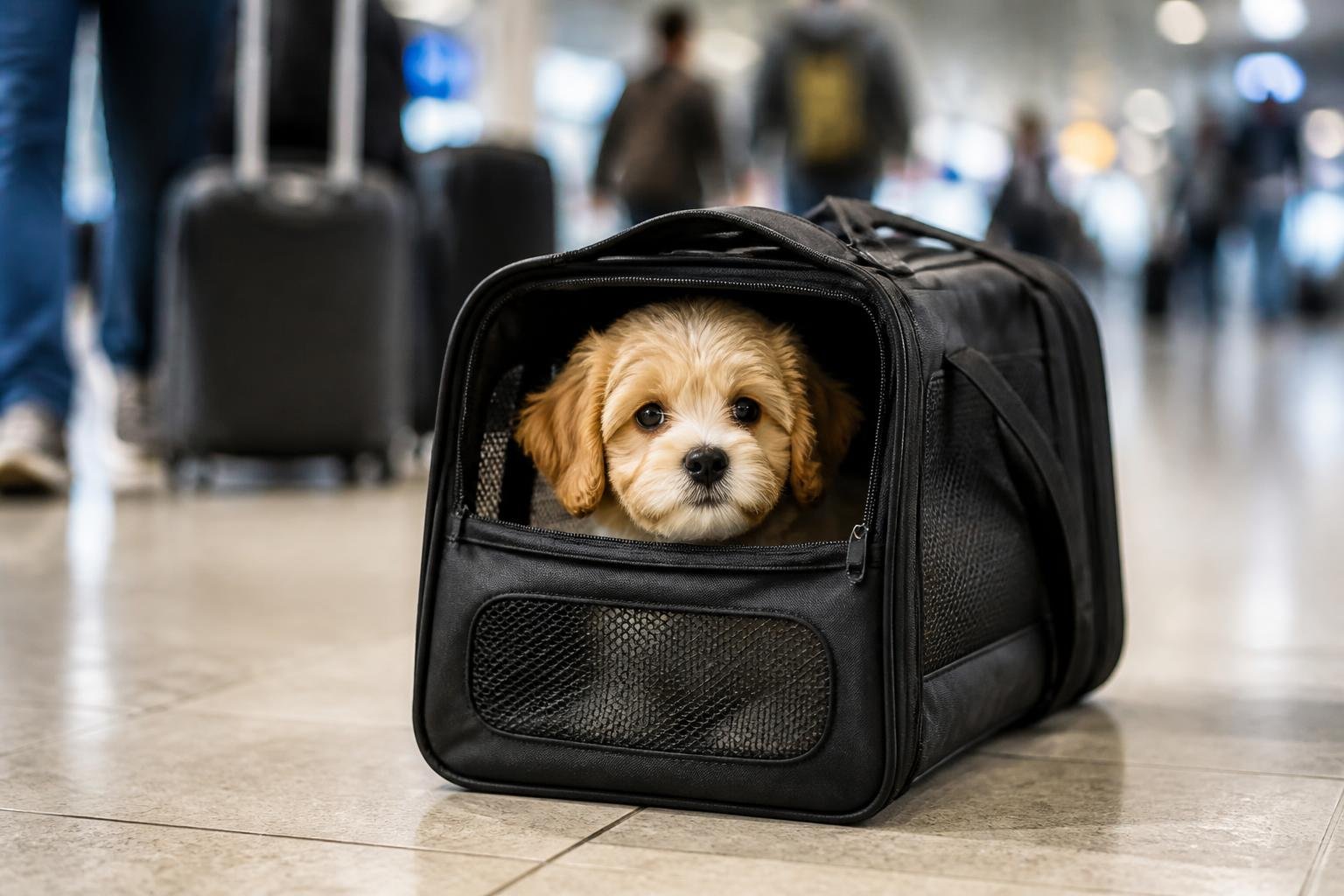
The best small puppy carrier is usually a soft-sided model that matches your airline’s under-seat dimensions first, then gives your puppy enough room to stand, turn, and lie down without excess space.
At Rover Ready, this is the issue we see most often. You want an airline approved pet carrier that feels safe to buy before flight day, not one that leaves you guessing at the airport.
If you want extra help comparing carrier dimensions to cabin rules, Rover Ready’s airline size guidance is built for that kind of planning. You can also reach the team at craig@roverreadyco.com or 803-630-1451.
Key Takeaways
- Prioritize under-seat fit before brand claims or listed weight limits.
- Soft-sided carriers usually give you the best chance of in-cabin approval.
- Test your pet travel carrier at home before you book your flight.
What to Look For in a Carrier for a Small Puppy
The right small puppy carrier balances airline fit, puppy comfort, and your ability to carry it through a busy airport. In practice, size and structure matter more than trendy features.
Under-Seat Fit Comes Before Weight Claims
Many listings highlight a pet’s maximum weight, and that can mislead you. A tiny puppy may be well under the stated limit and still be too tall or too long for the carrier once fully enclosed.
Always compare the carrier’s external dimensions to the airline’s under-seat allowance. The key issue is whether the pet travel carrier can compress enough to slide under the seat without collapsing onto your puppy.
How Much Room a Puppy Actually Needs
Your puppy should be able to stand, turn around, and lie down comfortably. That standard appears often in airline guidance and expert reviews, including The Spruce Pets airline-approved carrier review.
Do not size up too far just to “give more room.” A carrier that is too large can be refused in cabin, and a puppy can slide around more during boarding and taxi.
Why Soft-Sided Designs Usually Work Best in Cabin
A soft-sided pet carrier is usually the safest bet for cabin travel. It can flex slightly under the seat, is easier to carry, and tends to feel less rigid for a young dog.
An expandable pet carrier can be useful during layovers, though the expansion panels must stay closed during taxi, takeoff, landing, and any time crew instructions require full containment. For most U.S. flights, a soft, structured airline approved pet carrier gives you the best mix of compliance and comfort.
Airline Cabin Rules That Matter Before You Buy
Airline rules shape nearly every good buying decision. If you check them late, you may have to replace a carrier right before your trip.
Why Airline Approved Does Not Mean Guaranteed
“Airline approved pet carrier” and “airline-approved pet carrier” are useful labels, not promises. Airlines set their own pet rules, seat-space limits, route restrictions, and pet booking caps.
That means a carrier can be marketed for flights and still fail on a specific airline or aircraft. The AKC’s airline travel advice also points out that dog policies can change, which is why you should verify current rules before purchase and again before departure.
Common Size Ranges for Major Airlines
Many U.S. airlines allow in-cabin carriers in a range close to 17 to 18 inches long, 10 to 12 inches wide, and 9.5 to 11 inches high. The exact space can vary by airline, aircraft, and even seat row.
A soft-sided pet carrier has an advantage because slight compression often helps with under-seat fit. A hard-sided kennel has far less flexibility, which is one reason it is less common for in-cabin puppy travel.
How Rover Ready's Airline Size Guidance Helps You Compare
When you compare multiple airlines, the confusing part is not finding one number. It is matching carrier dimensions against different cabin allowances without guessing.
Rover Ready’s airline size guidance is useful when you want a fast comparison before you order a carrier or choose a flight. That kind of side-by-side check can save you from buying an airline approved pet carrier that fits one route and not the next.
Features That Improve Puppy Comfort and Safety
Small details make a real difference once your puppy is inside the carrier for more than an hour. The best pet travel carrier feels stable, ventilated, and easy to clean after a long day.
Ventilation, Visibility, and Scratch-Resistant Mesh
Good airflow matters more with puppies because they heat up and stress faster than older dogs. Look for mesh on at least two sides, and preferably three.
Scratch-resistant mesh holds up better if your puppy paws at the walls. In tested carrier picks reviewed by The Spruce Pets, strong mesh panels and enclosed construction were treated as key safety points for flights.
Locking Zippers, Interior Tethers, and Stable Bases
A soft-sided pet carrier should have zippers that clip, lock, or sit tight enough that a puppy cannot nose them open. Puppies test every weak point.
A stable base is just as important. If the floor sags, your puppy tends to brace and shift more.
An interior tether can add security during brief openings, though you should still keep your puppy fully contained when required.
Washable Pads, Leak Resistance, and Easy Cleaning
Accidents happen, especially with young dogs and travel stress. A removable, washable liner saves a lot of trouble.
Leak-resistant bottoms are worth paying for. Carriers with wipe-clean interiors are much easier to manage than plush interiors that absorb everything.
Choosing Between Popular Carrier Styles and Examples
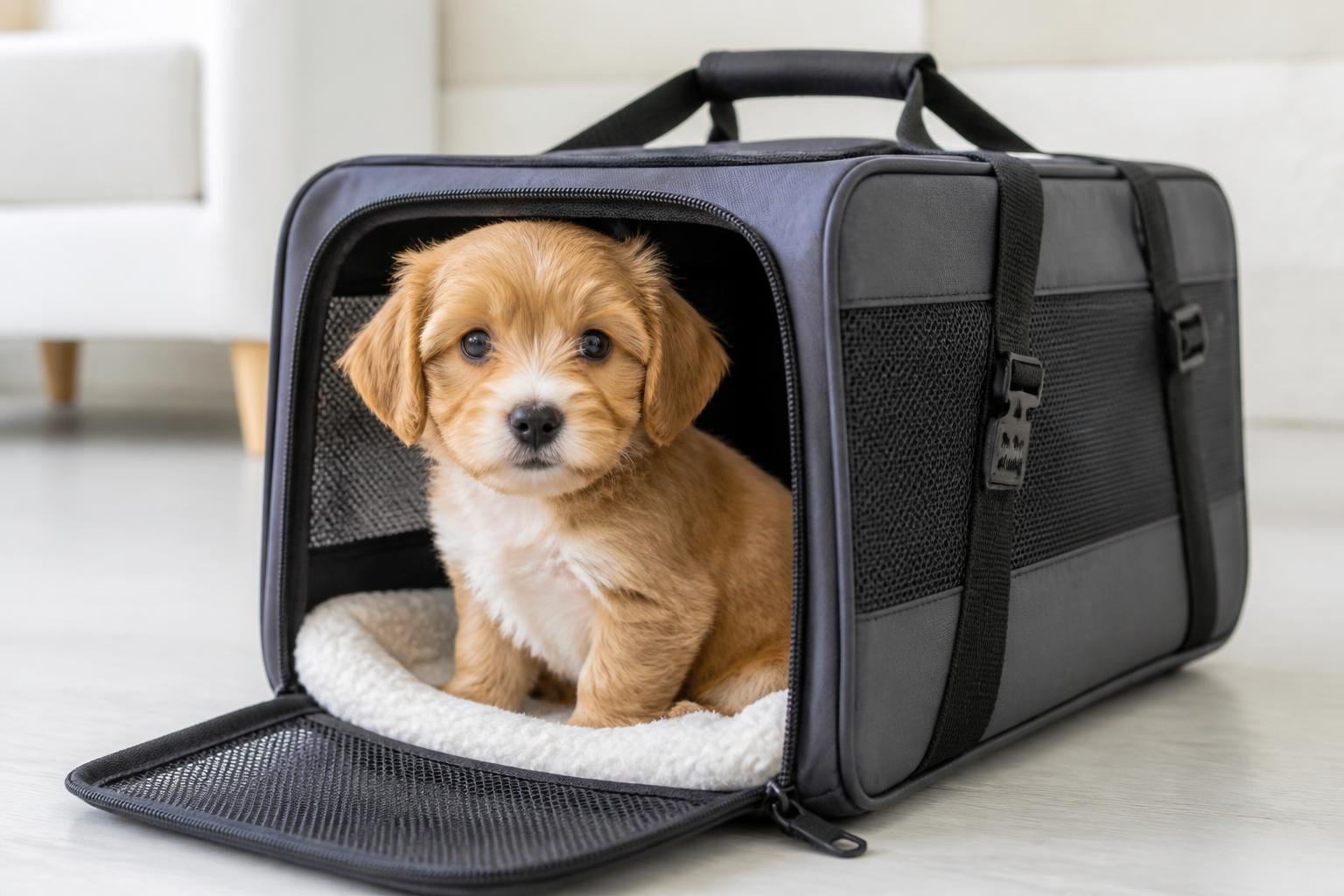
Carrier style changes how easy the trip feels for both you and your puppy. The best design depends on your route, your dog’s size, and how much airport walking you expect.
When an Expandable Design Makes Sense
An expandable pet carrier can be a smart choice for longer airport waits or layovers. It gives your puppy more room once you are off the plane and seated at the gate.
It helps most when your puppy is very small and you want extra comfort without buying a larger fixed-size carrier. Just make sure the base size still works as an in-cabin carrier when fully zipped.
When to Skip a Hard-Sided Kennel for In-Cabin Travel
A hard-sided kennel usually makes more sense for cargo or car use than for cabin travel. It does not compress, often weighs more, and is less forgiving under a tight airplane seat.
If your puppy is small enough to travel in cabin, a soft-sided pet carrier is usually the more practical option. Hard shells can work in limited cases, though they create more fit issues than they solve on most flights.
Examples Shoppers Often Compare
A few names come up often when you compare premium and budget options:
- Sleepypod Air for compressibility and airline-focused design
- Wild One Travel Carrier for style and structured build
- Henkelion Pet Carrier for lower-cost soft-sided travel
- Sherpa-style soft carriers for common under-seat use
When you compare examples, focus on actual dimensions, base support, ventilation, and zipper security. Reviews from broad roundups like NBC Select’s best dog travel carriers can be useful for narrowing your list, though your airline’s size rules still matter more than popularity.
How to Measure, Test, and Prepare Before Flight Day
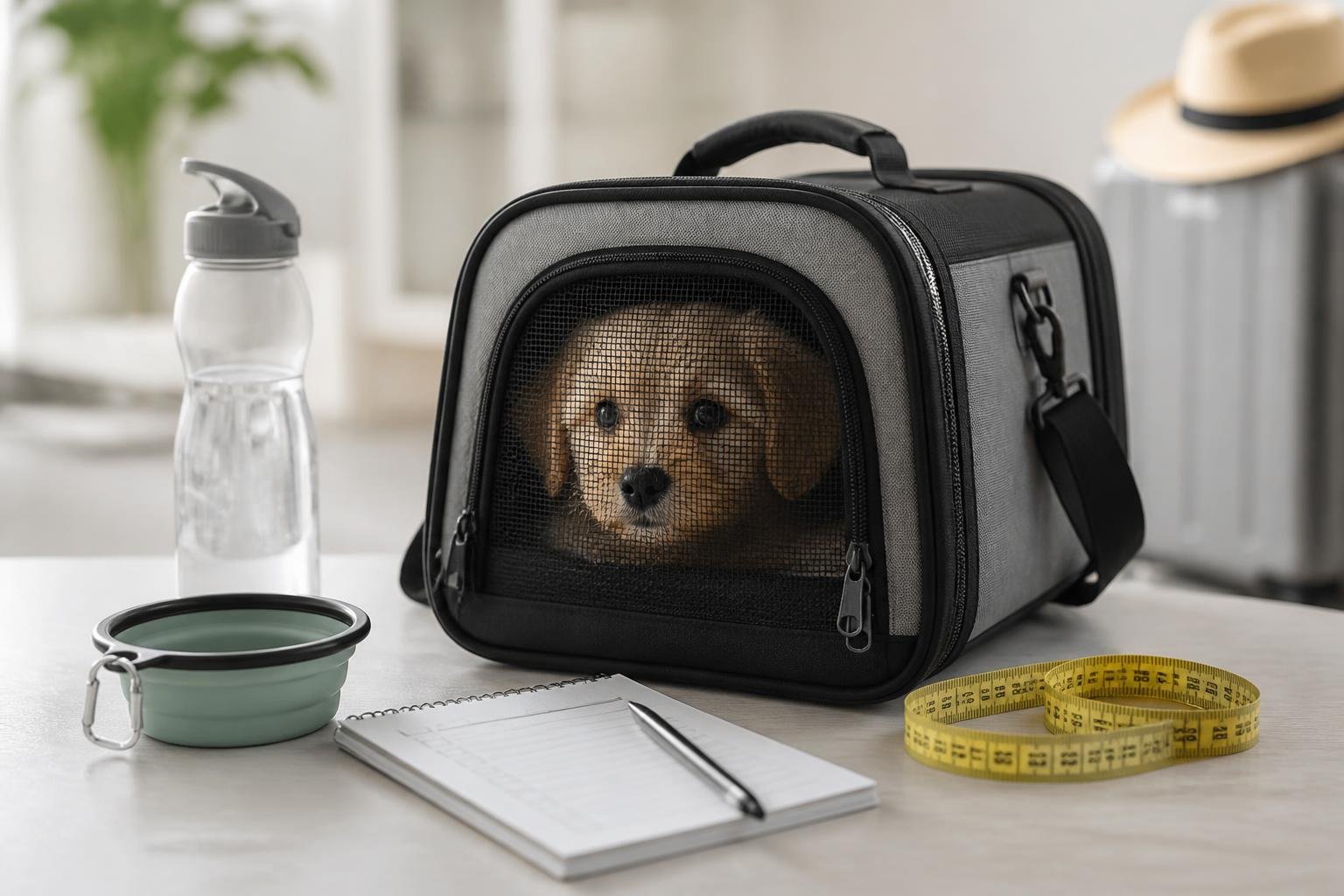
A good carrier choice starts with measuring and ends with testing. You should know how your puppy fits in real life, not just on paper.
Measure Your Puppy Standing and Lying Down
Measure your puppy from chest to floor for standing height, from nose to base of tail for body length, and across the widest part of the body. Then watch how your puppy lies down naturally, especially if they curl up tightly.
Those real-life positions matter more than breed labels. A compact puppy can fit comfortably in a smaller pet travel carrier than a longer, lankier puppy of the same weight.
Test the Carrier at Home Before Booking
Put your puppy in the airline approved pet carrier for short sessions before you commit to a flight. Close the zipper, carry it around the house, and place it under a table or desk to mimic under-seat space.
This step often reveals problems early. If your puppy panics, crouches because the roof is too low, or slides on the base, you still have time to switch carriers.
Pack the Right Travel Essentials for Check-In and Boarding
Keep your setup simple. Pack:
- Pee pads
- A small absorbent blanket or liner
- Wipes
- A collapsible water dish
- A few treats
- Your puppy’s paperwork
- A spare leash
Advice from flying with a puppy travel prep guides often stresses confirming pet space before booking. In-cabin pet spots are limited on many flights.
Where to Shop Smart and Avoid Common Buying Mistakes
Shopping for a puppy carrier is easier when you know what to ignore. The biggest mistakes usually come from trusting labels, skipping dimensions, or buying only on looks.
What to Check on Product Pages Before Ordering
Read the dimensions before you read the marketing. Check external size, internal floor area, base structure, ventilation panels, zipper type, and whether the pad is removable.
If you are comparing models like the Henkelion Pet Carrier, Wild One Travel Carrier, or Sleepypod Air, look for product photos that show the carrier under a seat or next to a ruler. Large marketplaces can be useful for variety, such as small dog airline carrier listings on Amazon, though you should verify specs carefully.
How Deals, Reviews, and Account Tools Can Help You Compare
Deals are helpful only if the carrier fits your airline and your puppy. A cheap carrier that gets rejected is not a deal.
Reviews can help you spot weak bases, snagging zippers, or mesh tears. If a store lets you save favorites in your account, compare dimensions side by side before ordering.
Red Flags That Signal a Poor Fit for Air Travel
Watch for these warning signs:
-
No exact dimensions listed
-
Only weight limits, no size guidance
-
Thin floor with no support
-
Minimal mesh ventilation
-
Weak zipper closures
-
No mention of fully enclosed travel
-
Tall profile that looks more like a tote than a cabin carrier
Retail roundups from places like Chewy’s dog carrier category can help you compare styles. Airline compliance still depends on the exact model and your flight.
Frequently Asked Questions
What size pet carrier will fit under an airplane seat?
Most in-cabin carriers for U.S. flights fall near 17 to 18 inches long, 10 to 12 inches wide, and 9.5 to 11 inches high. Your exact limit depends on the airline and aircraft, so check both before you buy.
Which features make a pet carrier airline-approved for in-cabin travel?
A carrier usually needs to be fully enclosed, ventilated, secure, and sized to fit under the seat. Soft-sided construction, locking zippers, and a stable base are common features.
How do I measure my puppy to choose the right carrier size?
Measure your puppy standing and lying down. You want enough room to stand, turn, and lie comfortably, while keeping the carrier small enough to meet under-seat rules.
What are the typical airline weight limits for pets traveling in the cabin?
Many airlines set combined pet-and-carrier limits in the range of about 15 to 20 pounds, though some vary. Even if your puppy is under the limit, the carrier still has to fit under the seat.
Are soft-sided or hard-sided carriers better for flying with a small dog?
Soft-sided carriers are usually better for in-cabin travel because they can flex slightly and are easier to fit under the seat. Hard-sided carriers are more common for cargo or non-flight use.
How can I help my puppy stay calm and comfortable in a carrier during a flight?
Start carrier training at home well before the trip. Use short practice sessions with a familiar blanket.
Handle your puppy calmly. Make sure the carrier is clean, stable, and has good airflow so your puppy treats it like a safe resting spot.


