

Airline Pet Rules for Flying With Dogs and Cats
Flying with a dog or cat involves more planning than most people expect the first time around. Each airline sets its own rules for things like carrier size, pet fees, and how many animals are allowed on a single flight. What works on one carrier might not work on another, and the rules can even shift depending on the aircraft type or route.
The most important thing you can do before booking is verify your carrier fits under the seat and that your airline actually has space for a pet on your specific flight.
That combination, the right carrier size and a confirmed reservation, is what keeps you from getting turned away at check-in. Resources like Rover Ready are built around exactly this problem: helping pet parents find travel-ready carriers and understand airline sizing requirements before they reach the gate. If you are actively shopping for a carrier or trying to decode your airline's rules, visiting Rover Ready is a solid first step.
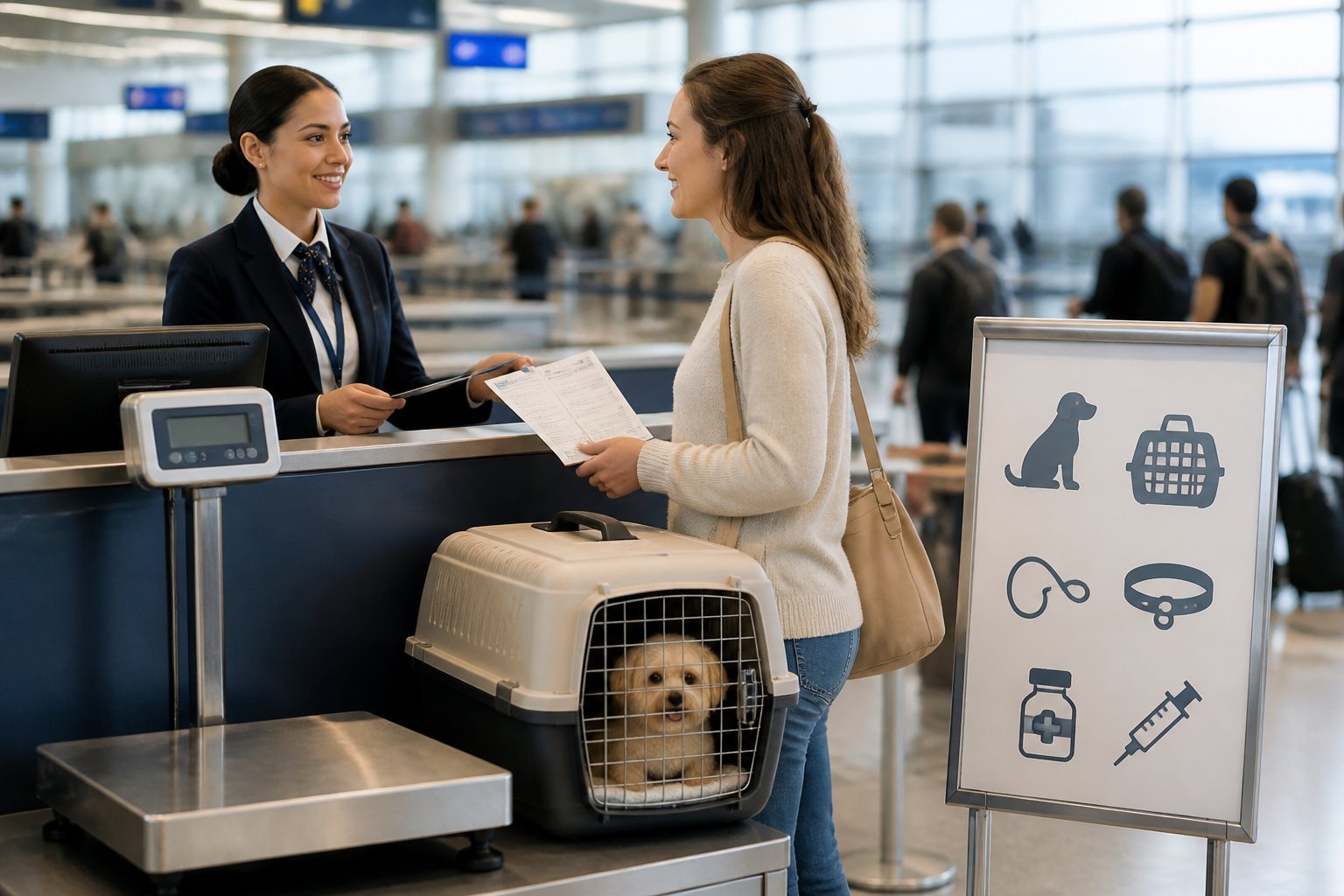
Flying with your pet does not have to be overwhelming. Knowing what airlines require before you book, what carrier features actually matter, and what to bring on airport day will get you most of the way there. This guide covers all of it in plain terms.
What Most Airlines Require Before You Book
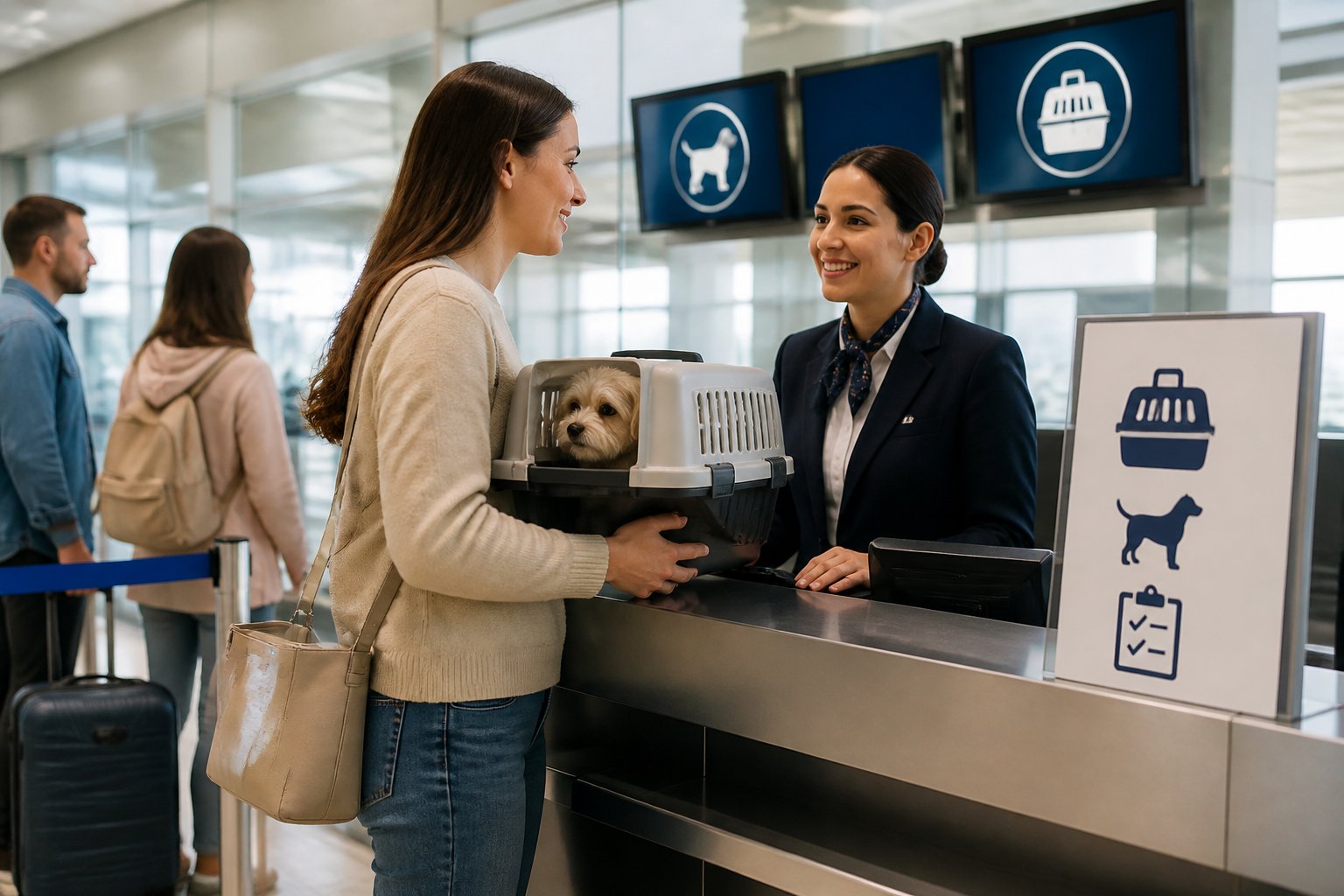
Most airlines require you to notify them about your pet at the time of booking, pay a pet fee, and use an approved carrier that fits under the seat. Fees typically range from $95 to $150 each way for in-cabin pets, and most flights cap the number of animals allowed on board, so reserving early matters.
In-Cabin Vs. Cargo: The First Rule That Changes Everything
The first decision is whether your pet travels in the cabin with you or goes into cargo. For most small dogs and cats, in-cabin travel is the goal. Your pet stays in an airline-approved carrier tucked under the seat in front of you for the entire flight.
Cargo is a different process, often used for larger pets that cannot fit in a cabin carrier. Some airlines, like Delta, have dropped their cargo pet programs entirely. Others, like Alaska Airlines, still offer it. If your pet is too large for cabin travel, you will need to verify cargo availability with your specific airline well before your trip.
The short version: if your dog or cat fits comfortably in a soft-sided carrier that slides under the seat, in-cabin travel is usually the simpler and less stressful option.
Why Under-Seat Fit Matters More Than Product Labels
A carrier labeled "airline approved" does not guarantee it will pass at check-in. Airlines set their own under-seat dimensions, and those dimensions vary. A bag that fits easily on one carrier's aircraft might be too tall or too wide on another.
According to a detailed comparison of major U.S. airline pet policies, carrier size limits range from roughly 17 to 18.5 inches in length depending on the airline, with height and width limits varying just as much. The only number that truly matters is whether your specific carrier fits under the seat on your specific aircraft. Always check the airline's published dimensions and compare them to your carrier's actual measurements before you book.
How Airline Limits on Pets Per Flight Affect Reservations
Most airlines cap how many pets can travel in the cabin on any given flight. Delta, for example, limits the main cabin to four pets per flight. Southwest caps carriers at six per flight. Some airlines do not let you reserve a pet spot when you book online, which means you need to call and confirm.
If you wait until the last minute, you may find no space is available even if you have the right carrier and all the paperwork. Call your airline as soon as your travel dates are set and ask specifically about pet cabin availability on your route.
How To Choose A Carrier That Matches Real Airline Limits
Choosing a carrier is not just about finding something your pet fits into. The carrier has to meet your airline's specific dimension requirements, stay under the seat for the whole flight, and keep your pet comfortable through the process. The material, structure, and features all play into whether a carrier actually works on travel day.
Soft-Sided Vs. Hard-Sided Options for Cabin Travel
Soft-sided carriers are the standard choice for in-cabin travel. They compress slightly to fit into tighter under-seat spaces, which is one reason airlines often prefer or require them. According to carrier size guidance from Mr. Peanut's Pet Carriers, soft-sided carriers are better suited to the variable geometry under different aircraft seats than rigid-walled options.
Hard-sided carriers can work for cabin travel on some airlines. American Airlines, for instance, allows hard-sided carriers up to 19" x 13" x 9". But hard carriers do not compress, so the fit has to be exact. If you choose a hard-sided bag, measure the under-seat space for your specific aircraft type before buying.
Carrier Features Airlines Commonly Expect
Beyond dimensions, there are features that show up consistently across airline requirements:
- Leak-proof bottom to contain any accidents during the flight
- Adequate ventilation on at least two or three sides
- Secure closures that your pet cannot open mid-flight
- No protruding wheels or frames that prevent a flat fit under the seat
Some airlines also require that your pet be able to stand, turn around, and lie down naturally inside the carrier. This matters more for sizing than for any particular product feature, but it is worth confirming before you buy.
Why Expandable Designs Help During Layovers but Not During Taxi, Takeoff, or Landing
Some soft-sided carriers include an expandable panel that allows more interior room when the carrier is not under the seat. This feature is genuinely useful during a long layover or while waiting at the gate, giving your pet a bit more space to shift around.
The catch is that during taxi, takeoff, and landing, the carrier must be fully collapsed and stored under the seat. Your pet is not allowed out, and the expanded panel cannot hang into the aisle. So while the expandable feature improves layover comfort, it does not change the under-seat fit requirement during the flight itself. Factor that in when deciding whether the added bulk of an expandable design is worth it for your trip.
How To Measure Your Pet and Avoid Size Mistakes
Getting your carrier dimensions right starts with measuring your pet accurately. Most size mistakes happen because travelers pick a carrier based on weight alone, which misses the body length and height that actually determine whether a dog or cat fits comfortably inside. Carrier dimensions and your pet's body shape both factor into a practical fit.
Body Measurements That Matter More Than Weight Alone
Weight limits are set by the airline and typically include the carrier, but body measurements tell you whether your pet can actually move around safely once inside. The two most important measurements are:
- Length: Measure from the tip of the nose to the base of the tail
- Height: Measure from the floor to the top of the head or the top of the ears, whichever is taller
A general rule used by many pet travel guides is to add 2 to 4 inches to each body measurement when choosing a carrier. This gives your pet enough room to shift positions without the carrier being so oversized it fails the airline's dimension limits. A step-by-step measuring guide from Best Pet Travel recommends confirming that your pet can stand, turn around, and lie down naturally inside the carrier before travel day.
How To Compare Your Carrier With Airline Size Rules
Once you have your pet's measurements and your carrier's internal dimensions, you need to stack those against your airline's published limits. Airlines publish their carrier dimension limits in length, width, and height, usually in that order.
Keep in mind that internal dimensions and external dimensions are different. A carrier listed as 18" x 11" x 11" on the outside may have an interior closer to 16" x 9" x 9" once the frame and padding are accounted for. Always check the product's internal measurements against your airline's limits, not just the external size. The Rover Ready Airline Size Guide is a useful starting point for comparing common cabin carrier requirements across major airlines before you shop.
When Breed and Body Shape Can Affect Travel Plans
Breed matters beyond just size. Brachycephalic breeds, dogs and cats with flat faces like Bulldogs, French Bulldogs, Pugs, and Persian cats, face additional restrictions on many airlines. The pushed-in facial structure makes it harder for them to regulate breathing under stress or in warm environments.
Some airlines restrict brachycephalic breeds from cargo entirely. Others require extra documentation or may deny boarding under certain weather conditions. Even for in-cabin travel, these breeds need extra airflow and should never be in a tightly packed carrier without good ventilation. Before you book, confirm your airline's specific breed policy in writing so there are no surprises at the gate.
Fees, Documents, and Policy Details To Double-Check
Pet fees, health paperwork, and the rules around service animals are three areas where travelers get caught off guard more than almost anywhere else in the process. The fees add up quickly, the document requirements shift by destination, and the rules around emotional support animals have changed significantly in recent years.
Typical Pet Fee Ranges and How They Are Charged
For domestic U.S. flights, in-cabin pet fees currently range from about $99 to $150 each way, depending on the airline. A round trip means you pay twice. According to a current breakdown of airline pet policies, Frontier charges the lowest at $99 each way, while American, Delta, United, and JetBlue each charge $150 each way. Southwest sits in the middle at $125.
The fee is almost always per carrier, not per pet. On airlines that allow two pets of the same species in one carrier, like Alaska Airlines, you pay one fee for both animals. The pet fee is typically charged at booking or at check-in, depending on the carrier.
Health Records, Rabies Paperwork, and Destination-Specific Forms
Domestic travel usually requires minimal paperwork, but international travel is a different situation. Most countries require a USDA-endorsed health certificate from a federally accredited veterinarian, completed within 10 days of departure. A current rabies vaccination is standard across nearly all destinations.
Beyond that, requirements vary significantly by country. The European Union requires a microchip and an EU-format health certificate. Hawaii has its own rabies quarantine protocols despite being a U.S. state, requiring specific pre-travel testing and timing. If you are traveling internationally, a complete guide to pet travel documentation recommends starting the paperwork process three to six months before your trip. Waiting until the last few weeks is a genuine risk.
What To Know About Service Animals and Emotional Support Animals
The rules on this changed in 2021 and the update still catches travelers off guard. Emotional support animals are no longer given special treatment on U.S. airlines. Since the DOT updated its guidelines, every major carrier treats ESAs the same as regular pets: same fees, same carrier requirements, same restrictions. An ESA letter carries no weight at the airport.
Trained service dogs are handled differently. A service dog can fly free in the cabin under DOT rules, but your airline will require you to submit specific federal forms, typically including a Service Animal Air Transportation Form and a Service Animal Relief Attestation, at least 48 hours before departure. Only dogs qualify as service animals on commercial flights. Psychiatric service dogs also fly free but may require additional documentation depending on the airline.
Airport Day Rules That Catch Travelers Off Guard
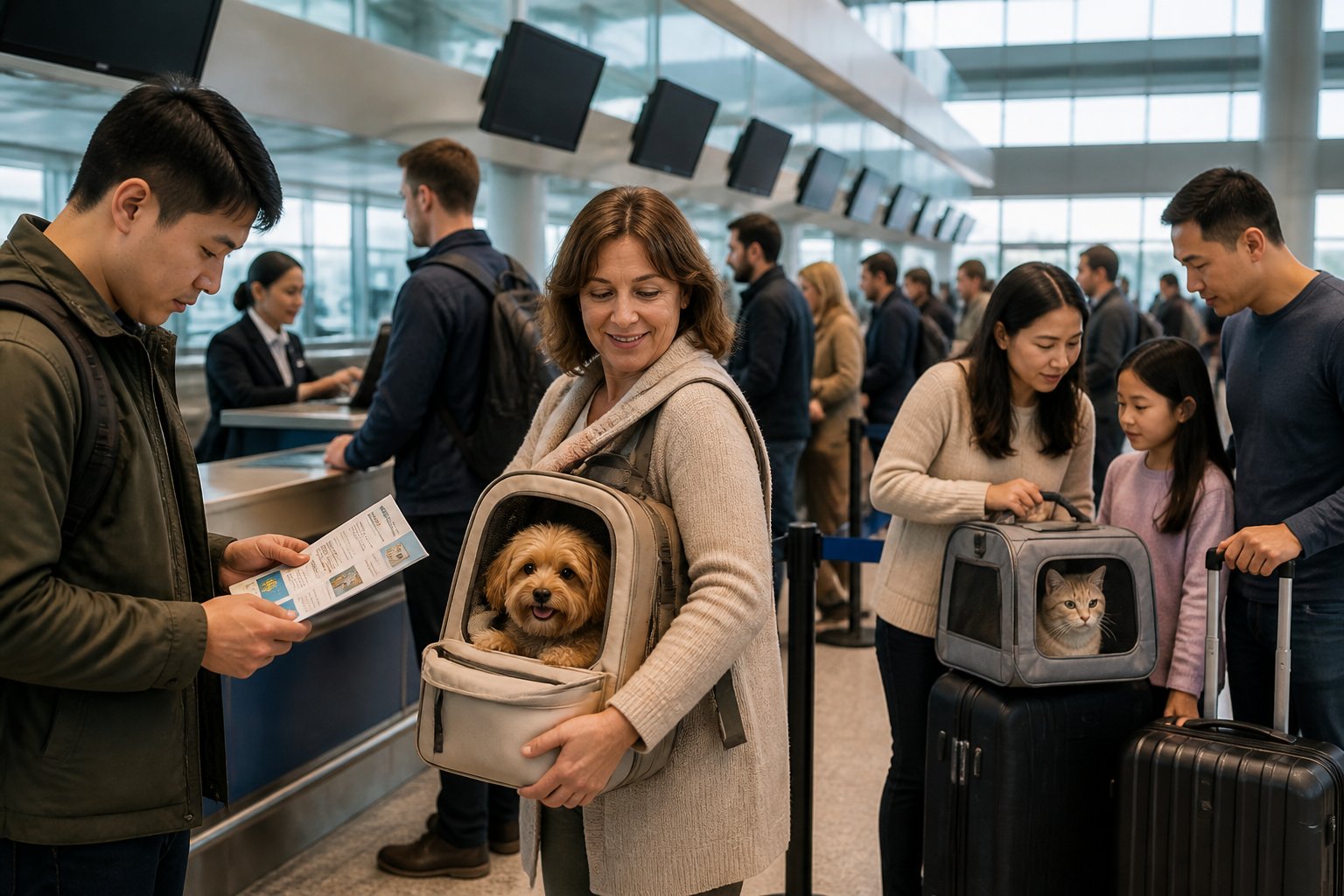
Even when your carrier is the right size and your paperwork is in order, airport day brings its own set of surprises. The check-in process, security screening, and layover logistics all work a little differently when you have a pet with you.
Check-In Timing, Screening, and Keeping Your Pet Secure
Arrive earlier than you normally would. Adding a pet to your check-in takes extra time, and some airlines require you to stop at a staffed counter to have your carrier verified in person before you can proceed to security. Do not assume a mobile check-in or kiosk will handle everything.
At the security checkpoint, TSA requires you to remove your pet from the carrier and carry them through the metal detector while the carrier goes through the X-ray machine on the belt. Have a secure grip ready and use a harness if your dog tends to bolt. The carrier goes back on after you clear the checkpoint.
Food, Water, and Comfort Supplies To Pack
Keep feeding simple on travel day. A light meal four to six hours before departure reduces the chance of nausea or an accident in the carrier during the flight. Water is trickier since most in-cabin carriers do not have attached bowls, but a small collapsible bowl and a bottle of water work well during layovers.
Pack a small bag with travel essentials within easy reach, not buried in your checked luggage. Useful items include:
- Pet wipes for quick cleanups
- A small absorbent pad for the carrier bottom
- Your pet's vaccination records and health certificate
- A favorite toy or worn item with a familiar scent to help your pet stay calm
Finding a Pet Relief Area Before Boarding or During a Layover
Most major U.S. airports have designated pet relief areas, though the locations are not always obvious. A quick search for your departure airport's map before you leave home will show where these are. Most are located before security, so plan on using them when you first arrive.
During a layover, finding a pet relief area inside the terminal is harder. Some airports have indoor relief stations past security; many do not. If your layover is long enough to leave the secure area and re-enter, check whether your airport supports that option. Keep pet wipes and a small pad handy as a backup for shorter connections where leaving the terminal is not practical.
How Rover Ready Helps You Travel With More Confidence
Navigating airline pet rules is genuinely easier when you have a reliable starting point for carrier selection and sizing. Rover Ready focuses specifically on that gap: helping dog owners find carriers built around real airline requirements, so you spend less time second-guessing and more time preparing for the actual trip.
Using Airline Size Guides To Compare Common Cabin Rules
One of the more useful things Rover Ready provides is a dedicated Airline Size Guide that lets you compare common cabin carrier requirements across major airlines before you shop. Rather than bouncing between airline websites and trying to cross-reference dimension tables manually, you can use that guide as a starting point to understand what size range your carrier needs to fall within.
This is especially helpful if you are still in the early stages of planning and have not yet chosen an airline. Seeing the size differences side by side makes it easier to choose a carrier that gives you flexibility across multiple carriers, rather than one that only works for a single route.
Choosing Travel Gear for Flights, Road Trips, and Lower-Stress Travel
Rover Ready's product focus goes beyond just cabin carriers. The site covers airline approved dog carriers alongside dog travel essentials and car travel gear, which is useful if your dog needs to be comfortable in multiple settings throughout a trip. A carrier that works on a flight but falls apart in a rental car is not a complete travel solution.
Comfort and safety are consistent themes across the gear Rover Ready highlights. For a first-time traveler with a dog or cat, having a resource that curates specifically for travel use, rather than general pet products, saves a lot of time and guesswork during the shopping process.
Why Final Confirmation Should Always Come From the Airline
Rover Ready is clear about something worth repeating: no guide, size chart, or product description should be treated as the final word on whether your carrier will be accepted at the gate. Airline pet policies shift, aircraft seat configurations vary, and individual gate agents can interpret rules differently.
After using any size guide or shopping resource, your last step before travel should always be a direct call or written confirmation with your airline. Ask specifically about your carrier's dimensions, your route, and your aircraft type. Get confirmation of your pet reservation in writing if possible. That combination, a well-chosen carrier confirmed against your airline's own current rules, is what actually gives you confidence at check-in.


