

American Air Pet Policy: What To Know Before Flying
Flying with your dog on American Airlines takes more preparation than most people expect. The rules around carrier size, pet fees, and eligible routes can catch you off guard if you wait until the last minute to look them up.
Knowing what to expect before you book makes a real difference at the airport.
The American Airlines pet policy allows small dogs to travel in the cabin as long as they fit in an approved carrier that stays under the seat for the entire flight. That one rule shapes everything from which carrier you buy to how you pack for your trip.
Getting it right means less stress at check-in and a smoother experience for both you and your dog.
At Rover Ready, helping dog owners cut through the confusion around airline pet rules is a core part of what the brand does. Whether you're flying for the first time with your dog or just want to double-check the current rules, this guide walks you through everything that matters.
Reach out at craig@roverreadyco.com or call 803-630-1451 if you want help finding a carrier that fits before your trip.
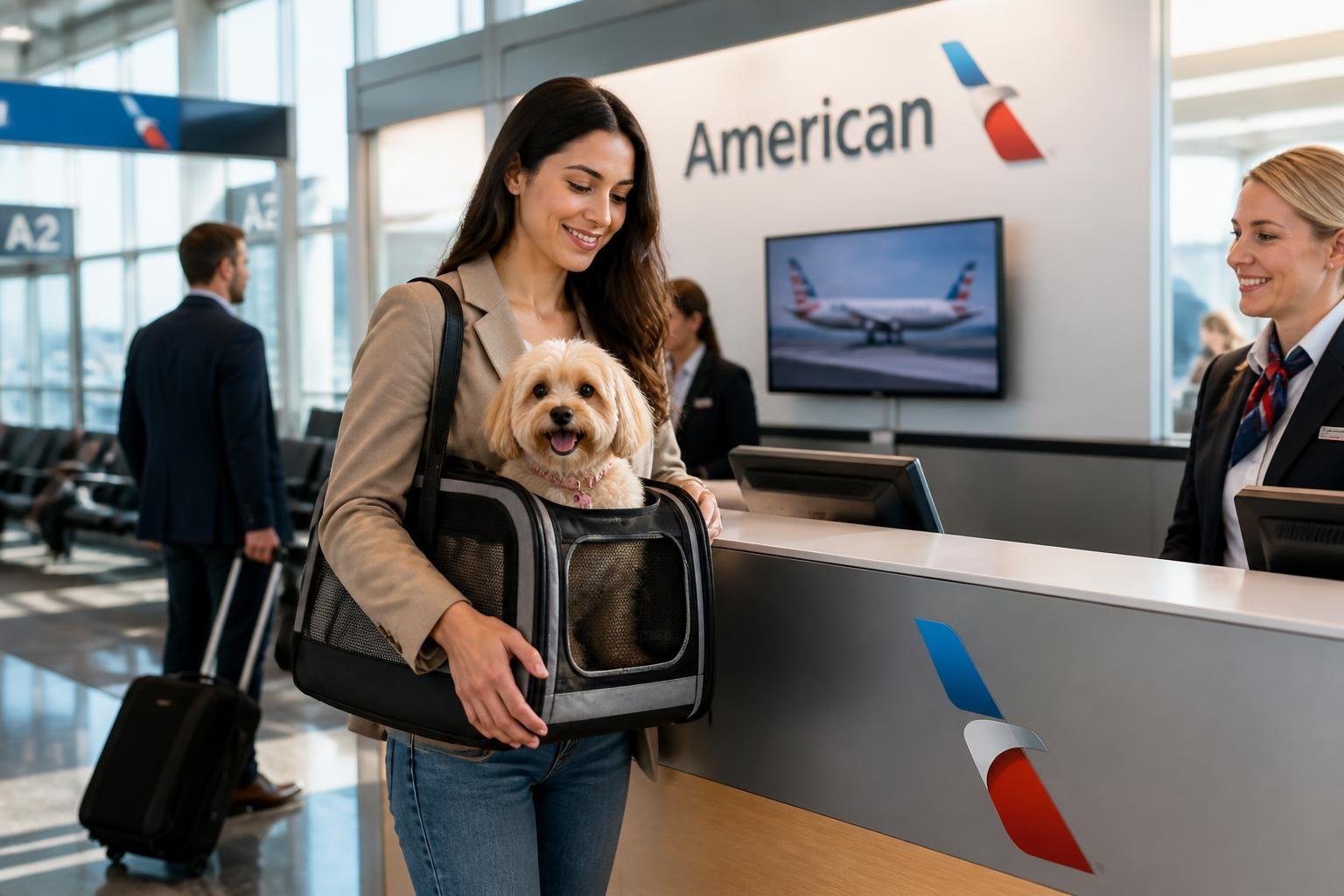
The details below cover cabin eligibility, carrier sizing, fees, route restrictions, and what to do on travel day. Each section gives you practical, specific information so you can walk into the airport feeling prepared.
Can Your Dog Fly In The Cabin On American Airlines?
In-cabin pet travel on American Airlines is available for small dogs and cats that meet specific size, age, and destination rules. Not every dog qualifies, and the requirements go beyond just weight.
Eligible Pets And Basic Cabin Rules
According to the American Airlines pet policy, carry-on pets are limited to cats and dogs. Your dog must stay inside the carrier and under the seat in front of you for the entire flight, without exception.
There is no lap time allowed, even on short trips. You are allowed to bring one pet carrier as a carry-on.
With it, you can bring either a personal item or a full-sized carry-on bag that fits in the overhead bin, but not both. Pet strollers must be checked at the ticket counter and standard checked bag fees apply.
Age, Size, And Under-Seat Fit Requirements
Your dog must be old enough to travel, which generally means at least eight weeks of age and fully weaned. The carrier itself must fit under the seat in front of you, and your dog must be able to stand, turn around, and lie down comfortably inside it.
A carrier that technically meets the size limit but leaves your dog cramped can still create problems at boarding. As noted in a detailed breakdown by DogChart, both the carrier dimensions and your dog's behavior inside the carrier matter to airline staff.
A dog that cannot settle inside the carrier may be flagged even if the measurements are technically correct.
When In-Cabin Travel Is Not Allowed
In-cabin travel is not available on all routes or aircraft types. Flights longer than 12 hours are not eligible.
Certain international destinations also restrict or prohibit in-cabin pets entirely. If your dog is too large to fit under the seat, the only options are American Airlines Cargo through the PetEmbark service or, for active-duty military, checked pet travel.
There is no general checked pet option for civilian travelers.
Carrier Size Rules That Matter Before You Book
Picking the right carrier is one of the most important steps in preparing for a flight with your dog. Soft-sided dimensions differ from hard-sided ones, and measuring correctly avoids problems at the gate.
Recommended Soft-Sided And Hard-Sided Dimensions
American Airlines recommends soft-sided carriers for most cabin travel because they compress slightly to fit under the seat more easily. According to PetsTravelInfo, hard-sided carriers used on American Eagle flights should measure no larger than 16 x 12 x 8 inches (40 x 30 x 20 cm).
Soft-sided carriers have more flexibility in practice, but you should always verify current dimensions directly with the airline before booking since limits can vary by aircraft. The under-seat space also varies by plane type and seat location.
Bulkhead seats, for example, often have less floor space, which can affect whether your carrier fits at all.
How To Measure For Comfort And Compliance
Measure your carrier's length, width, and height before you buy. Then measure your dog from nose to tail and from the floor to the top of their head while standing.
Your dog should have a few inches of clearance in each direction inside the carrier. A tight fit is uncomfortable for your dog and can flag a problem during boarding.
Practice loading your dog into the carrier at home well before your trip. A dog that enters and settles quickly makes the check-in process much easier for everyone involved.
Why Rover Ready Focuses On Under-Seat Confidence
One of the most common stressors for dog owners flying with their pets is not knowing whether the carrier will actually fit. Rover Ready addresses this directly by curating carriers built around airline under-seat dimensions and offering airline size comparison guidance to remove the guesswork.
Choosing a carrier that is tested for under-seat fit means you arrive at the airport with confidence rather than concern.
Fees, Reservations, And Flight Limits
Understanding the cost and logistics of adding a pet to your American Airlines reservation helps you avoid surprises at the airport. Fees are set per kennel, per direction, and are non-refundable once paid.
What Pet Fees To Expect
The carry-on pet fee on American Airlines is $150 per kennel, each way, for travel within and between the United States, Canada, Mexico, Central America, and eligible Caribbean destinations. As noted in a comparison of airline pet fees, American sits among the higher-priced domestic carriers for in-cabin pets.
Fees are paid at the airport using a credit card or paper voucher. Cash and checks are not accepted.
All pet fees are non-refundable. If your trip includes a voluntary stopover or connection of more than four hours, the fee applies again for each segment.
How To Add A Pet To Your Trip
You can add a carry-on pet to your reservation online, through the American Airlines app, or by calling reservations. Adding your pet early is important because the number of pet carriers allowed per flight is limited.
Waiting until check-in may mean your pet cannot board, even if you have paid. The American Airlines check-in guide from AirAdvisor recommends arriving at the airport with plenty of extra time when traveling with a pet.
Route And Flight Duration Restrictions
American Airlines limits in-cabin pet travel to flights of 12 hours or less. Longer flights, transatlantic routes, and certain international destinations do not permit carry-on pets.
Your specific route matters more than just origin and destination, especially on itineraries with connections operated by partner airlines.
Route Restrictions, International Limits, And Aircraft Considerations
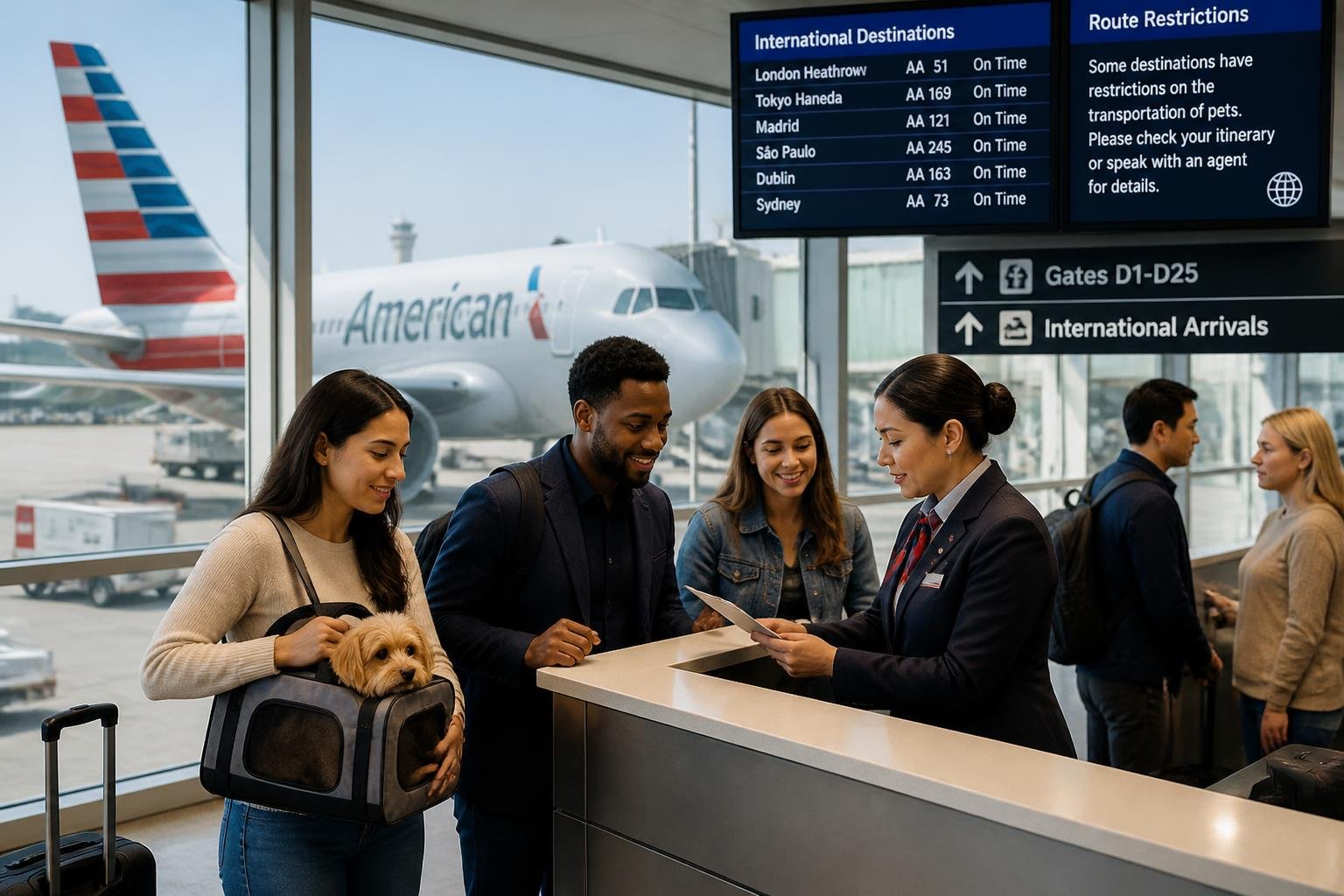
The routes where American Airlines allows in-cabin pets are clearly defined, but the rules shift significantly once you move outside domestic travel. The type of aircraft and who operates your flight can change the rules entirely.
Domestic Versus International Differences
Within the 48 contiguous United States, pet travel in the cabin is generally straightforward as long as your carrier and dog meet the size and age requirements. Travel to Alaska, Puerto Rico, St. Thomas, and St. Croix is also permitted.
According to the American Airlines pet travel page, travel to Canada and Mexico is allowed but may come with additional special restrictions that apply on a destination-by-destination basis.
Transatlantic And Destination-Based Restrictions
Transatlantic flights are not eligible for in-cabin pet travel on American Airlines. This means routes to the United Kingdom, Europe, and most other long-haul international destinations are off-limits for carry-on pets.
If you are traveling internationally with your dog, checking the destination's entry requirements is just as important as checking the airline's rules. Some countries have strict import regulations for dogs that go beyond what any airline requires.
The CDC also has updated requirements for bringing dogs into the United States, which apply on return trips regardless of airline.
Why Operating Airline Rules Can Change The Trip
If your itinerary includes a flight "operated by" a partner airline, American Airlines does not collect or control the pet policy for that segment. You will need to check in separately with the operating carrier and pay their fees directly.
This matters most on regional or connecting flights that show an American flight number but are actually flown by a different carrier. Always look for the words "Operated by" on your ticket before assuming American's rules apply to every leg of your trip.
How To Prepare For Check-In And Boarding With Less Stress
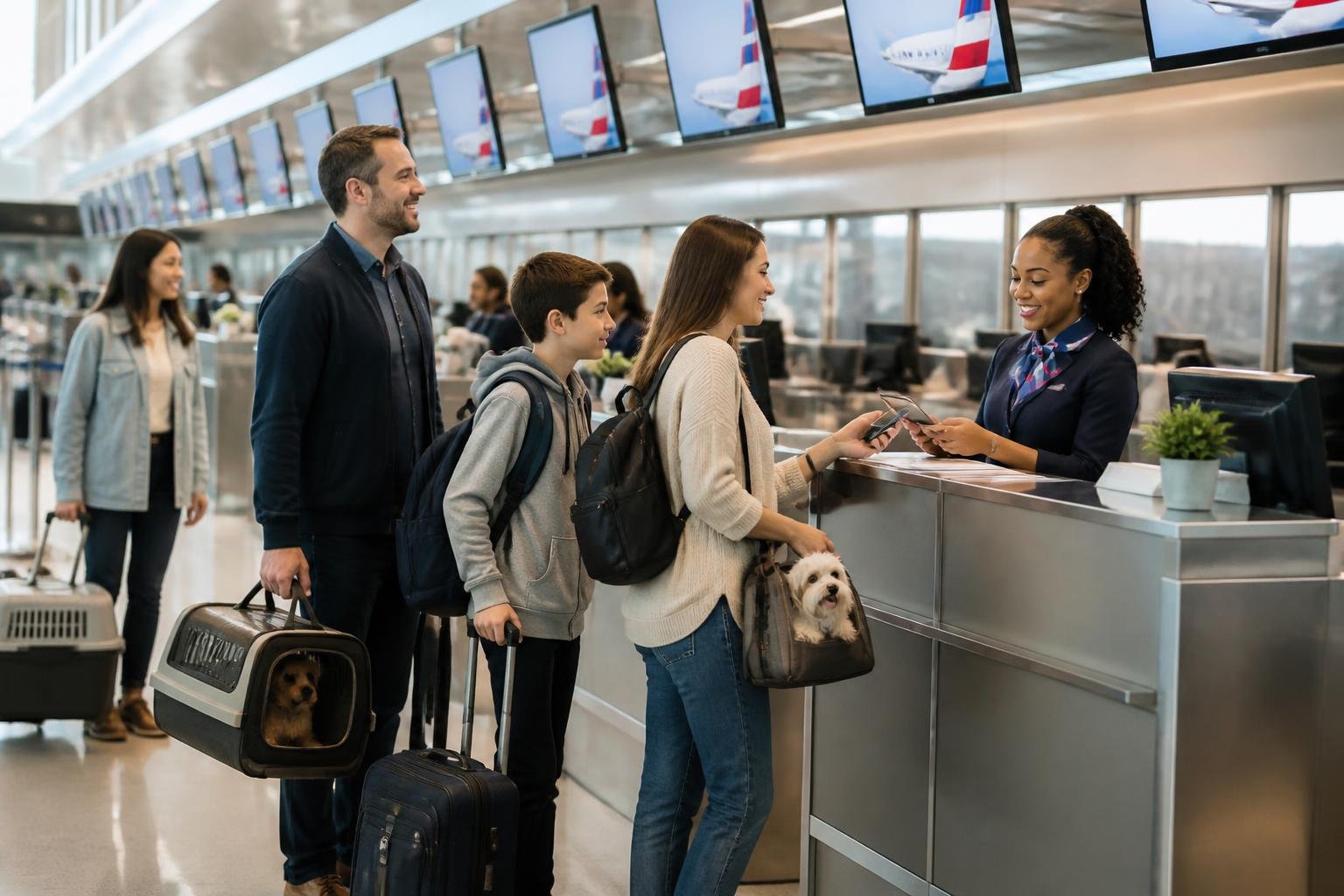
Arriving prepared makes a visible difference when you are traveling with a dog. The check-in and boarding process moves faster when you have the right documents, a calm dog, and no surprises waiting for you at the counter.
What To Bring On Travel Day
Bring your pet reservation confirmation and be ready to show it at the ticket counter. If your dog has a health certificate, keep it accessible, especially for international routes or if an agent requests it.
Have your credit card ready since American Airlines does not accept cash for pet fees. Pack a small travel kit in your personal item: a collapsible water bowl, a few treats, a waste bag, and a familiar toy or small blanket your dog associates with comfort.
How To Help Your Dog Stay Comfortable In The Carrier
Start carrier training weeks before your flight, not the night before. Let your dog eat and sleep in the carrier at home so it becomes a familiar space rather than a stressor.
Limit food and water in the two to three hours before your flight to reduce the chance of accidents inside the carrier. A short walk before you enter the terminal helps burn off energy and lets your dog relieve themselves before a long period of stillness.
Common Check-In Mistakes To Avoid
One of the most common mistakes is assuming your pet reservation transferred correctly after a flight change or rebooking. Always confirm your pet is still on the reservation after any itinerary update.
Another frequent issue is bringing a carrier that is too rigid to compress slightly under the seat. Even if the dimensions technically qualify, a hard-sided carrier on a mainline flight may not slide under the seat as expected.
Arriving at least two hours before departure gives you time to address any surprises without missing your flight.
Choosing Travel Gear That Supports A Smoother Trip
Picking the right gear goes beyond just the carrier itself. A few well-chosen add-ons can make airport transitions and in-flight time noticeably easier for your dog and for you.
When A Soft-Sided Carrier Is The Better Option
Soft-sided carriers are the most practical choice for in-cabin travel on American Airlines. They compress slightly when sliding under the seat, which gives them a real advantage over hard-sided options on most mainline aircraft.
Look for carriers with ventilation on multiple sides and a flat base that holds its shape. A secure top zipper your dog cannot nudge open is also important.
Carriers with a removable fleece liner make post-flight cleanup much easier. For American Eagle regional flights where the hard-sided limit applies, confirm exact dimensions before purchasing.
Helpful Add-Ons For Airport And Road Connections
If your trip includes a road connection before or after the flight, a carrier trolley that attaches to rolling luggage saves you from carrying extra weight through long terminals. Foldable, lightweight trolleys work especially well when you need to move quickly between gates.
For car segments, a separate crash-tested travel harness or crate adds a layer of safety that a soft carrier alone does not provide.
Using Rover Ready Resources To Compare Airline Fit
Rover Ready's airline size guide lets you compare common cabin carrier requirements across airlines before you commit to a carrier or a booking.
This is especially useful if you fly multiple airlines throughout the year and want one carrier that works across different under-seat spaces.
The brand also covers carrier suitcases and rolling options for pet parents who want more flexibility across airport and road travel.
Browsing those resources before you buy helps you avoid purchasing a carrier that works for one trip but fails on the next.


