

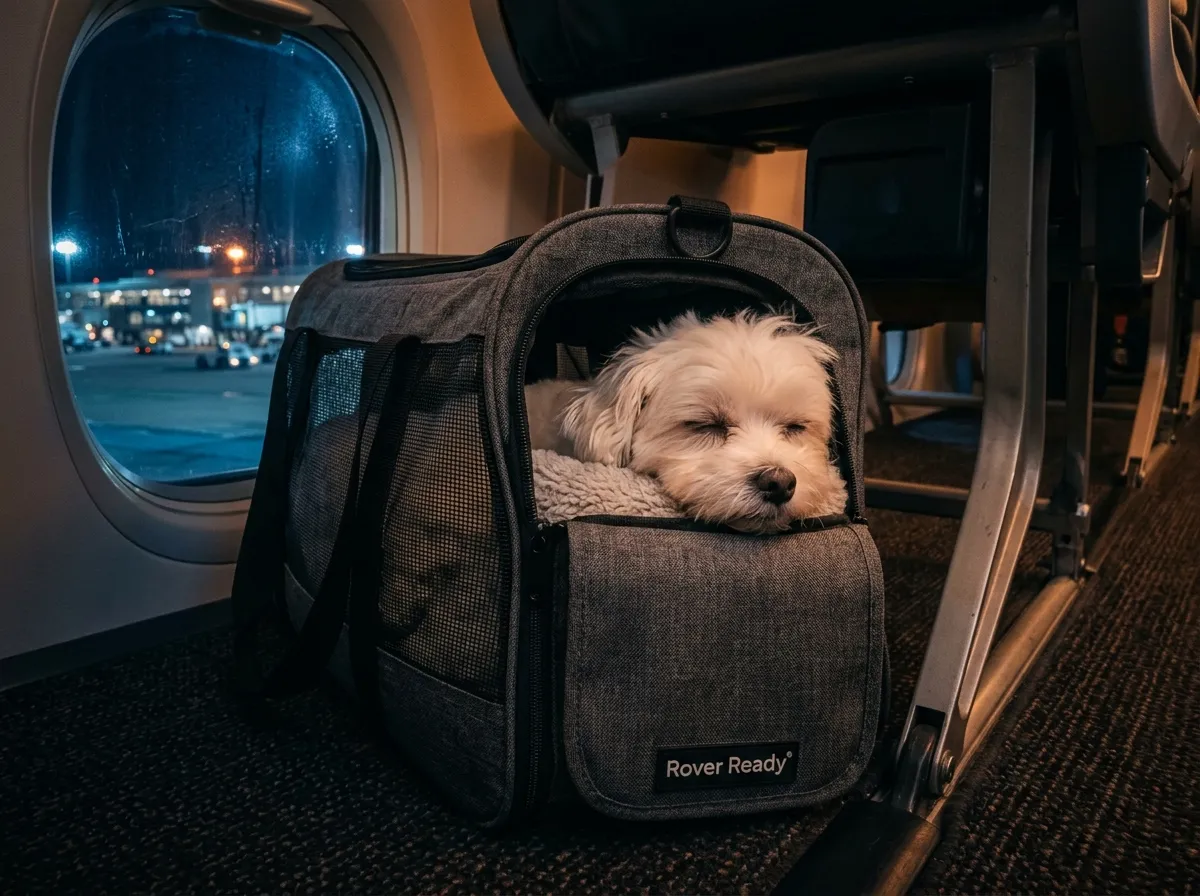
By Craig Roberts, Rover Ready Co
Choose carriers and calming products that meet safety, comfort, and airline requirements to reduce travel risk and stress. This guide explains carrier types, mandatory features, and calming options so you can select compliant equipment and suitable aids for air travel. Follow the guidance to prepare your dog, verify airline approval, and combine carriers with calming solutions for a controlled travel experience.
Before you buy, assemble a short pre-travel checklist: measure your dog, review the airline’s pet policy, confirm carrier dimensions, and run at-home trials so the dog associates the carrier with rest and safety. Planning ahead reduces the chance of last-minute refusals at the airport and helps you identify the right calming aid and carrier combination for your dog’s temperament.
Key Takeaways
- Choosing the right dog travel carrier ensures safety, comfort, and airline compliance during air travel.
- Soft-sided carriers offer flexibility, lightweight design, and ventilation ideal for small to medium dogs in-cabin.
- Hard-sided carriers provide durability and security, suitable for larger or anxious dogs requiring stability.
- Airline-approved carriers must meet specific size limits and be made from durable, non-toxic materials.
- Calming products like herbal chews, Thundershirts, and pheromone sprays effectively reduce travel anxiety in dogs.
- Proper ventilation, padding, and secure closures are essential features for comfortable soft-sided dog carriers.
- Consumer reviews help identify reliable and effective dog carriers and calming products for air travel.
- Consulting airline policies before travel ensures carrier compatibility and avoids last-minute issues at the airport.
- Combining suitable carriers with calming aids enhances the overall travel experience for dogs and owners.
Best Dog Travel Carriers
Select a carrier based on your dog’s size, temperament, and the airline’s specifications. Soft-sided designs prioritise flexibility and in-cabin compatibility; hard-sided models prioritise protection and structural integrity. Evaluate ventilation, materials, and security features when choosing a carrier.
Think about where and how you travel: frequent business trips or long transits may favour a more durable carrier with extra padding and a rigid base, while occasional short flights often suit a lightweight soft-sided design you can carry through the terminal. If you fly regularly, investing in a higher-grade carrier with replaceable liners and reinforced seams will pay off in longevity and hygiene.
- Petmate Sky Kennel: This hard-sided carrier is perfect for larger dogs, offering excellent ventilation and durability.
- Sherpa Travel Original Deluxe Carrier: A soft-sided carrier that's airline-approved, it features mesh panels for breathability and side pockets for storage.
- SportPet Designs Travel Pet Carrier: This versatile carrier collapses easily and is suitable for both soft and hard-side preferences.
When evaluating models, inspect the floor structure — carriers with a solid insert or reinforced bottom reduce sagging and help the dog maintain balance during taxiing and turbulence. Check zippers and closures for double-stage latches or buckles and ensure there are secure attachment points for a short leash or harness clip inside the carrier for additional restraint.
| Carrier Type | Key Features | Ideal For |
|---|---|---|
| Soft-Sided | Flexible, lightweight, fits under airline seats | Small to medium-sized pets |
| Hard-Sided | Sturdy, secure, better for large dogs | Larger breeds or anxious dogs needing stability |
Match the carrier to the dog’s measurements and behaviour to ensure safety and compliance during air travel. If your dog is anxious or prone to trying to escape, prioritise carriers with more rigid structure and secure locking mechanisms even if they add weight to your luggage.
Size and Material Requirements
Airline-approved carriers must meet specific dimensional and material standards set by each carrier. Verify ventilation, strength, and non-toxic construction against the airline’s published requirements before purchase.
- Dimensions: The carrier should be no larger than the dimensions specified by the airline, which often caps at 18” H x 11” W x 11” D for in-cabin travel.
- Material: Carriers should be made of durable fabric or hard materials that provide security and comfort. Soft carriers must also be made with non-toxic materials.
To measure your dog accurately, use a soft measuring tape and record three dimensions: length from nose to base of tail, height at the top of the shoulder while the dog stands, and the widest part of the chest. Allow a few inches of extra space inside the carrier so the dog can turn around and lie down comfortably. If your dog fills the carrier completely when standing, it’s a sign you need a larger size.
Materials affect cleaning, breathability, and long-term durability. Look for carriers with removable, machine-washable liners, water-resistant outer layers, and reinforced stitching around carry points. Avoid carriers that trap moisture or have adhesives that could degrade with repeated cleaning.
Comparisons Between Soft-Sided and Hard-Sided Models
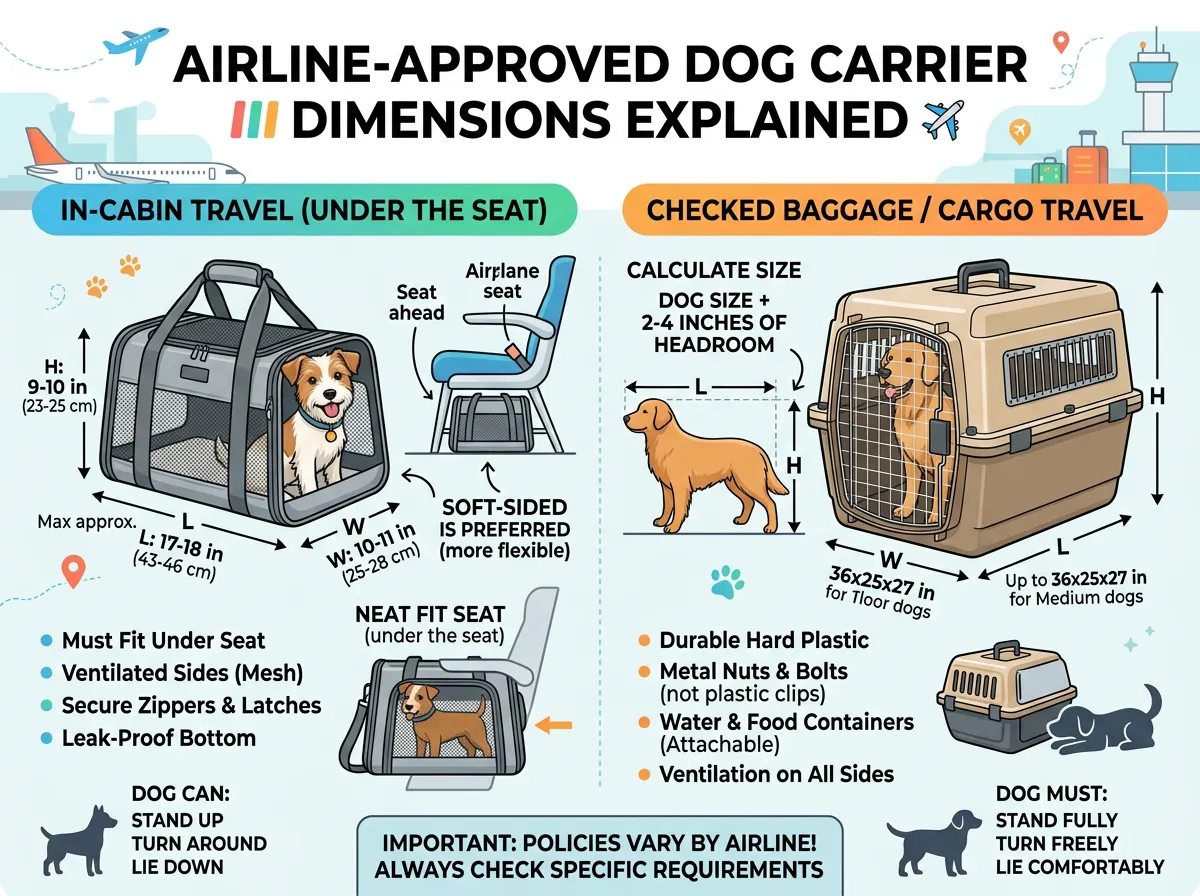
Compare soft-sided and hard-sided carriers by assessing storage, weight, durability, and suitability for in-cabin placement. Choose the option that aligns with the dog’s size and the airline’s constraints.
Advantages of Soft-Sided Carriers
Soft-sided carriers provide flexibility and compact storage. They are lightweight and typically fit under seats, and their breathable panels improve airflow for in-cabin travel. They often include pockets for paperwork and treats, and many have extendable side panels that expand the pet’s resting area when the aircraft seat beside you is empty.
Drawbacks of Hard-Sided Carriers
Hard-sided carriers require more storage space and may be heavier to transport, but they deliver superior durability and a secure enclosure for dogs that require additional stability. They are less likely to collapse if jostled and usually offer better protection against impact; however, they are typically bulkier and can be awkward to carry through crowded airports or to stow when not in use.
Evaluate both types against the dog’s needs and travel conditions to select the appropriate carrier category. If uncertain, trial both types at home so the dog can indicate a preference for a quieter, darker enclosure or a more open, mesh-sided carrier.
Tips for Selecting the Best Soft-Sided Dog Carrier
Assess comfort, safety, and portability when selecting a soft-sided carrier. Prioritise padding, ventilation, secure closures, and ergonomic straps.
- Comfort Features: Look for padding, breathable materials, and ample ventilation to keep your furry friend comfortable.
- Safety Considerations: Ensure the carrier has secure zippers and locking mechanisms to prevent accidental escape.
- Portability: Features like shoulder straps or handles can make transporting the carrier easier, especially in busy airports.
When possible, choose a soft-sided carrier with reinforced side panels and a removable, washable bottom pad. Evaluate strap attachments and test the weight distribution by packing the carrier with an equivalent weight to your dog. Ergonomically designed straps and a padded shoulder pad help the owner avoid fatigue during long walks through terminals.
Check for ventilation on multiple sides: mesh on three faces is preferable because it allows cross-ventilation and gives your dog multiple sightlines, which can reduce stress. Ensure mesh panels are tightly sewn and backed by a fabric rim to resist fraying and chewing.
Calming Products
Identify calming products that reduce travel-related anxiety. Choose treatments and devices with clear indications, documented ingredients, and instructions for use during transit.
- Calming Chews: These supplements are formulated with natural ingredients like chamomile and tryptophan to help soothe anxious dogs.
- Thundershirts: A snug-fitting garment that applies gentle pressure to calm pets during stressful situations.
- Diffusers and Sprays: Natural pheromone diffusers can create a calming environment for your pet in confined settings.
Before travel, trial any calming product at home during progressively longer carrier periods. Observe for side effects such as lethargy, digestive upset, or paradoxical agitation. For all ingestible products, follow the manufacturer’s dosing instructions and seek veterinary advice for dogs with underlying health conditions or those taking medication.
How Do Calming Chews for Dogs Work to Reduce Travel Anxiety?
Calming chews contain natural ingredients intended to promote relaxation and reduce stress. Administer them according to product instructions and consult a veterinarian to confirm suitability for the individual dog. Start with a single chew several days before travel to observe effects, then give the recommended dose on travel day only if the dog responded well during the trial period.
Which Calming Products Are Recommended by Veterinarians for Flying Dogs?
Veterinarians typically recommend products containing herbal or amino-acid components such as valerian root, L-theanine, and chamomile. Select evidence-based options and review dosage guidance with a veterinarian prior to travel.
Research indicates that ambient lavender scent can increase resting and sitting time while reducing movement and vocalising in dogs during transport.
In addition to topical or aromatic aids, non-pharmaceutical strategies like pre-flight exercise, familiar bedding, and short desensitisation sessions inside the carrier are effective. Combine environmental adjustments with approved calming products for the best results.
A Study on the Anxiolytic Effects of Lavender on Travel-Induced Excitement in Canines
1. Objective — Assess the effectiveness of ambient lavender scent as an intervention for travel-induced excitement in canines. 2. Procedures — Owners observed each dog during car transportation to a customary walking location under two olfactory conditions: a control condition with natural environmental odours and an experimental condition with ambient lavender. Observations were recorded for three consecutive days under each condition. Researchers quantified the proportion of time spent moving, standing, sitting, resting, and vocalising for each dog. 3. Results — During the experimental condition, canines showed a statistically significant increase in time spent resting and sitting, with a corresponding reduction in time spent moving and vocalising.Aromatherapy for travel-induced excitement in dogs, 2006
Which Dog Carriers Are Airline Approved for Safe Air Travel?
Airline-approved carriers must satisfy ventilation, structural integrity, and size requirements defined by each airline. Consult the airline’s policy documents to confirm approval prior to travel.
When selecting a carrier for a particular airline, look for the carrier model listed on the airline’s approved pet carrier pages or check for specific language saying the carrier is suitable for under-seat storage. Keep screenshots or printouts of the airline’s policy with your booking and attach a copy of the carrier’s manufacturer specifications to your travel documents to expedite check-in if any questions arise.
What Are the Size and Material Requirements for Airline-Approved Pet Carriers?
Carriers should be constructed from durable, non-toxic materials and conform to airline size limits. Many airlines specify maximum dimensions for in-cabin soft-sided carriers, commonly cited as 18” H x 11” W x 11” D.
Ensure the carrier has adequate ventilation on at least two sides and that any wheels or collapsible features can be secured or removed to comply with cabin storage rules. Hard-sided carriers intended for cargo hold travel typically require bolt-on door latches and extra ventilation; follow airline instructions carefully if you intend to check a pet in baggage or cargo.
How Do Soft-Sided Dog Carriers Compare to Hard-Sided Models for Airline Travel?
Soft-sided carriers are preferable for in-cabin travel due to flexibility and reduced weight. Hard-sided carriers provide a more rigid enclosure and may be required for larger breeds but can exceed under-seat space limits. If you must switch carriers between trips, keep essential documentation and a quick-clean kit (disinfectant wipes, spare pad) in your carry-on to address in-flight accidents or unexpected delays.
How to Choose the Best Soft-Sided Dog Carrier for Your Travel Needs?
Determine the carrier by measuring the dog, assessing temperament, and reviewing travel conditions. Prioritise fit, durability, ease of cleaning, and airline compliance.
- Size Compatibility: Ensure the carrier accommodates your pet comfortably without being excessively large, making it cumbersome during transport.
- Durability and Ease of Cleaning: Opt for waterproof materials whenever possible, as they enhance the carrier's longevity and simplify cleaning.
- Airline Compliance: Always verify that the selected soft-sided carrier aligns with airline-specific guidelines.
Test the chosen soft-sided carrier at home by placing the dog inside with familiar bedding and treats. Gradually increase the time the dog spends in the carrier and practise carrying the loaded carrier for short walks so both you and the dog become accustomed to the motion and weight distribution.
Consider secondary features such as storage pockets for documents, an ID window for attaching your contact information, and interior leash anchors for safety. These small design choices can make check-in and security screening more efficient.
What Are the Key Features and Dimensions to Consider in Soft-Sided Dog Carriers?
Prioritise ventilation, adequate padding, and reliable handles or straps when evaluating soft-sided carriers. These features support comfort, safety, and ease of transport.
| Feature | Description | Importance |
|---|---|---|
| Ventilation | Mesh panels or windows for airflow | Keeps pet cool and calm |
| Padding | Comfortable cushioning to support your dog | Reduces travel stress |
| Handles & Straps | Sturdy attachments for carrying | Facilitates ease of transport |
Also look for slip-resistant bottoms to keep the carrier stable on surfaces such as airport floors, and for removable inserts that give you options to wash or replace bedding quickly between trips. Built-in name and phone number slots help with identification during busy travel periods.
Which Soft-Sided Carriers Offer Optimal Comfort and Airline Compliance?
Select carriers with reinforced construction, extra padding, and adjustable straps to balance comfort and regulatory compliance. Models such as the Sherpa Travel Original Deluxe Carrier are examples of designs that address these priorities.
Comfort-focused carriers will include breathable mesh, a solid base, and an interior tether for added security. When trying a carrier, place it on the floor and let your dog approach and enter on their own terms — a willing, calm entry is a good indicator the carrier is an acceptable fit.
What Dog Calming Products Are Effective and Safe During Air Travel?
Prefer calming aids with recognised natural ingredients and clear usage instructions. Options include herbal chews, pressure garments, and pheromone-based sprays; always verify suitability with a veterinarian.
- Herbal Chews: Natural ingredients like chamomile can help soothe before and during flights.
- Thundershirts: Designed for anxiety relief, they apply gentle pressure to comfort your dog.
- Pheromone Sprays: These products mimic natural pheromones to create a calming atmosphere.
Integrate calming products into a broader plan that includes exercise, a light meal several hours before departure, and a familiar blanket or toy inside the carrier. Avoid heavy feeding close to departure to reduce the risk of motion sickness or discomfort during the flight.
How Do Consumer Reviews and Ratings Influence the Selection of Dog Travel Carriers and Calming Products?
Consumer reviews provide practical evidence of product performance, durability, and comfort. Use multiple reviews to assess consistency and identify common strengths or defects before purchasing.
When reading reviews, prioritise verified purchases and those with clear photos or videos. Look for recurring comments about seams, zippers, or sizing differences and pay attention to how reviewers describe handling at check-in and during security screening. Reviews that describe airline interactions and long-term use are particularly valuable for air travel purchases.
Aggregate user feedback helps anticipate real-world issues and supports informed procurement decisions for travel equipment and calming aids. Combine review insights with the manufacturer’s specifications and airline policy checks to make a confident selection.
Frequently Asked Questions
What should I consider when choosing between a soft-sided and hard-sided dog carrier?
Consider the dog’s size, temperament, and airline restrictions. Soft-sided carriers suit smaller, calm dogs and in-cabin requirements; hard-sided carriers provide greater durability for larger or anxious dogs. Ensure the chosen carrier meets airline rules and offers adequate comfort and security. If your dog chews or claws, a sturdier option may be safer.
Are there specific calming products effective for dogs during air travel?
Yes. Commonly recommended options include calming chews with natural ingredients, Thundershirts that apply gentle pressure, and pheromone sprays or diffusers. Consult a veterinarian to determine the appropriate product and dosage for your dog.
How far in advance should I introduce calming products to my dog?
Introduce calming products several weeks before travel to allow the dog to acclimate. Apply the product in low-stress settings first and monitor the dog’s response prior to the trip. A slow, controlled introduction reduces the risk of unexpected reactions on travel day.
What are the benefits of reading consumer reviews for dog carriers and calming products?
Reviews reveal user experiences with fit, durability, and effectiveness. They identify recurring issues and help verify whether product claims hold true in real-world use, supporting a more reliable purchase decision. Cross-reference a range of reviews to balance out singular positive or negative experiences.
Can I use calming aids in conjunction with other travel arrangements?
Yes. Use calming aids alongside a suitable carrier, proper hydration, and rest periods to create a comprehensive travel plan that minimises stress and supports the dog’s welfare. Plan exercise windows and short walks during layovers where permitted.
Is it essential to check airline-specific requirements for dog carriers?
Yes. Each airline enforces distinct size, material, and security requirements. Confirm these requirements in advance to prevent denial at check-in and to ensure a smooth boarding process. Keep contact information for the airline’s pet desk handy in case of questions at the airport.
How often should I take my dog out of the carrier during travel?
Do not remove the dog from the carrier during flight for safety and security reasons. During layovers or at designated rest areas, provide brief exercise and bathroom breaks while maintaining control on a leash. Long layovers are ideal opportunities for a calm walk, a short meal, and a water break before reboarding.
Conclusion
Select carriers and calming products according to the dog’s dimensions, temperament, and the airline’s specifications. Applying the criteria in this guide will reduce travel complications and improve comfort. Review options carefully and confirm airline approval before travel to ensure a controlled and compliant journey for both owner and dog.
Final checklist before travel: confirm carrier dimensions with the airline, run an at-home carrier trial, introduce any calming aids early, pack a small comfort kit (collapsible water bowl, spare pad, waste bags, treats), and arrive early to allow time for smooth check-in. With preparation and the right equipment, most dogs can travel safely and with reduced stress.


