

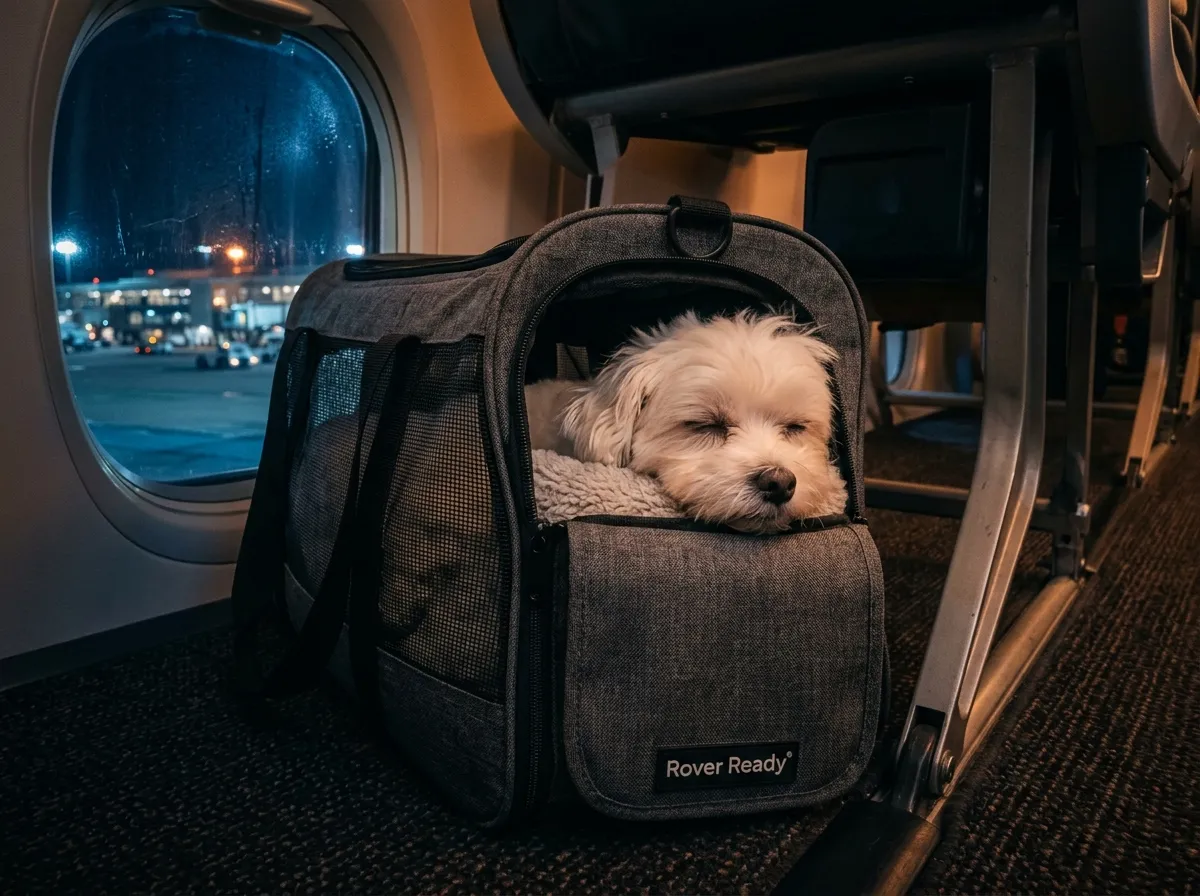
By Craig Roberts, Rover Ready Co
Ensure your pet carrier fits under the airplane seat to avoid travel issues. This guide defines under-seat carrier requirements, airline compliance criteria, and considerations for your dog’s comfort. It addresses common challenges in selecting a carrier that meets regulations while providing a secure, comfortable space. The guide covers standard sizes, safety standards, selection guidance, measurement procedures, and recommended airline-approved carriers. Wherever possible, apply the verification steps described here to real products and your airline’s published policy to reduce the chance of a last-minute change at the gate.
Key Takeaways
- Airlines require soft-sided pet carriers to fit specific under-seat dimensions for compliance and comfort during travel.
- Accurate measurement of your dog’s length, height, and weight is essential to select an airline-approved carrier.
- Soft-sided carriers provide flexibility, ventilation, and secure closures, making them preferred for air travel.
- Major airlines like Delta, American Airlines, and JetBlue have varying but similar size requirements for pet carriers.
- Checking and matching your carrier’s dimensions with airline policies prevents travel complications and ensures smooth boarding.
- Preparing your dog by familiarizing them with the carrier and packing essentials reduces stress during flights.
- Regularly monitoring airline pet travel policies helps stay updated on size restrictions and compliance changes.
- Using measuring tapes and airline seat maps assists in verifying that your carrier fits under the airplane seat.
Standard Size Requirements
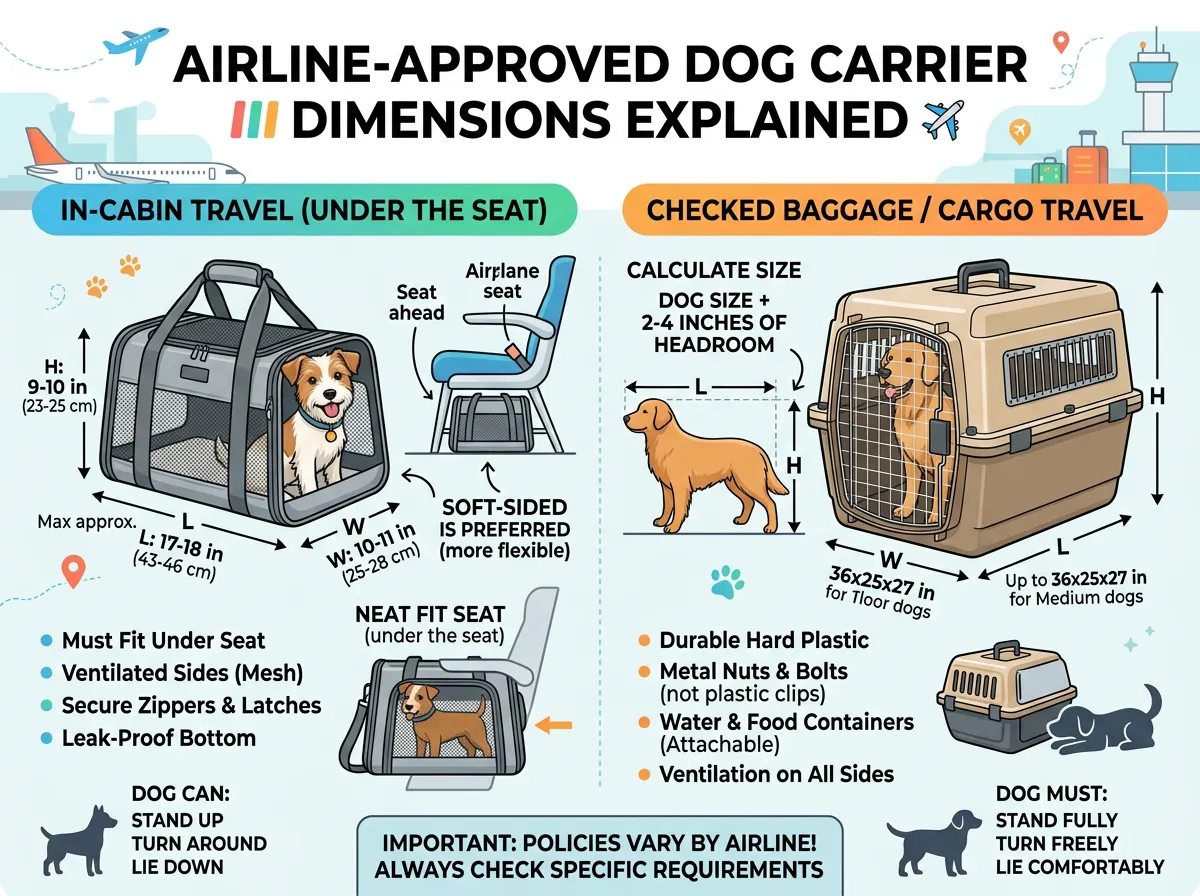
Carrier size requirements differ by airline and determine whether a pet may travel in the cabin. Most airlines permit soft-sided carriers that conform to specified under-seat dimensions; compliance with those dimensions is required for in-cabin transport. Beyond the published dimensions, carriers should be assessed for actual usable interior space, which can differ from the exterior measurements listed by some manufacturers.
| Carrier Type | Airline | Dimensions |
|---|---|---|
| Soft-sided | Delta | 18" x 11" x 11" |
| Soft-sided | American Airlines | 18" x 11" x 11" |
| Soft-sided | United | 18" x 11" x 11" |
| Soft-sided | Southwest | 18.5" x 8.5" x 13.5" |
| Soft-sided | JetBlue | 17" x 12" x 8" |
Confirm the specific dimensions required by your airline before purchasing a carrier. When comparing carriers, check both external dimensions and internal usable space, and note how much the carrier compresses when a pet is inside. Some carriers list external measurements that include handles or wheels; measure the body of the carrier separately if needed. Also check whether the airline measures height as the tallest point including handles or only the soft body height.
Safety Standards
Carriers must provide adequate ventilation, secure closures to prevent escapes, and interior padding for comfort. Airlines may require durable construction and proper ventilation panels as part of their safety criteria. Look for mesh panels on multiple sides for airflow and visibility, robust stitching and seam reinforcement, and closures that remain secure under typical handling conditions at the gate and in the cabin.
Using a carrier that meets these standards protects your dog and reduces the risk of issues during airport screening and boarding. Other safety considerations include a leak-resistant bottom or removable liner in case of accidents, interior attachment points that allow you to clip the pet’s harness to the carrier, and reinforced bases to help maintain shape while fitting under a seat. Choose materials that withstand wear, are easy to clean, and do not have small parts a pet could chew off.
Tips for Selecting the Right Carrier
Select a carrier based on accurate pet measurements, carrier construction, and the airline’s rules. The steps below present the primary selection criteria. In addition to dimensional compliance, consider ergonomics for the handler and the pet, such as padded shoulder straps, a top-access opening for calm handling, and pockets for documents and small essentials.
- Measure Your Dog Accurately: Knowing your dog's length, height, and weight is crucial for selecting a suitable carrier.
- Choose Soft-Sided Carriers: These carriers are often more flexible and can fit better under airplane seats.
- Check Airline Policies: Always verify the specific requirements of the airline you will be flying with to ensure compliance.
Follow these recommendations to select a carrier that satisfies both your dog’s needs and airline regulations. Expand the decision criteria by comparing cleaning options (removable liners vs fixed padding), presence of interior tie-down points, zip quality and locking options, and whether the carrier offers a slipcover or rain-resistant coating for adverse weather during transit.
What Are the Standard Airline Pet Carrier Size Requirements?
Carrier size limits vary by airline and by aircraft type; review the airline’s published dimensions to avoid surprises at the airport. Keep in mind that airlines sometimes publish different allowances for international versus domestic flights or for certain aircraft within their fleet. If your itinerary includes multiple carriers, use the most restrictive airline’s dimensions to avoid complications.
Most airlines accept soft-sided carriers that conform to their under-seat dimensions to provide sufficient space for the pet while enabling placement under the seat. When purchasing, verify manufacturer measurements against the airline's stated interior or external limits and account for any accessories (removable bed, extra padding) that might increase the carrier’s effective size.
How Do Under-Seat Dimensions Vary Among Major Airlines?
Under-seat dimensions differ across airlines and sometimes by aircraft model. For example, Delta and United list similar dimensions, while American Airlines permits slightly larger carriers in some cases. Regional jets and some narrow-body aircraft can have tighter under-seat space, so a carrier that fits on one aircraft may be borderline on another.
Confirming these differences allows you to select a carrier that complies with the specific airline you will use. When in doubt, call the airline’s customer service and reference the aircraft type on your itinerary. Some airlines will accept a soft-sided carrier that compresses slightly; others enforce the published measurements strictly at the gate.
Which Airlines Approve Soft Sided Pet Carriers?
Many major carriers approve soft-sided pet carriers because they compress to fit under seats and provide ventilation. Airlines such as Delta, American Airlines, and JetBlue publish guidelines for acceptable soft-sided carriers. Approval often comes with conditions, such as weight limits or requirements that the pet remain inside the carrier for the duration of the flight.
Verify that the chosen carrier meets the airline’s dimensional and construction requirements prior to travel. Review the policy for any carrier-specific rules, such as allowed carrier orientation under the seat (facing forward or sideways) and whether the airline requires a carrier to be stowed in a specific manner during takeoff and landing.
How to Measure Your Dog for an Airline Approved Carrier?
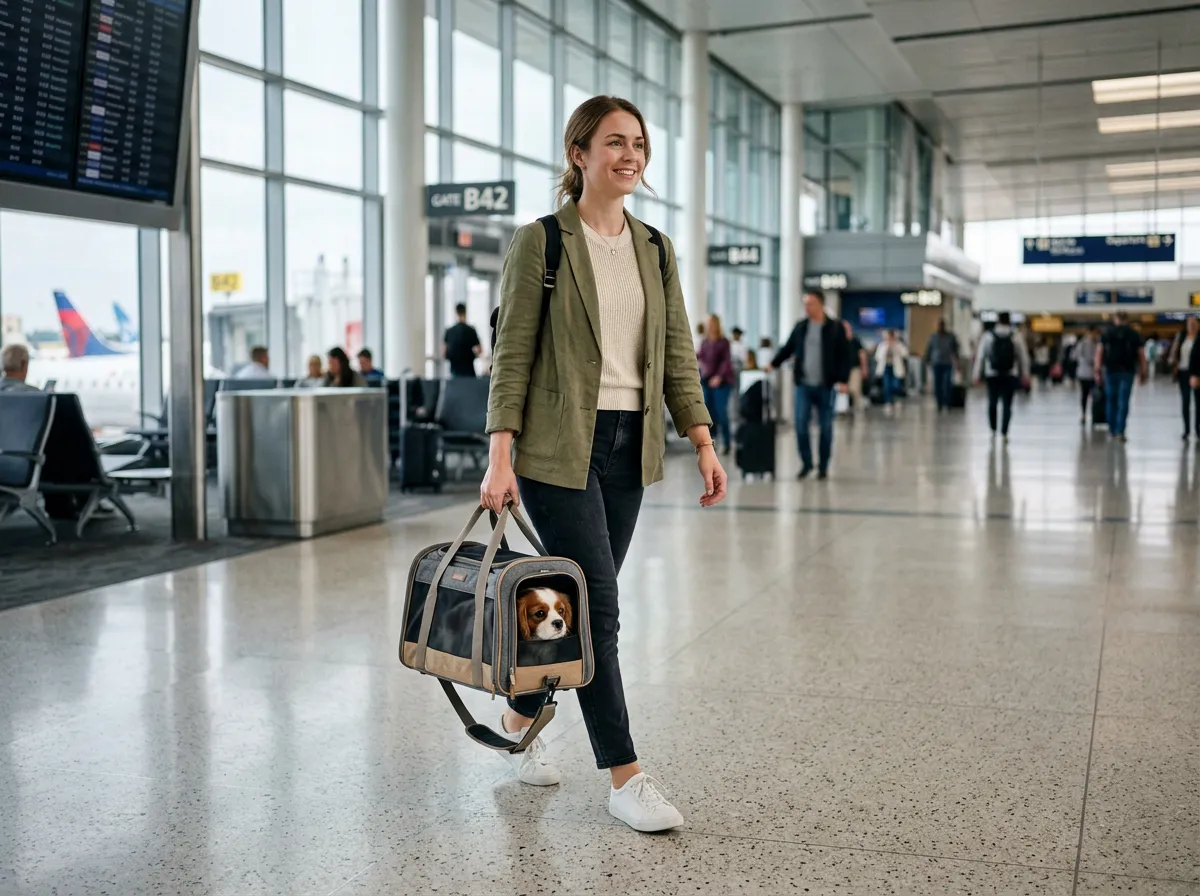
Obtain precise measurements to determine the correct carrier size. Follow the steps below for consistent results. Accurate measurements help you select a carrier that allows the dog to sit, stand, and turn comfortably while remaining within airline limits.
- Length: Measure from the tip of the nose to the base of the tail. For breeds with long coats or tails, measure from the nose to where the tail meets the body to get usable length.
- Height: Measure from the ground to the top of the shoulders (the withers). If the dog has a tall head posture, also note head height when standing to ensure the dog can sit comfortably without bumping the top of the carrier.
- Weight: Weigh your dog to ensure it falls within the carrier's weight limit. If your scale is imprecise, use a human scale and subtract your own weight while holding the dog for a practical estimate.
Use these measurements to select a carrier that allows the dog to sit, stand, and turn comfortably. A useful rule of thumb is to add a small buffer (for example, a couple of inches) to each measurement to allow the dog to reposition and for bedding. Avoid choosing a carrier that is only an inch or two larger than the dog’s measurements, since closures, padding, or internal structure can reduce usable space.
What Are the Key Dog Size Metrics for Carrier Fit?
Focus on three metrics when evaluating carrier fit: length, height, and width. Each dimension must allow for natural movement and resting posture. Measure the dog while it stands naturally, and if the dog tends to curl when resting, measure length both stretched and curled to compare with carrier interior layout.
- Length: Ensure the carrier is long enough for your dog to lie down comfortably. Consider whether the dog sleeps stretched out or curled and choose a carrier dimension that accommodates the typical posture.
- Height: The carrier should allow your dog to stand without hitting their head. For breeds with erect ears, include ear height in the measurement if ears are usually upright when the dog sits.
- Width: Adequate width ensures your dog can turn around easily. Some carriers taper at the ends; confirm interior width where the dog will lie rather than the maximum external width.
These metrics support both your dog’s comfort and regulatory compliance. When assessing width, consider the interior shape: a rectangular interior provides more usable turning space than a rounded or narrow interior with internal braces.
Step-by-Step Guide to Accurate Dog Measurement
Follow a consistent process to measure your dog and confirm carrier compatibility. Use a helper if the dog is fidgety and repeat measurements to confirm accuracy. Keep a small treat on hand to calm or reward your dog during the process.
- Gather Tools: Use a measuring tape and a scale. A flat surface and a pen and paper to record measurements help avoid errors.
- Measure Length: Have your dog stand straight and measure from nose to tail base. For squirmy dogs, measure while standing over them gently after a walk when they are calmer.
- Measure Height: Measure from the ground to the top of the shoulders (not the head) while the dog stands on a flat surface.
- Weigh Your Dog: Use a scale to determine your dog's weight. If the carrier or airline lists a weight limit, compare your dog’s weight to that limit and include bedding weight in the calculation if required.
Accurate measurements ensure you select a carrier with the correct internal dimensions. After selecting a candidate carrier, test the dimensions at home by placing the carrier in a representative location and encouraging the dog to enter; observe how the dog sits and lies down to confirm the fit before travel day.
Which Are the Best Airline Approved Dog Carriers for Under-Seat Travel?
Several carriers are recognised for meeting airline requirements and offering reliable construction. Examples include the Petmate Sky Kennel, Sherpa Travel Original Deluxe Carrier, and Rover Ready Co Soft-Sided Carrier. Each model has distinguishing features that may suit different dogs and handlers.
- Petmate Sky Kennel: Known for its durability and safety features. The Sky Kennel is often chosen for sturdiness and easy cleaning in situations where a more rigid structure is preferred or required for checked flights.
- Sherpa Travel Original Deluxe Carrier: Offers comfort and flexibility. Sherpa models are widely used for in-cabin travel because they compress slightly under seat pressure and typically include top and side access points that make loading and unloading easier.
- Rover Ready Co Soft-Sided Carrier: Specifically designed to meet airline requirements. Carriers designed with airline travel in mind often provide clear labeling of dimensions and include travel-focused features such as removable liners, extra ventilation, and document pockets.
These models combine compliance, safety, and user-focused design appropriate for in-cabin travel. When choosing among them, compare interior usable space, ease of cleaning, weight, and how the carrier compresses under pressure. Read customer reviews to learn how each model performs in real travel situations, paying particular attention to reports about gate acceptance and fit under seats on different aircraft types.
What Features Define Soft Sided Airline Pet Carriers?
Soft-sided carriers include features that facilitate under-seat travel and pet comfort. Beyond the basics of size and ventilation, evaluate construction details such as seam reinforcement, the quality of zippers, and the presence of secondary closures to prevent accidental opening.
- Flexibility: They can be compressed to fit under seats. This feature is useful on aircraft with limited under-seat clearance or when a bit of compression makes the difference at boarding.
- Ventilation: Mesh panels provide airflow and visibility for your pet. Multiple mesh panels increase cross-ventilation and can reduce stress for pets that prefer visibility.
- Secure Closures: Zippers and buckles ensure your pet stays safe inside. Look for zippers that allow a small lock or clip if extra security is desired, and check that zipper pull hardware is robust enough to withstand repeated use.
These characteristics explain why soft-sided carriers are commonly recommended for in-cabin transport. Additional convenience features to consider include removable washable liners, interior tether clips for harnesses, and pockets for health documents and treats.
How to Match Carrier Dimensions to Airline Requirements?
To match a carrier to airline rules, follow a simple verification process described below. Apply a methodical approach: check the airline policy, measure the carrier, compare, and document the result so you can present the measurements if asked at check-in.
- Check Airline Guidelines: Review the specific dimensions allowed by the airline. Some airlines publish different allowances by aircraft type or cabin class.
- Measure Your Carrier: Use a measuring tape to confirm the carrier's dimensions. Measure the soft body when possible and note the compressed height if the carrier is flexible.
- Adjust as Necessary: If your carrier is too large, consider a different model. Packable carriers or models with removable bases often offer more flexibility for meeting strict limits.
Confirming dimensional compliance before travel reduces the risk of denial at the gate. Save screenshots or print the airline policy and the carrier’s specification page for quick reference during check-in.
What Are the Latest Airline Compliance Policies for Pet Carriers in 2023?
In 2023 several airlines revised pet-carrier policies to emphasise safety and comfort; updates include modified size limits and clearer recommendations for soft-sided carriers. Where airlines published changes, they often clarified measurement methods, stated whether internal or external dimensions apply, and reiterated that the pet must be able to remain in the carrier for the entire flight.
Review current airline guidance regularly to ensure your carrier meets the latest requirements. Policy language sometimes changes terminology (for example, "soft-sided carrier" vs "soft carrier"), so confirm that your understanding aligns with the airline's definitions to avoid misinterpretation.
How Have Under-Seat Size Restrictions Changed Recently?
Some airlines have adjusted under-seat allowances for soft-sided carriers, in some cases increasing permitted dimensions to accommodate common carrier models. Other airlines have tightened enforcement at the gate, asking passengers to demonstrate fit or requiring removal of optional carrier components to comply.
Awareness of these adjustments assists in selecting a carrier that complies with present regulations. Keep documentation handy showing both the carrier’s published dimensions and your pet’s measurements to help resolve questions quickly if an agent requests verification.
Where to Find Official Airline Pet Travel Policy Updates?
Consult authoritative sources to confirm policy details and changes. Official airline websites are the primary source; policies there will typically include dimensions, weight limits, and any breed or breed-type restrictions. Look for a last-updated date on policy pages to assess currency.
- Airline Websites: Most airlines provide detailed information on their pet travel policies. Bookmark the relevant page and check it again close to travel.
- Pet Travel Forums: Online communities often share the latest updates and experiences. Treat forum posts as anecdotal and verify the facts with the airline.
- Official Airline Customer Service: Contacting customer service can provide direct answers to specific questions. Ask for written confirmation if you receive permission for a non-standard carrier or exception.
Use these resources to verify policy details before travel. If your route involves multiple carriers or legs on partner airlines, confirm the most restrictive policy applies for the entire itinerary.
How to Ensure Your Dog Carrier Fits Under the Airplane Seat?
Ensure carrier fit by measuring both the under-seat space and the carrier, and by confirming compliance with airline specifications. Account for seat pitch and the structure under the seat — some rows have oxygen lines, bulkheads, or support bars that reduce usable height or depth.
- Measure the Under-Seat Space: Use a measuring tape to determine the available space. If you cannot measure the actual aircraft, consult airline seat maps or request under-seat dimensions from customer service for the specific aircraft type on your itinerary.
- Select a Compliant Carrier: Choose a carrier that meets the airline's size requirements. Prefer soft-sided carriers when allowable because they adapt better to differences in under-seat shape.
- Test the Fit: If possible, try placing the carrier under a similar seat before travel. Some pet owners test fit using a cardboard template cut to the carrier’s footprint to quickly verify fit under a seat at the airport before boarding.
Perform these checks prior to departure to avoid last-minute adjustments at the gate. On the day of travel, arrive early to give yourself time to address any unexpected issues without missing the flight.
What Visual Tools Help Verify Carrier Fit?
Visual and measurement tools clarify whether a carrier will fit under a specific seat. A combination of accurate measurement and a visual test reduces uncertainty and helps gate agents see the effort you put into compliance.
- Measuring Tapes: To measure both the carrier and the under-seat space. Use a soft tape measure for curved surfaces and a rigid tape for straight dimensions.
- Visual Comparisons: Use images of the carrier in relation to common objects for scale. Photographs of the carrier under a seat or next to a standard piece of luggage can be helpful when discussing fit with airline staff.
- Airline Seat Maps: Many airlines provide diagrams of under-seat dimensions. Combine these with the carrier’s measurements to confirm compatibility well before travel day.
Use these tools to confirm fit and prevent boarding issues. If you frequently travel with a pet, maintain a small kit containing a measuring tape, a printed copy of airline policies, and a lightweight carrier template you can place under a seat to demonstrate fit if needed.
How to Prepare Your Dog and Carrier for Air Travel?
Prepare both dog and carrier to reduce stress and ensure compliance during travel. Start training and acclimatisation weeks before the trip so the carrier becomes a familiar, safe environment for the dog.
- Familiarize Your Dog: Allow your dog to explore the carrier before the trip. Leave the carrier out at home with familiar bedding and treats so the dog associates it with comfort rather than confinement.
- Health Checks: Ensure your dog is healthy and has all necessary documentation. Consult your veterinarian about travel health requirements, vaccination records, and any paper forms the airline requires.
- Pack Essentials: Include food, water, and comfort items in the carrier. Bring absorbent pads, a familiar blanket or toy, and a small collapsible water dish. Pack copies of veterinary records and any required travel paperwork in an accessible pocket on the carrier.
Advance preparation minimises stress for the dog and for the handler during transit. On travel day, give the dog regular bathroom breaks and keep feeding light before boarding to reduce the chance of motion-related upset.
What Are Common Questions About Under-Seat Dog Carrier Fit?
Common concerns include size limits, carrier type, and contingency options; clear answers reduce uncertainty. Planning ahead and documenting compliance can make interactions with airline staff smoother.
- What if my dog is too big for the carrier?: Consider a larger carrier or check for alternative travel options. If cabin travel is not possible, explore ground transport or specialized pet cargo services offered by the airline or third-party providers.
- Can I use a hard-sided carrier?: Most airlines prefer soft-sided carriers for under-seat travel. Hard-sided carriers are sometimes acceptable for checked or cargo travel but may not compress to fit under seats.
- What if my carrier doesn't fit?: Always check the dimensions before travel and consider alternatives. If you discover a fit issue at the gate, remain calm and present measurements and policy citations; ask staff about possible solutions such as rebooking or gate check options.
Addressing these topics before travel improves planning and compliance. When making reservations, notify the airline that you will be traveling with a pet to confirm space availability and any additional fees or requirements.
How to Measure Carrier Dimensions Accurately?
Accurate carrier measurement confirms whether the unit complies with airline specifications. Take three primary measurements: length, width, and height. For soft-sided carriers, measure the compressed height as well as the uncompressed maximum height to understand how it will behave under a seat.
- Use a Measuring Tape: Measure the length, width, and height of the carrier. Measure at the widest and tallest points to ensure the carrier will fit in constrained spaces.
- Check Airline Requirements: Compare your measurements with the airline's specifications. If the airline specifies internal dimensions, measure the inside body, not the external fabric or handles.
- Adjust if Necessary: If your carrier is too large, consider a different model. Some carriers include removable panels or a collapsible top that can make compliance feasible while maintaining comfort for the pet.
Accurate measurement prevents unexpected denials at boarding. Record your carrier measurements and, if possible, keep an image of the dimensions printed or stored on your phone to show gate staff when needed.
Are Soft Sided Carriers Better for Air Travel?
Soft-sided carriers are generally preferred for in-cabin travel due to their compressibility and ability to fit under seats. Their lighter weight and extra ventilation often make them more comfortable for many pets, and the flexible structure helps when aircraft under-seat space is limited.
They also typically offer improved ventilation, secure closures, and a lighter weight, which supports pet comfort and handler convenience. However, evaluate each carrier model on its construction quality, internal shape, and safety features rather than selecting solely by material type. For dogs that require more rigid support or for certain types of checked travel, a hard-sided crate may still be appropriate.
How to Use Structured Data and Images to Enhance Your Carrier Selection?
Structured data and clear images improve product discovery and buyer confidence when selecting a carrier. If you are publishing product pages or reviews, adding schema markup helps search engines understand the carrier's dimensions and suitability for airline travel.
- Structured Data: Implement schema markup on product pages to improve search visibility. Include fields for dimensions, weight, material, and compatibility notes to help users and search engines match products to airline requirements.
- Images: Use high-quality images that showcase the carrier's features and dimensions. Provide shots of the carrier empty, compressed, and with a dog inside so buyers can see real-world fit and scale.
- User Reviews: Incorporate customer feedback to provide insights into the carrier's performance. Reviews that mention gate acceptance, ease of cleaning, and fit under specific aircraft types are particularly valuable.
Apply these practices to present carrier specifications and real-world use clearly to buyers. When available, include dimension overlays on images or comparison photos next to common objects (a standard carry-on or a laptop) to give users a quick visual reference.
What Schema.org Markup Supports Pet Carrier Product Pages?
Use appropriate schema types to surface product details and customer feedback in search results. Product schema fields commonly used for pet carriers include name, description, brand, dimensions, weight, material, and offers. Review schema documentation for best practices and ensure that each field reflects accurate product data.
- Product Schema: To provide detailed information about the carrier, including dimensions and features.
- Review Schema: To display customer ratings and reviews prominently.
- Offer Schema: To highlight pricing and availability.
Implement these markups to improve search visibility and user trust. Keep the structured data synchronized with on-page content so search engines and users receive consistent, accurate information about carrier suitability for air travel.
How to Optimize Image Filenames and ALT Text for Carrier Dimensions?
Optimised filenames and ALT text improve SEO and accessibility for carrier product images. Use filenames that are descriptive and concise, and ensure ALT text describes the image in a way that is useful to both search engines and users who rely on screen readers.
- Descriptive Filenames: Use clear, descriptive filenames that include the carrier's dimensions. For example, include the model name and the primary dimension set in the filename to help with organization and search relevance.
- ALT Text: Write informative ALT text that describes the image and its relevance to the carrier. Good ALT text explains what the image shows and why it matters, for example noting that an image shows the interior space or compressed fit under an airplane seat.
- Consistency: Ensure that all images follow a consistent naming convention. Consistency helps with long-term content management and improves the usefulness of image metadata for SEO.
Consistent, descriptive image metadata enhances discoverability in search results. When using images that illustrate fit under seats, include the airline model or a reference in the caption or surrounding text when known and verified.
How to Monitor and Update Your Knowledge on Airline Pet Carrier Policies?
Maintain current knowledge of airline policies by using authoritative sources and community insights. Policies change, so establish a routine for reviewing official airline pages and setting alerts for changes.
- Subscribe to Airline Newsletters: Many airlines provide updates on policy changes through newsletters. Subscribing can alert you to policy changes relevant to pet travel.
- Follow Pet Travel Blogs: These blogs often share the latest news and tips for traveling with pets. Use them as a secondary source and verify any claims with the airline.
- Join Online Communities: Engaging with other pet owners can provide valuable insights and experiences. Community reports are useful for practical tips but should be cross-checked with official policy documents.
Regularly consult these channels to ensure your information reflects current airline rules. Maintain a small checklist of items to verify before any trip: airline pet policy page, carrier dimensions, pet documentation, and airline contact details for confirmation.
What Tools Track Airline Policy Changes for 2023 and Beyond?
Several online tools and platforms aggregate airline policy updates relevant to pet travel. Use a combination of direct airline monitoring and curated pet travel resources to stay informed. Set browser bookmarks for each airline’s pet policy page and check them periodically, particularly before booking and again before travel.
- Flight Tracking Apps: Some apps provide updates on airline policies and travel requirements. Use these to monitor broader travel changes that might affect policies.
- Pet Travel Websites: Websites dedicated to pet travel often compile the latest information on airline policies. Use these resources as a starting point, but confirm specifics on the airline’s website.
- Social Media: Following airlines on social media can provide real-time updates on policy changes. Social channels can also be a place to request clarification when policy text is ambiguous.
Use these tools to monitor policy changes and plan accordingly. When you find a policy update that affects your travel, save a link or screenshot with the date so you have a record if questions arise at check-in.
How Often Should You Audit Carrier Fit Content?
Conduct regular content audits to ensure accuracy and relevance for users seeking carrier guidance. Policy nuances and product lines change frequently; schedule recurring checks to keep information current and actionable.
- Every Six Months: To keep up with changing airline policies and regulations.
- After Major Airline Announcements: To ensure your content reflects the latest information.
- When New Products Are Released: To incorporate the latest carriers into your content.
Regular audits maintain content reliability and user trust. During an audit, verify that all dimension examples, product mentions, and procedural instructions still match the latest published materials and amend content where necessary.
Frequently Asked Questions
What should I do if my dog is too big for the airline-approved carrier?
If your dog exceeds cabin size limits, evaluate alternative transport options. Consider a larger carrier that complies with airline rules, ground transport, or airline cargo services where available. Confirm the airline’s specific policies for larger pets before booking. When exploring alternatives, compare costs, the pet's welfare during transit, and any veterinary or documentation requirements that different transport modes may impose.
Can I use a hard-sided carrier for under-seat travel?
Some airlines permit hard-sided carriers, but most prefer soft-sided models for under-seat travel due to their compressibility and fit. Verify the airline’s carrier-type policy prior to travel. If choosing a hard-sided option for other benefits (rigidity, protection), confirm it both fits the airline’s published dimensions and that it is acceptable for cabin stowage on your specific flight.
How can I prepare my dog for air travel?
Acclimatise your dog to the carrier in advance, schedule a veterinary health check and obtain required documentation, and pack essential items such as food, water, and a comfort item to reduce stress during the flight. Practice brief periods in the carrier during daily routines so the dog associates it with calm and positive experiences. Consider short trial outings to simulate travel conditions before the actual trip.
What are the benefits of using soft-sided carriers for air travel?
Soft-sided carriers typically compress to fit under seats, provide mesh ventilation for airflow and visibility, include secure closures to prevent escapes, and are lightweight for easier handling through airports. They are also easier to store at home and often include extra pockets and access points that assist with feeding or comforting the pet while in transit.
How can I ensure my carrier meets airline requirements?
Review the airline’s published size and type guidelines, measure the carrier accurately, and compare dimensions with the airline’s specifications. Replace the carrier if it does not comply and confirm any additional safety requirements the airline specifies. Bring documented measurements and, where possible, photos showing the carrier’s internal space so staff can quickly verify compliance if questions arise.
What should I do if my carrier doesn't fit under the seat?
Reconfirm measurements of both the carrier and the under-seat space. If the carrier is too large, obtain a compliant soft-sided model or consult the airline about alternative options, such as cargo transport for larger pets. If you discover the issue at the airport, remain polite and cooperative; staff may be able to offer a solution such as a different seat or a gate-check option if available.
How can I stay updated on airline pet travel policies?
Regularly check the airline’s official website, subscribe to airline newsletters, follow reputable pet travel resources, and participate in professional or community forums to receive timely policy updates. Save or print policy snapshots before travel and note any reference numbers or agent confirmations if you receive a special exception or written permission from the airline.
Conclusion
Selecting an under-seat carrier that complies with airline regulations reduces travel risk and improves your dog’s comfort. Understand the relevant dimensions, safety standards, and measurement procedures before purchase. Use this guide to verify compliance and consider the recommended carriers to simplify your next trip. Preparing early, documenting measurements and policies, and practicing with the carrier help create a smoother travel experience for you and your dog.


