

By Craig Roberts, Rover Ready Co
Air travel with a dog requires systematic planning to ensure safety and regulatory compliance. This guide provides a pre-flight checklist and timeline that outlines essential preparations for canine air travel. It addresses common owner challenges in maintaining pet comfort and meeting airline requirements. Use this checklist to reduce stress and ensure adherence to airline policies. The guide covers preparations, health and safety measures, packing essentials, and procedures for navigating airline pet regulations.
Preparation and stress management are critical to a successful journey, as owner-reported research indicates.
Dog Air Travel Preparation & Stress Management
The study collected data on how dogs were prepared for air travel and on measures commonly used to manage their stress during flights.
How well do dogs cope with air travel? An owner-reported survey study, 2023
Key Takeaways
- Preparing your dog for air travel requires selecting an airline-approved carrier that meets size and safety regulations.
- Obtain a health certificate and vaccination records from a veterinarian before traveling with your dog by air.
- Acclimate your dog to the carrier weeks before travel to reduce stress and ensure comfort during the flight.
- Pack essential items such as food, water, a leash, and familiar comfort objects for your dog’s journey.
- Follow a pre-flight timeline including veterinary checks and documentation gathering to stay organized and compliant.
- Check specific airline pet travel policies and carrier requirements to avoid complications at check-in.
- Post-flight care involves monitoring your dog’s health, providing a comfortable space, and re-establishing their routine.
- Utilize resources like airline websites, veterinarians, and pet travel forums for updated carrier guidelines and travel tips.
- Soft-sided carriers are preferred for air travel due to their flexibility, ventilation, and compliance with airline standards.
To put those takeaways into practice, start with a clear checklist and a steady timeline. Prioritize documentation and health checks first, then focus on carrier fit and acclimatization. Use short, consistent sessions to introduce the carrier, combine those with positive reinforcement, and gradually increase time inside the carrier so the dog forms a neutral or positive association. Confirm airline-specific rules early and keep digital and paper copies of all documents. At every stage, aim to reduce novelty on travel day: familiar bedding, a favorite toy, and a consistent feeding and exercise schedule all help minimize anxiety. A stepwise, patient approach preserves your dog's well-being and reduces the chance of last-minute complications.
Checklist for Preparing Airline-Approved Dog Carriers
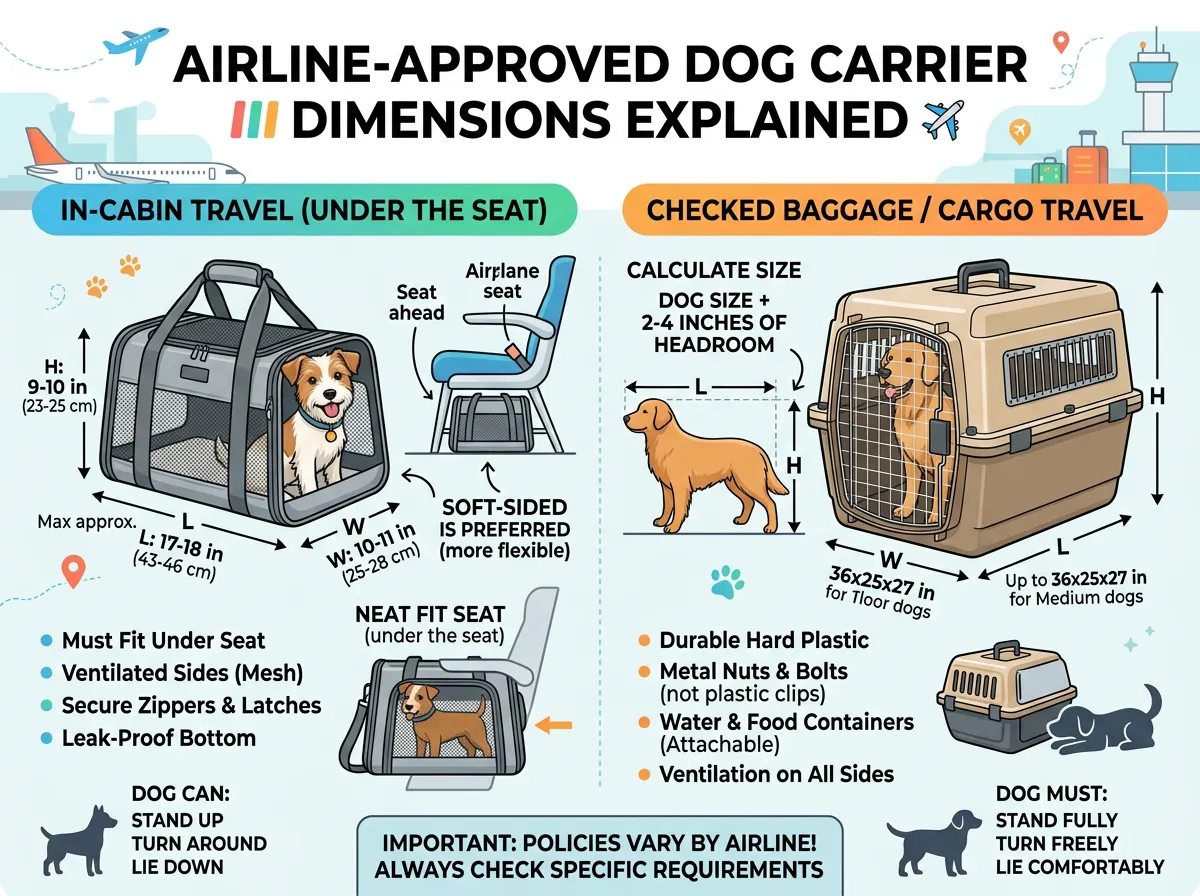
Begin by verifying that you have an airline-approved dog carrier. Use the following checklist to confirm compliance and readiness:
- Carrier Requirements: Ensure the carrier dimensions meet airline regulations, typically a maximum of 18" x 11" x 11".
- Documentation: Gather necessary documentation, including a health certificate from a veterinarian if required by the airline.
- Comfort Items: Include familiar items like a blanket or toy to soothe your pet during the flight.
Rover Ready Co supplies airline-approved carriers and travel essentials designed for compliant, secure canine transport.
When evaluating a carrier, check construction and materials: reinforced seams, durable zippers or closures, and multiple ventilation panels. Soft-sided carriers should still have a stable base so the dog can stand and turn comfortably; some models include a removable, wipeable pad that fits airline dimensions. Verify return policies and warranties where possible, and ensure the carrier's weight and packed dimensions will fit under the airplane seat for in-cabin travel. If you plan to gate-check or use cargo, confirm the carrier meets those distinct standards and that padding or ties are sufficient to secure the carrier during handling.
What Are the Essential Steps to Prepare Your Dog for Airplane Travel?
Preparing a dog for airplane travel involves specific steps to ensure safety and comfort.
- Required Documentation: Obtain a health certificate from a veterinarian, which may be required by the airline. Ensure you have proof of vaccinations as well.
- Health Checks: Schedule a veterinary check-up to confirm your dog is fit for travel. This is crucial for their well-being during the flight.
- Acclimatization Tips: Gradually acclimate your dog to the carrier by allowing them to explore it at home before the travel day.
These steps ensure your dog is prepared for travel.
Acclimatization works best with a progressive plan. Over several weeks, place treats and meals near and then inside the carrier, gradually increasing the time your dog spends with the door closed for short intervals. Pair those sessions with calm praise and a predictable routine so the carrier becomes a safe space. Practice loading the carrier into a car for short drives to simulate motion and noise, and try brief crate stays with the door closed while you are in another room. If your dog shows signs of severe anxiety, discuss behavioral strategies with your veterinarian or a certified trainer rather than attempting rapid desensitization immediately prior to travel.
How to Create a Dog Travel Essentials Checklist
A travel essentials checklist helps organize required items for the trip. Include the following:
- Airline-Approved Carrier: Ensure it is comfortable and meets airline specifications.
- Food and Water: Pack enough food and water for the duration of the trip, along with portable bowls.
- Leash and Collar: Bring a sturdy leash and collar, including identification tags with your contact information.
A prepared checklist reduces the risk of omitting essential items.
Expand your essentials into a practical packing list: bring at least two days’ worth of your dog’s regular food in sealed bags, measured portions in resealable containers, and any prescribed medications in clearly labeled containers with dosing instructions. Include extra absorbent pads, plastic bags, a small towel, and a compact first-aid kit with bandages, antiseptic wipes, and a digital thermometer. Keep both printed and digital copies of all travel documents, a spare collar with a secure ID tag, and a lightweight blanket or bed that fits in the carrier. For longer trips, include a supply of familiar treats, chew toys, and items that help with scent comfort.
Which Airline Approved Dog Carriers Meet Pet Travel Carrier Requirements?
When selecting an airline-approved dog carrier, consider factors that ensure compliance with airline regulations.
- Size and Safety Standards: Most airlines have specific maximum dimensions for carriers, typically around 18" x 11" x 11".
- Comfort and Compliance Features: Look for carriers with secure closures to prevent accidental openings and adequate ventilation.
- General Guidelines: Always check the specific airline's requirements, as they can vary significantly.
Selecting the proper carrier is essential for your dog's safety and comfort in flight.
How to Choose the Right Carrier Based on Your Dog’s Breed and Size
Choose a carrier based on your dog's breed and size requirements.
- Measure Your Dog: Measure your dog's height and length to ensure a proper fit in the carrier.
- Consider Breed-Specific Needs: Some breeds may require additional space or specific features, such as extra ventilation.
- Carrier Types and Features: Soft-sided carriers are often preferred for air travel due to their flexibility and comfort.
Considering these factors ensures comfortable travel for your dog.
How to Follow a Pre-Flight Timeline for Dog Flight Preparation?
Establish a pre-flight timeline to organize tasks and complete required preparations before travel.
- 4-6 Weeks Before Travel: Acclimate your dog to the carrier by allowing them to spend time in it at home.
- 1-2 Weeks Before Travel: Schedule a veterinary check-up and obtain any required health documentation.
- Day of Travel: Ensure your dog has relieved themselves before heading to the airport and pack all essentials.
Adhering to the timeline reduces stress for both owner and dog.
For trips that require more preparation, extend the timeline to include an eight-week plan: weeks seven to eight focus on low-intensity carrier exposure and short periods in the carrier while playing or feeding; weeks five to six include brief car rides with the carrier to acclimate to motion; weeks three to four emphasize document checks, trial packing, and practicing airport transitions such as walking past busy areas; the final week should prioritize rest, routine, and a vet visit to obtain final documentation. Building gradual exposure and predictable routines over an extended timeline lowers anxiety and improves travel readiness.
What Health and Safety Measures Are Required for Dog Air Travel?
Health and safety are paramount when transporting a dog. Consider these measures:
- Veterinary Checks: Obtain a health certificate from a veterinarian to confirm your dog is fit for travel.
- Vaccination Requirements: Ensure you have documentation of your dog's vaccinations, as some airlines may require this.
- Emergency Preparedness: Familiarize yourself with emergency procedures and have a plan in place in case of unexpected situations.
These measures support your dog's safety during air travel.
As part of emergency preparedness, assemble a concise pet emergency plan. Identify the nearest veterinary clinic and emergency animal hospital at your destination and along your route, and store contact details on your phone and in paper form. Include a simple pet first-aid kit with gauze, adhesive tape, a small pair of tweezers, an emergency blanket, and any prescribed medications. Learn basic first-aid steps such as how to check respiration and pulse, and how to handle a bleeding wound. Having this information and supplies readily available reduces response time and improves outcomes should an incident occur in transit.
Research on canine physiological and behavioral responses during air transport underscores the need for these health and safety measures.
Canine Physiological & Behavioral Responses to Air Travel
Twenty-four beagles were used to measure physiological and behavioral reactions to air transport. For each of three flights, a group consisting of four sedated dogs (0.5 mg/kg acepromazine maleate) and four non‑sedated control dogs was flown between Montreal and Toronto after road transport from Quebec City to Montreal.
Physiology and behavior of dogs during air transport, R Bergeron, 2002
What Are the Key Dog Travel Essentials to Pack for Airplane Trips?
Packing appropriate essentials affects the dog's travel experience. Include the following items:
- Airline-Approved Dog Carrier: Ensure it meets size requirements and is comfortable for your dog.
- Food and Water: Pack enough for the duration of the trip, along with portable bowls for easy access.
- Comfort Items: Bring familiar items like a blanket or toy to help soothe your pet during the flight.
These essentials help maintain your dog's comfort and security during travel.
How to Organize Travel Documents and Compliance Papers
Organize travel documents to ensure a smooth process. Follow these steps:
- Gather Required Documentation: Collect all necessary documents, including health certificates and vaccination records.
- Create a Travel Folder: Use a folder or binder to keep all documents organized and easily accessible.
- Check Airline Requirements: Review the specific documentation required by the airline to avoid any last-minute issues.
Maintaining organization ensures all required paperwork is available for travel.
Keep two sets of essential documents: one in your carry-on and a digital copy accessible on your phone or cloud storage. Label documents clearly and include photocopies of vaccination pages, the pet's microchip number, and contact information for the home veterinarian. If traveling internationally, verify import rules and required forms well ahead of time and confirm any customs procedures. A well-organized folder reduces time spent at check-in and minimizes the risk of delays or refusals at the gate.
How to Navigate Airline Pet Travel Regulations and Compliance?
Airline pet travel regulations can be complex; understanding requirements simplifies the process.
- Required Documentation: Familiarize yourself with the documentation required by the airline, including health certificates and vaccination records.
- Breed Restrictions: Some airlines may have restrictions on certain breeds, so check these details in advance.
- Carrier Compliance: Ensure your carrier meets the airline's size and safety requirements to avoid complications at check-in.
Being informed facilitates a smoother travel experience for owner and dog.
What Are the Updated Airline Pet Carrier Size and Policy Guidelines for 2025-2026?
Stay updated on airline carrier size and policy guidelines to ensure compliance.
- Size and Weight Limits: Most airlines have a maximum carrier size of approximately 18" x 11" x 11", with weight limits typically between 15-20 pounds. Some airlines may vary in these specifics, so it’s best to check.
- Carrier Type Preferences: Airlines often prefer soft-sided carriers for in-cabin travel due to their flexibility.
- Policy Changes: Regularly check for updates on airline policies, as they can change frequently.
Understanding these guidelines assists in selecting a compliant carrier.
Additional guidance on cabin regulations emphasizes checking airline-specific policies and carrier dimensions before booking.
Smooth Pet Air Travel: Airline Cabin Regulations & Tips
The guidance provides tips for smooth travel with pets and notes that not all airlines permit cabin pets. Confirm the airline allows in-cabin pets and that the carrier fits under the seat in front of you.
Traveling by Air With Birds in the Cabin
How to Verify Your Carrier’s Compliance with Specific Airline Requirements
Verify carrier compliance with airline requirements to avoid issues at check-in.
- Check Size Specifications: Measure your dog and compare those measurements with the carrier's dimensions to ensure a proper fit.
- Review Ventilation Requirements: Ensure the carrier has adequate ventilation to keep your dog comfortable during the flight.
- Secure Closures: Confirm that the carrier has secure closures to prevent accidental openings during travel.
These steps confirm the carrier meets required specifications.
What Are the Best Practices for Post-Flight Dog Care and Adjustment?

Post-flight care is essential for canine adjustment. Implement the following practices:
- Monitor Your Dog's Health: Keep an eye on your dog's behavior and health after the flight, looking for any signs of stress or discomfort.
- Provide a Comfortable Space: Create a quiet and comfortable space for your dog to relax and acclimate after the journey.
- Re-establish Routine: Return to your dog's regular routine as soon as possible to help them feel secure.
These practices support post-flight adjustment.
After travel, monitor eating, drinking, and elimination patterns for at least 48 to 72 hours. Mild disorientation, decreased appetite, or transient lethargy can occur after a stressful trip; provide calm reassurance and keep activity light while re-establishing regular feeding and exercise. If symptoms persist, escalate, or if you notice unusual breathing, vomiting, or persistent disorientation, contact your veterinarian promptly. For longer trips, check the dog's weight and hydration daily and maintain consistent feeding times to restore the normal routine as quickly as possible.
Where Can You Find Additional Resources and Support for Dog Air Travel?
Identify reliable resources and support to improve travel outcomes. Consider the following options:
- Pet Travel Websites: Explore websites dedicated to pet travel for tips and guidelines.
- Local Pet Stores: Consult local pet stores for travel supplies and advice on traveling with pets.
- Veterinary Clinics: Your veterinarian can provide valuable information on health requirements and travel tips.
Using these resources supports a successful travel experience.
How to Access Airline Dog Carrier Size Guides and Compliance Resources
Access carrier size guides and compliance resources to verify carrier suitability. Use these sources:
- Airline Websites: Most airlines provide detailed size guides and compliance information on their websites.
- Pet Travel Forums: Join online forums where pet owners share experiences and resources related to pet travel.
- Veterinary Resources: Consult your veterinarian for recommendations on compliant carriers and travel tips.
These resources assist in navigating travel requirements.
What Are Recommended Soft Sided Airline Approved Pet Carriers Available for Purchase?
When selecting a soft-sided airline-approved carrier, consider these recommendations:
- Comfort Features: Look for carriers with padded interiors and ventilation to ensure your dog’s comfort.
- Size Options: Choose a carrier that fits your dog’s dimensions while adhering to airline size regulations.
- Price Range: Soft-sided carriers typically range from $30 to $250, depending on features and brand.
Selecting the appropriate carrier enhances travel comfort and ensures regulatory compliance.
Frequently Asked Questions
What should I do if my dog has anxiety about flying?
Consult your veterinarian for guidance on calming techniques or medication. Gradually acclimate the dog to the carrier by allowing exploration at home and by conducting short trips to build positive associations. Provide familiar items such as a blanket or toy, and ensure the dog receives adequate exercise before travel to reduce anxiety.
Are there specific breeds that are not allowed to fly?
Some airlines restrict certain breeds, notably brachycephalic breeds (e.g., Bulldogs, Pugs) due to increased respiratory risk. Check the airline's pet policy before booking. If a breed is restricted, consider alternative transport or consult the airline for exceptions or guidance.
How can I ensure my dog stays hydrated during the flight?
Pack a portable water bowl and a water bottle with an easy-access nozzle. Offer water before boarding and during layovers. Verify the airline's policy on providing water in flight. Consider ice cubes or pet hydration solutions to keep water cool and fresh.
What should I do if my dog gets sick during the flight?
If the dog becomes ill in flight, remain calm and inform a flight attendant. Administer medications or basic first aid if trained. After landing, seek veterinary care promptly. Prepare an emergency plan and identify veterinary services at the destination in advance.
How can I find pet-friendly accommodations at my destination?
Use online platforms such as BringFido and Airbnb to filter pet-friendly options. Call hotels directly to confirm their pet policies and any associated fees. Always verify restrictions on pet size, breed, and additional requirements prior to booking.
What are the best practices for feeding my dog before a flight?
Feed a light meal about 3–4 hours before departure to allow digestion and reduce the risk of nausea. Avoid feeding immediately before travel. Ensure access to water and consider packing snacks for the journey.
How can I prepare my dog for a long flight?
Acclimate the dog to the carrier well in advance. Ensure the dog is well‑exercised before travel. Pack essentials, including food, water, comfort items, and any medications. Schedule a veterinary check-up to confirm fitness for travel. Plan for regular breaks during layovers to allow relief and stretching.
Conclusion
Traveling with your dog can be managed effectively through proper preparation. Ensure you have an airline-approved carrier, required documentation, and a comprehensive travel checklist to reduce stress for both you and your pet. Apply the procedures and resources in this guide to plan your trip. For additional information and travel products, review our selection.


